

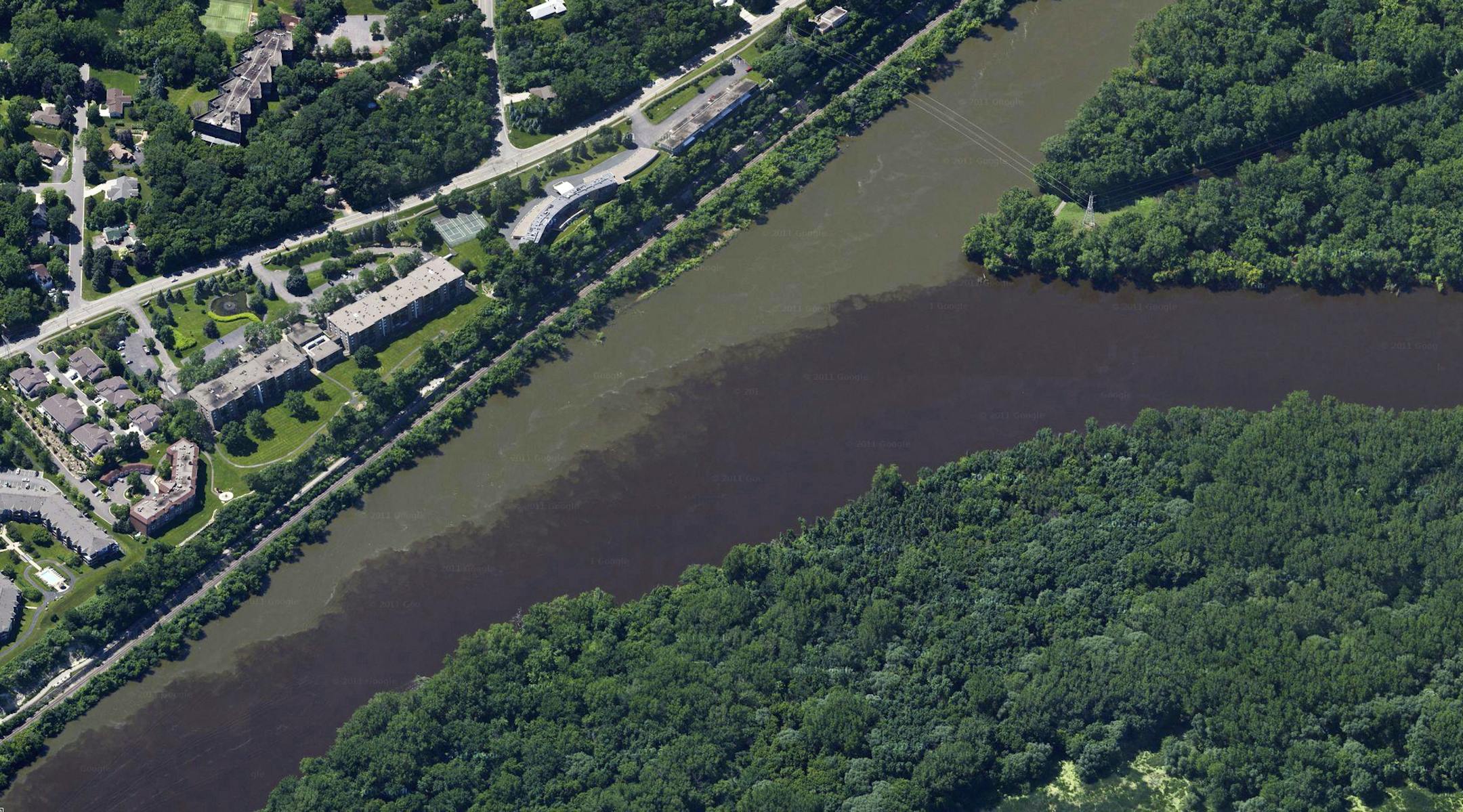
Gary Joachim's May 12 commentary "Minnesota River murkiness predates modern agriculture" cites entries from the journals of travelers in the early 1800s. Here are several additional journal notes to consider (zizania is wild rice, and unios are mussels):
• "[A] most delightful country, abounding with all the necessaries of life, that grow spontaneously. … Wild rice grows here in great abundance; and every part is filled with trees bending under their loads of fruit, such as plums, grapes, and apples." (Jonathan Carver, 1766.)
• "[We found] the water beautifully transparent, and the unios stuck in countless numbers in pure white sand, so that I could, by baring my arm, select them as we went along." (George W. Featherstonhaugh, Sept. 26, 1835).
• "[W]e paddled away at the rate of four or five miles an hour … when the otters were seen swimming amongst the zizania. … The musk-rats were already at work building their conical houses on the marshy grounds, with mud and straw of the wild rice, against the approach of winter. As we advanced through these low rice-grounds, clouds of wild ducks rose on the wing, and we killed them at our leisure from the canoe." (Featherstonhaugh again).
• In 1917, 2,054 tons of shells were harvested from the Minnesota River and almost 5 tons from the Pomme de Terre. (De Lestry, 1918).
It is important to understand that wild rice and mussels need very clear and clean water to flourish. It is obvious that the Minnesota River before modern agriculture was a slow-moving paradise for wildlife. And it was the source of a world-class mussel-to-buttons industry until the river became too polluted.
Howard Markus, Woodbury
LIGHT RAIL
'Social engineering?' No, good urban planning, with precedent
I've responded in the past to negative views of light rail in the Star Tribune, and after reading "So, then, it's social engineering" (Readers Write, May 10), I felt it worth defending again. To someone who once took light rail every day on the East Coast and who has taken the bus system in Minneapolis every day to work downtown (and as someone who grew up in a small town and never saw traffic), a rail system is not social engineering. Proper urban planning — yes. There is not a city with the corporate, industrial and population presences of the Twin Cities that has not done something around rail. And before anyone has an opinion about rail, I want to ask them if they have consistently used it. If you look at the train stations in places like Fairfield, Conn., Carrollton, Texas, and Burlingame, Calif. — you see vibrancy. Each city received rail at three very different times over the last 100 years. This topic is worth discussing with facts, figures and experience.
Now move to the opposite side of the conversation. Ask anyone in Houston why they hate the city. The answer is traffic. And it is too late to build rail downtown there at any reasonable price. Don't say that Houston opposes rail transit because it is the center of the oil industry. I asked a lifelong friend and executive in the oil industry there which he would rather have — a Suburban stuck in traffic or predictable train commute — and he would take the train.


