

•••
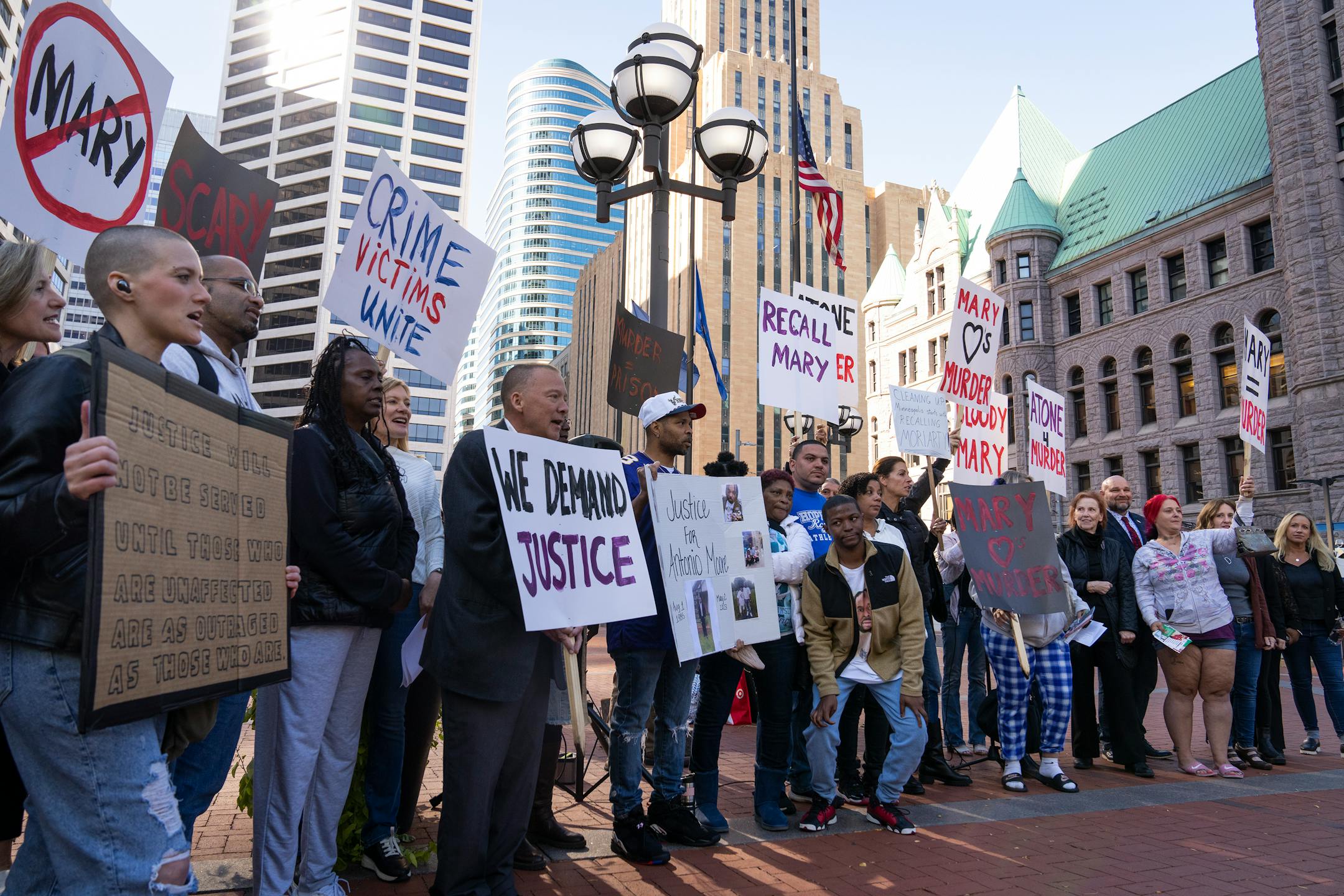
The opinion piece by Deputy Hennepin County Attorney Sarah Davis, defending the Moriarty administration’s actions in the Husayn Braveheart case, opens by declaring the administration’s concern for victims’ families (”It’s time to rethink what’s just, what keeps us safe,” Opinion Exchange, Jan. 19). She writes: “To avoid adding to their pain, we at the Hennepin County Attorney’s Office have kept relatively silent about the case.” How patronizing, how disingenuous. This essay is at least the second from that office to appear in the Star Tribune about this case; it would never have been written if not for the widespread public criticism it has faced (see “Moriarty’s vision, not critics’ fears, has been fulfilled,” Opinion Exchange, Oct. 25). The administration appears to be trying hard to fend off a Moriarty recall effort.
However, Davis offers a much stronger defense. She helps clarify the closely mingled (or tangled) threads of justice, public safety and rehabilitation. She emphasizes Braveheart’s painful history of childhood abuse and neglect, the potential for rehabilitation, its value for public safety and the likelihood of no such outcome from an ordinary prison term. (Of course, there is no mention of the capital punishment inflicted on murder victims by the offenders. For these victims, there is no rehab option available.)
Davis paints a picture of a Minnesota justice system at war with itself. I am sure prison officials will be somewhat taken aback by her repeated dismissal of their sector as “muscle memory.” Ironically, a piece by Star Tribune columnist Jennifer Brooks, which appeared on the same day, merely amplifies this appearance of departmental disconnect. While Davis, in the name of “public safety,” defends steps taken by Moriarty to keep young offenders out of jail at all costs, Brooks describes a successful program of rehabilitation within the Lino Lakes prison (”Helping inmates learn to help,” Jan. 19). Inmates are provided close guidance in their effort to renounce drug/alcohol addiction, as a step toward achieving well-being and moral responsibility in their lives as a whole.
Justice involves the imposition of a penalty — consequences — for crime. This cannot be obviated by prognoses about rehabilitation or general public safety. We do not want a two-tiered system of humane rehabilitation vs. “muscle memory.” When justice is tempered by mercy and wisdom — when the opportunity for moral reckoning and rehabilitation is offered within the parameters of a fair penalty, including incarceration, for grievous crimes — only then will we be able to say we have a decent justice system. It is always a difficult work in progress, to put it mildly. We have a long way to go.
Henry Gould, Minneapolis
UVALDE REPORT
Shameful failures all around
It will be interesting to see the Texas governor’s reaction to the Justice Department report on the school shooting in Uvalde, Texas (“‘Unimaginable failure’ in Uvalde police response,” Jan. 19).


