

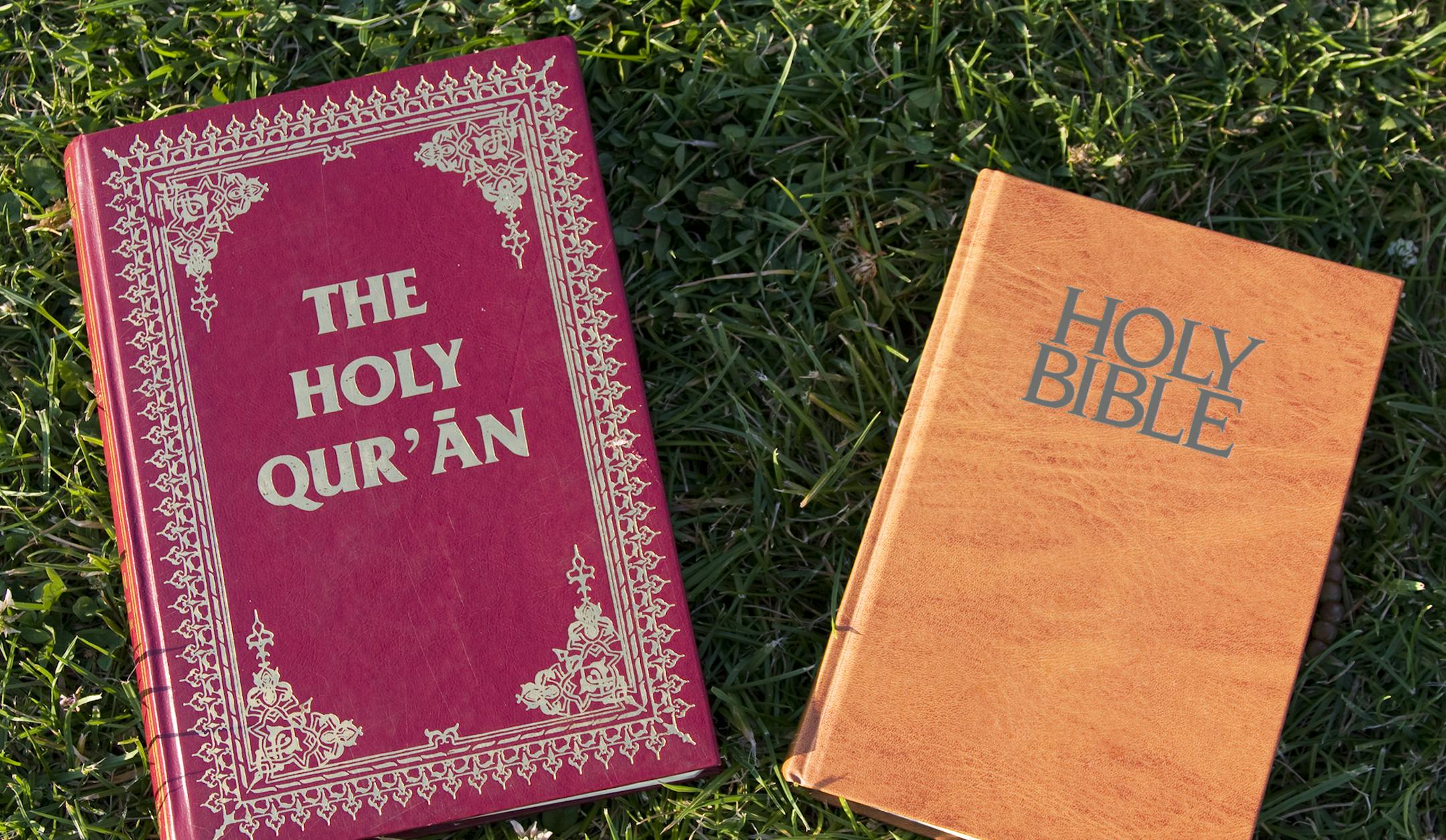
Let me get this straight: "Students in Minnesota public high schools could earn credit for courses that teach the Bible OR [emphasis mine] the Qur'an as an infallible truth under a proposal now before the Legislature." ("Public school credit for religion?"March 25.) Can there be multiple infallible truths? And what if those truths contradict one another? I'm very confused. Maybe our students would be better served educationally if instead of pursuing the slippery slope of infallible truth we and the Legislature paid more attention to Article XIII, Section 1 of the Minnesota State Constitution: "The stability of a republican form of government depending mainly upon the intelligence of the people, it is the duty of the legislature to establish a general and uniform system of public schools. The legislature shall make such provisions by taxation or otherwise as will secure a thorough and efficient system of public schools throughout the state." Might this be a more simple truth we can all embrace and aspire to?
Mark Storry, Monticello, Minn.
• • •
I am confused by the numbers presented in the March 25 article as a reason to have students attend supplemental schools for religion classes. There are 168 hours in a week; then there are about 35 hours per week for students at school, and 56 hours per week for sleep, and that leaves more than 70 hours a week for other activities. If a family's priority is to study the Bible as the infallible truth, there is more time available than one hour on Sundays, as a proponent states in the article.
Sue Nielsen, Richfield
• • •
If the proposed legislation to allow public school credit for private school classes becomes law, it will likely cause a tsunami of lawsuits and eventually be ruled unconstitutional. Minnesota lawmakers should review the landmark U.S. Supreme Court case Lemon vs. Kurtzman (1971), which established the "Lemon" test that is used by courts to determine whether state or federal laws violate the First Amendment's Establishment Clause (U.S. Constitution).
A law can only be constitutional if it passes all three parts of the Lemon test: The law must have a secular purpose; the primary effect of the law must not advance or inhibit religion, and the law must not result in an "excessive government entanglement" with religion. This proposed legislation would clearly violate part three of the test in that it would completely entangle government with religion.
The legislation would cause public schools to monitor, review and investigate religious school courses in order to decide accreditation. This would burden public school officials and force them to become arbiters of whether class material has secular or religious content. And schools will spend thousands on litigation costs.
In today's world, we have enough disputes over religion, and we certainly don't need more of it in our public schools. This proposal should never become law.


