

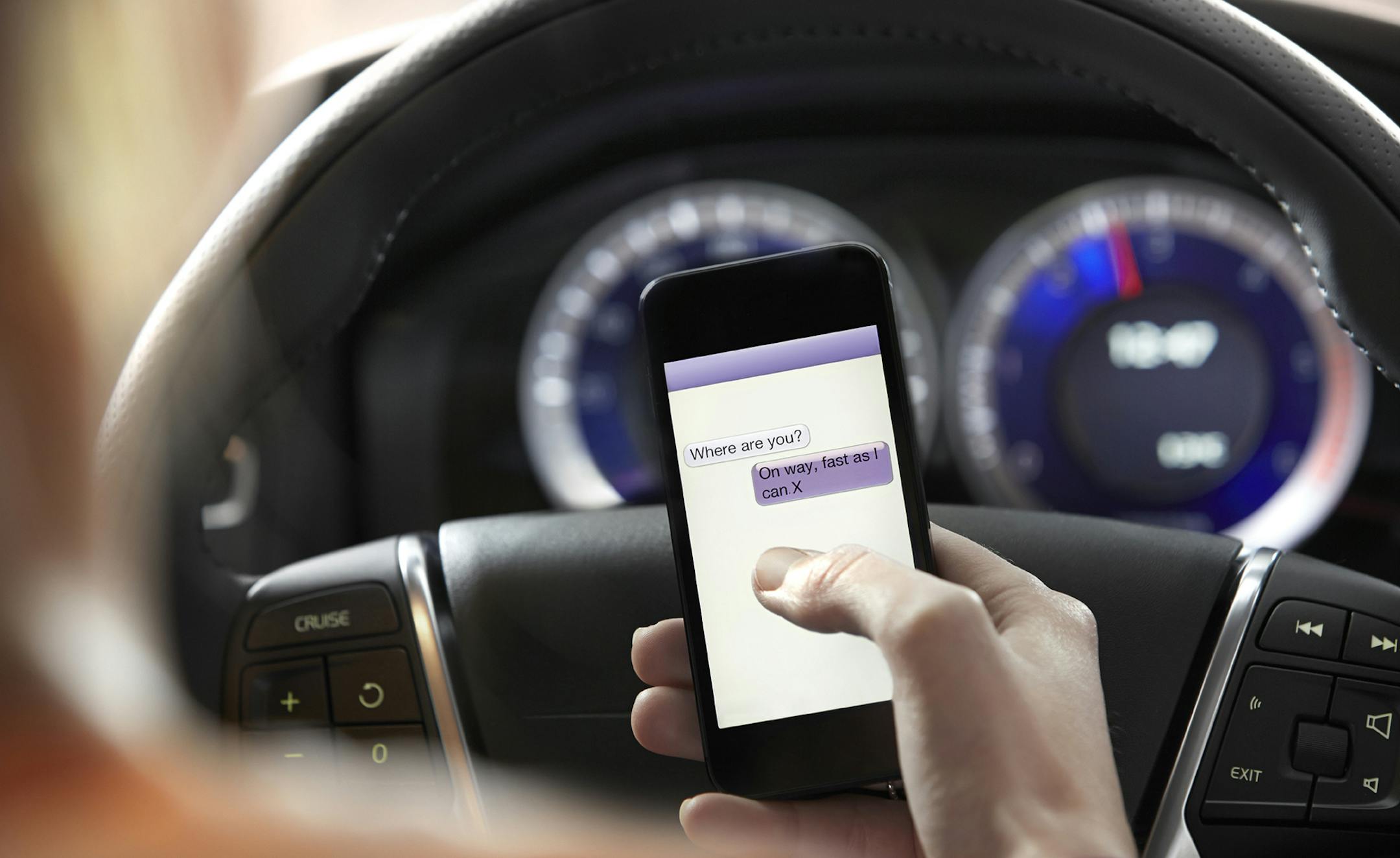
After reading "How's My Driving? Just Fine!" (March 17), my blood boils. Almost 100 percent of those 1,750 surveyed agree that texting and driving is not safe and impacts their driving, yet they still engage in that dangerous behavior — putting all other drivers at risk because of their selfish inability to share the roads responsibly.
The Office of Traffic Safety says, "What a tough nut to crack." I say slap a $1,000 or higher fine on anyone texting or e-mailing while driving. The proof is right there on the phone. Payable on the spot or your car is impounded. We have laws that have no bite behind them — our $135 fine won't deter anyone. People won't stop, because getting their hand slapped isn't enough of a deterrent. Or let's take Alaska's lead and fine people $10,000 for texting and driving.
Think of how many roads could be repaired with that money. And how many lives might be saved by finding a real deterrent to this extreme road hazard that on any day could kill any one of us. And does. Let's all stop killing people with our phones, OK? Enough is enough.
Debb Morgen, Mendota Heights
WOMEN'S ATHLETICS
Minnesota known as a leader in leveling the playing field
It was great to see the editorial on March 17 recognizing the excellence of the University of Minnesota's women's teams ("Hats off to U of M women's teams.") It might have been appropriate to delve into some of the historic reasons for these accomplishments.
First of all, in 1975, the Legislature passed the strongest women's sports equality law in the country (Minnesota Statute 121A.04). It was stronger than the federal Title IX in that Minnesota girls had the right to try out for and play on boys' teams, and there was no exemption for contact sports. A leading player pushing the U to move faster and go further was Alan Page, then a U regent, now a state Supreme Court justice. Just ask the women activists from that time how important his words and actions were in securing passage of this law.
In the case of hockey, Minnesota has another unique law requiring any arena renting ice to the public to show a fair and equitable division of ice time, particularly for prime times, between men and women. We also require charitable groups supporting youth sports to divide their funds equitably. Not only do Minnesota players fill almost the entire U women's hockey team, but many of our opponents have a preponderance of women from our state. I remember one year when Wisconsin had more players from Minnesota than from Wisconsin!
Women seldom see anything handed to them, but this issue shows they know how to fight and win.


