

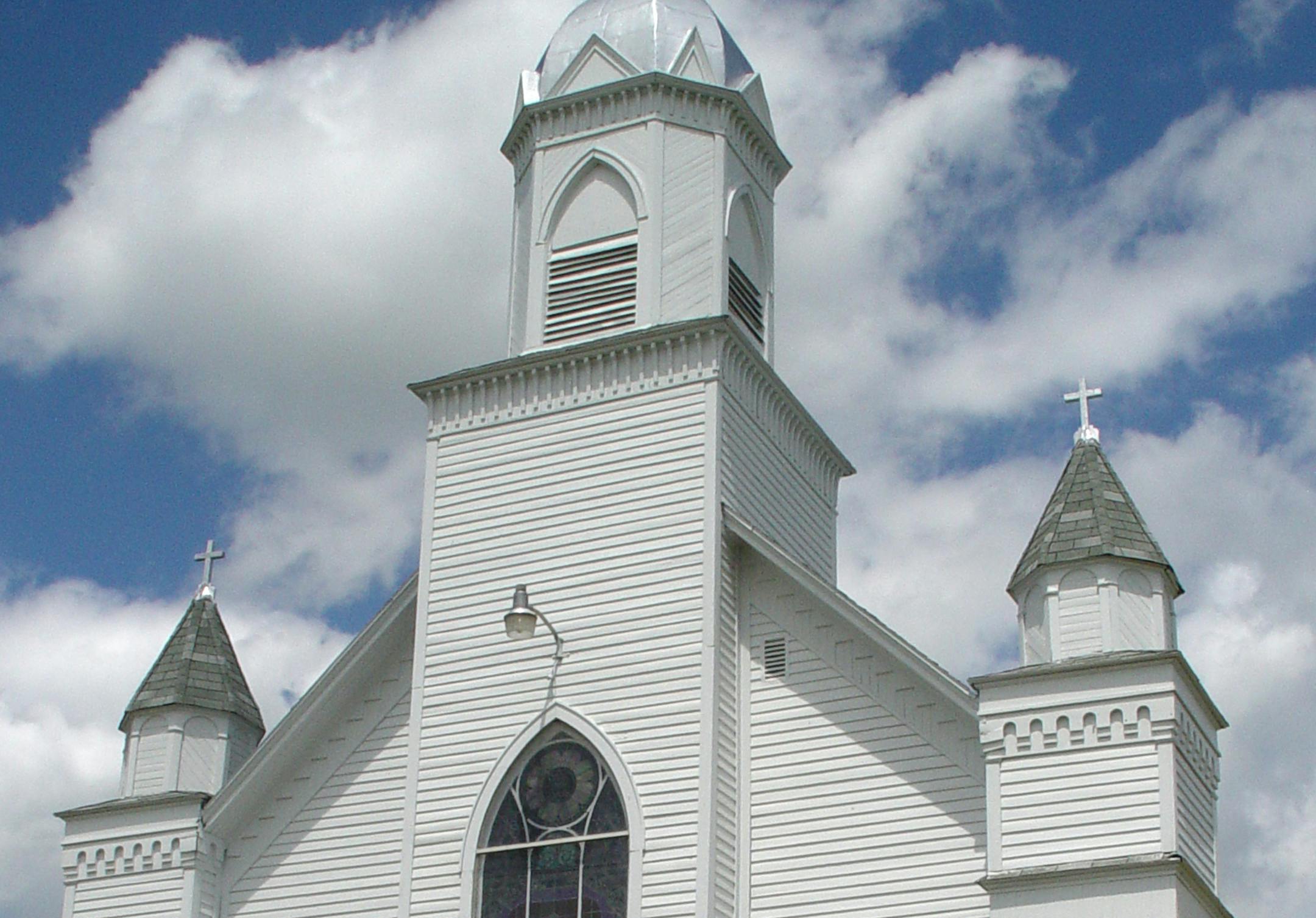
It is indeed a tragic loss for a congregation when its house of worship is closed and threatened with demolition ("Prayers for preservation," March 11). With its loss goes the memory of a pioneering people who chose to settle in our state and, often with the labor of their own hands, erected a house of worship. These buildings, many of them white, clapboard structures with their steeples reaching toward the sky, have always been a part of our state's landscape. While it is impossible to preserve all of these historic houses of worship, it is possible for us to preserve their histories for future generations. I would urge county historical societies to prepare volunteers to go out and photograph their houses of worship, gather their histories, conduct oral interviews with members, and see that this information is stored in their archives and the archives of the Minnesota Historical Society, where it will be available to researchers seeking information on our state's diverse religious and ethnic heritage, once visible in its houses of worship that are no longer there.
Marilyn J. Chiat, Minnetonka
FOR-PROFIT COLLEGES
We dispute the data cited in attorney general's commentary
Students should have access to relevant and timely information when selecting an institution of higher education. The same applies to government officials when regulating these institutions. Unfortunately, Minnesota Attorney General Lori Swanson received incorrect and misleading information, and those data points appeared in her recent commentary on the subject of private-sector colleges and universities ("State needs to make for-profit colleges more transparent," March 12).
Her article contends that private-sector institutions don't graduate students and that when they do, those students can't find jobs or repay their loans. The attorney general is flat wrong.
First, Swanson's piece uses a claim from the U.S. Department of Education about the earnings of our students that was found by the Washington Post (http://tinyurl.com/lnsr3am) to be false and misleading.
Second, missing from the attorney general's commentary is any context to students served. Private-sector institutions graduate students at nearly three times the rate of community colleges, who serve similar students, while also having lower rates of default than community-college borrowers (http://tinyurl.com/o8xwezm).
Finally, when it comes to earnings, we recently conducted an analysis using U.S. Department of Education data and found that students graduating from our programs in fields like health care, automotive or information technology more than double their earnings (http://tinyurl.com/q9mwu8n).
Students, and their families, put considerable thought into the decision to pursue higher education. They need the best information in a transparent and consumer-friendly manner. All stakeholders should work together to make sure that the facts trump rhetoric.
Steve Gunderson, Alexandria, Va.
The writer is president and CEO of the Association of Private Sector Colleges and Universities.


