

Excellent. Now Apple has given us another reason to keep our heads down even more — a smartwatch.
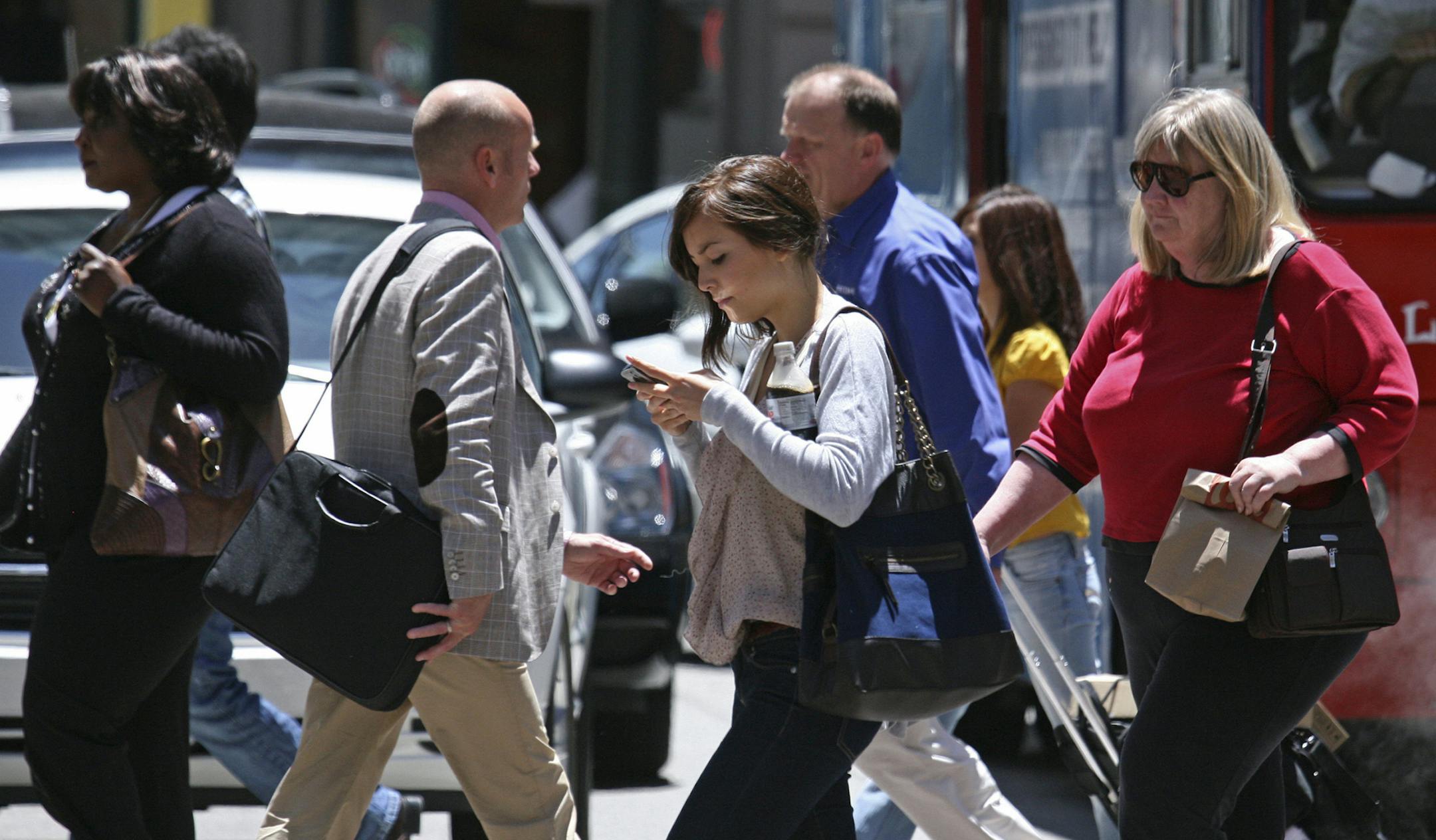
Awesome. We can now have our bloodshot, tired eyes fixated on our wrists, then immediately switch them over to our smartphone, which is glued to our other hand. Man, our necks are really going to be sore.
How refreshing it was to read of James Cameron's views in a USA Today interview. Here is a guy who made millions making the two top-grossing high-tech movies of all time — "Titanic" and "Avatar" — and he refuses to own a smartphone.
Says Cameron: "I look around the airport, and every single person is oblivious to the world around them. They don't live in the moment. I've made a conscious choice to not spend all my time … looking down at a device. I refuse to do it. I just see it as a ball and chain. I don't want to be that available to the world. I don't want to share every single thing I do."
Now I feel pretty good about my dumb phone and watch.
Neil F. Anderson, Richfield
THE TAX BURDEN
Editorial failed to acknowledge complexities in the data
The methodology of the March 12 editorial praising the direction of Minnesota tax law changes ("Spreading burden of state income tax") was deeply flawed. In particular, the Star Tribune Editorial Board asserted that the data from the Department of Revenue's new Tax Incidence Study suggest that, in 2017 (after the law changes are fully effective), Minnesota's low-income folks will have continuing grounds for complaint inasmuch as they are projected to carry 1.9 percent of the state's tax burden while receiving only 0.8 percent of total state income. A share of burden that is more than twice the share of income should send the liberals scurrying back to the Legislature in coming sessions to push for more "equity," based on your selection and highlighting of this statistic.
In fact, the Tax Incidence Study clearly acknowledges in several places that income data for the low-income deciles are unreliable. This is because they cannot capture almost all of the in-kind and unreported cash benefits received by this category. While some welfare payments and tax credits are captured for those in that group who file returns, the study acknowledges that income excludes most of these payments and all of food stamps, rent subsidies and energy subsidies. Add to those such things as school meal subsidies, child care subsidies, nursing home subsidies, higher-education grants and various private charity initiatives, to name a few.
"Low income" is defined by the Editorial Board as up to $25,000 of annual income. Across that bracket, it is not difficult to argue that the uncounted benefits would easily double, and in many cases more than double, the reported income of the first couple of deciles, with corresponding reduction in real tax burden.


