

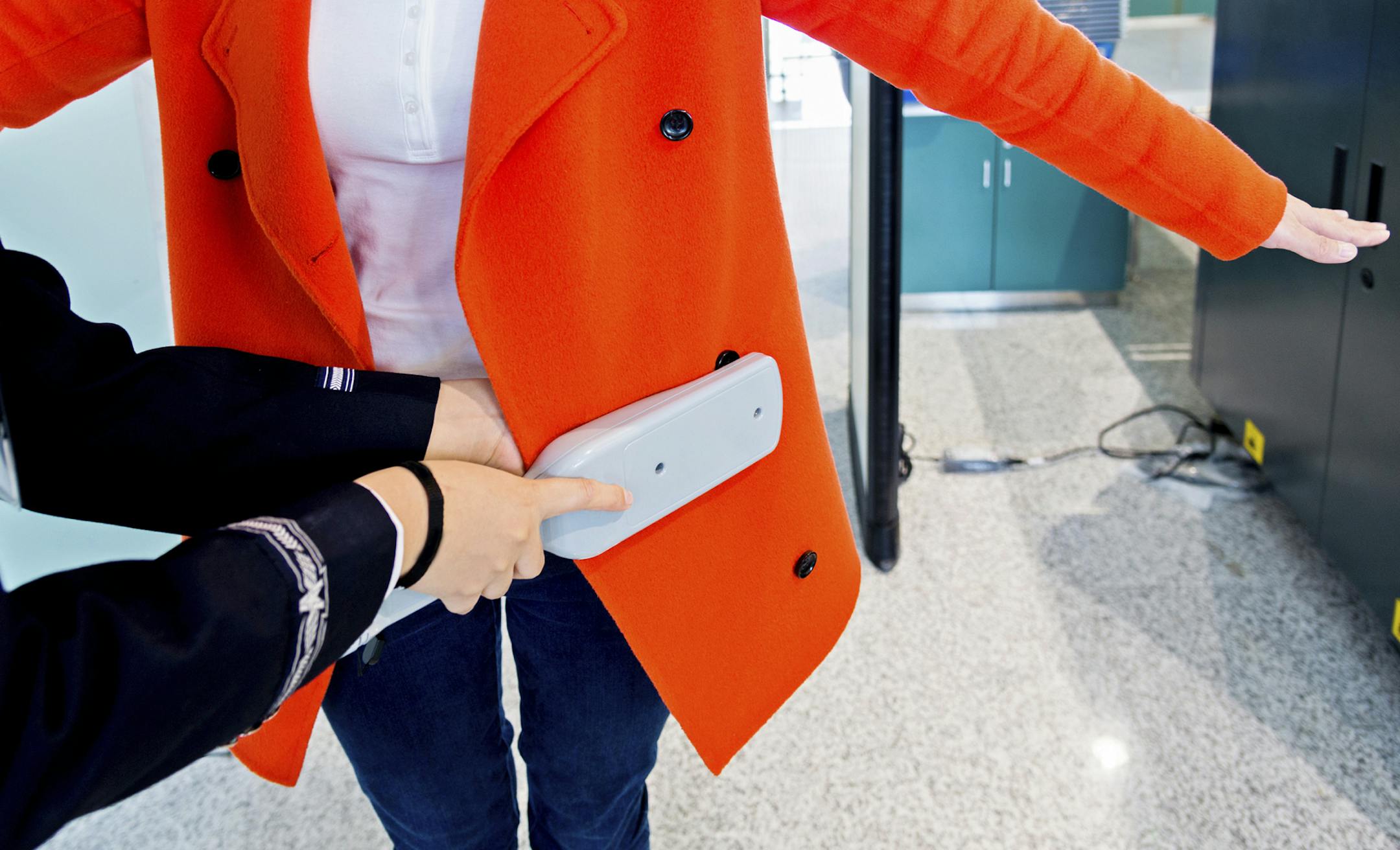
On an early date, at the Ahmanson Theatre in Los Angeles, my husband turned to me and whispered, "You know, four storm troopers with machine guns could take out most of this audience."
I gave him a look between a gasp and a glare. "You don't think of things like that?" he asked. "No," I said. "It's not normal?" he asked. "Nope," I said. "It's that Second Generation Holocaust Survivor thing."
We'd been reading about children of Holocaust survivors and their inherited sense of panic. This fit to a tee.
Recently, we went to the Orpheum in Minneapolis for the opening night of "If/Then." When we arrived, 20 minutes before curtain, the crowd huddled before the exterior doors, unmoving. It was past what should have been curtain time before we learned why: Inside, across the ornate entryway, were several metal detectors, the ones like giant, open-sided coffins standing on end. Polite and calm TSA workers (theater safety associates) told well-dressed theatergoers to empty their pockets of metal and to place phones and purses in small, plastic baskets. As we waited, I turned back to the crowd and said, "Please put your liquids in small plastic bags," then realized by the horror on their faces that people didn't know I was joking.
Finally, we walked through, but not before being wanded. It wasn't until we were inside that I thought of my husband's much earlier comments.
In the shadow of the attack on the Bataclan concert hall in Paris, in the shadow of near biweekly mass shootings in this country, we have entered a new era. Now we are all Holocaust survivors' children. I shudder at the thought.
Sakki Selznick, St. Paul
ROAD USE
Tentative push for lower speed limits isn't just a bicycling issue
The Bicycle Alliance of Minnesota explored the idea of lowering the minimum speed limit in Minnesota's communities. In our initial research, we found little consensus around how to do this. We're disappointed that the reasons for exploring the idea — including livability of communities and the goal of no traffic fatalities for drivers, pedestrians and bicyclists — have been lost in the media coverage, though it is not lost on our supporters across the state. Even the fact that this idea was never presented as a legislative proposal seems to be forgotten.
I would also like to correct a quote I feel was taken out of context in the StarTribune.com post about the aforementioned issue. I mentioned to the reporter that polling has shown that bicyclists are regarded as lawbreakers by a significant portion of the general public. I followed up this reference by saying that because of current perception, cyclists are not who should be leading the speed-limit change campaign. There should be a group consisting of a wide range of stakeholders — like the Complete Streets Coalition or Toward Zero Deaths — to tackle this issue, which is not only a law change but also an information-gathering and education campaign.


