

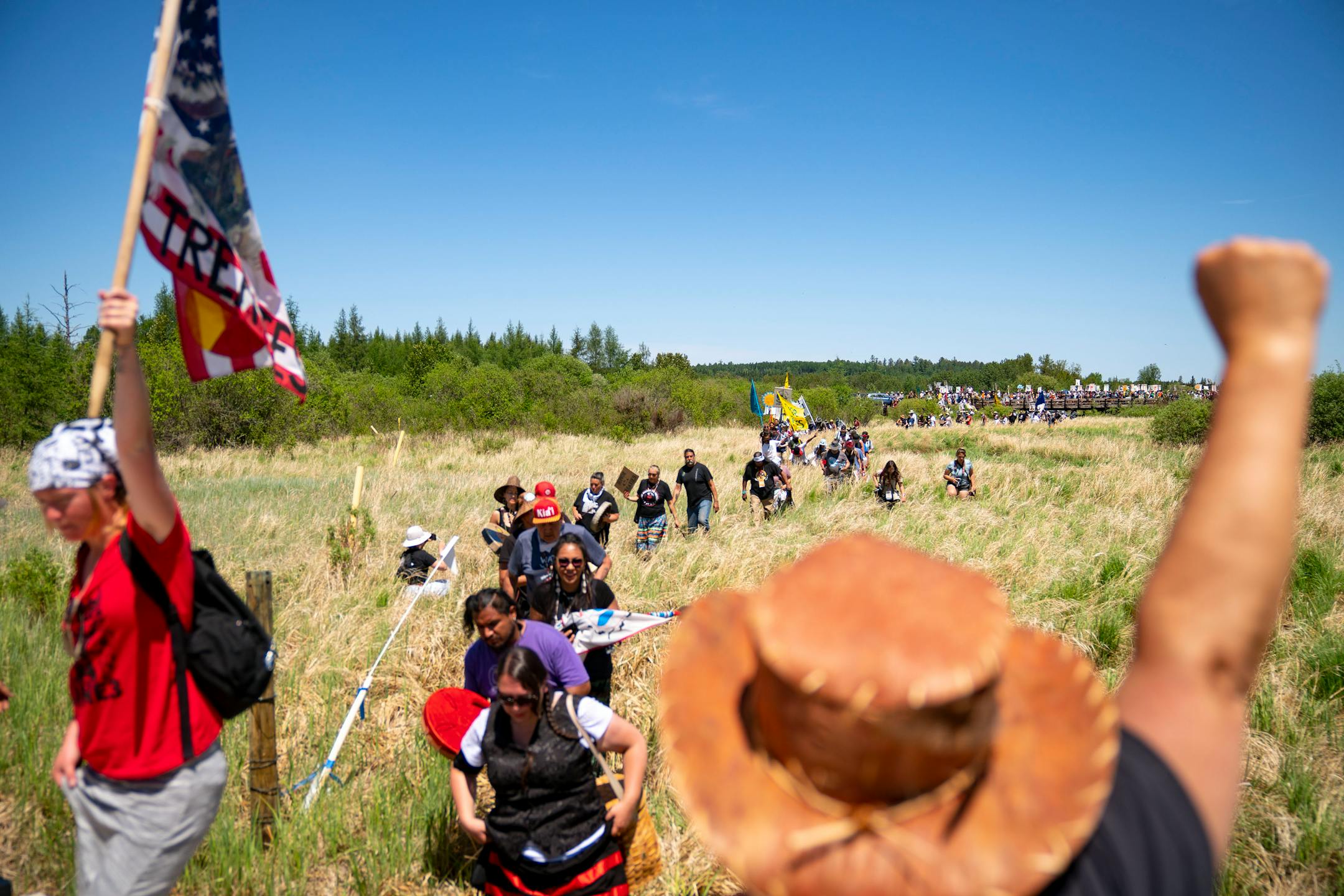
Most reports on this week's "Treaty People Gathering" in northern Minnesota ("Line 3 opponents turn up the heat," front page, June 8) mention that activists resisting the Enbridge pipeline are trying to protect wetlands and drinking water for Indigenous people and rural communities. This is all true. But why aren't we talking about the imminent threat to water downstream? Right now Enbridge is preparing to drill underneath the Mississippi River. If you live in Minneapolis, St. Paul or St. Cloud — not to mention New Orleans or other cities downstream — then the water in your pipes comes from the Mississippi, for you and 18 million other Americans.
Enbridge keeps saying that it can safely pump high-pressure tar sands oil underneath our lakes and rivers, but then, it always says that. It said it could protect the water in Grand Rapids, before spilling 1.7 million gallons of oil into the Prairie River. It said that in Michigan before spilling 1.1 million gallons of oil into the Kalamazoo River. It has exhausted the public trust.
Line 3 needs a social license to operate. This week, that social license has been revoked.
Sarah Heller, Minneapolis
•••
In northern Minnesota we are witnessing a familiar story. Tribal communities and their allies are actively opposing the construction of the Line 3 oil pipeline, and the state is deploying forces to remove peaceful protesters.
The land where the Line 3 pipeline is being constructed is governed by our nation's treaties with sovereign tribal nations. Treaties made between these nations are binding upon all of us as residents of the United States. Honoring these treaties is not optional. They are enshrined in statute. Yet, time and again, elected officials and agencies responsible for upholding the law have ignored our treaties and granted permits that violate them.
Excuses have been made for this failure. And each failure has further eroded the relationships defined by our treaties and any trust that might have been nurtured by honoring them.


