

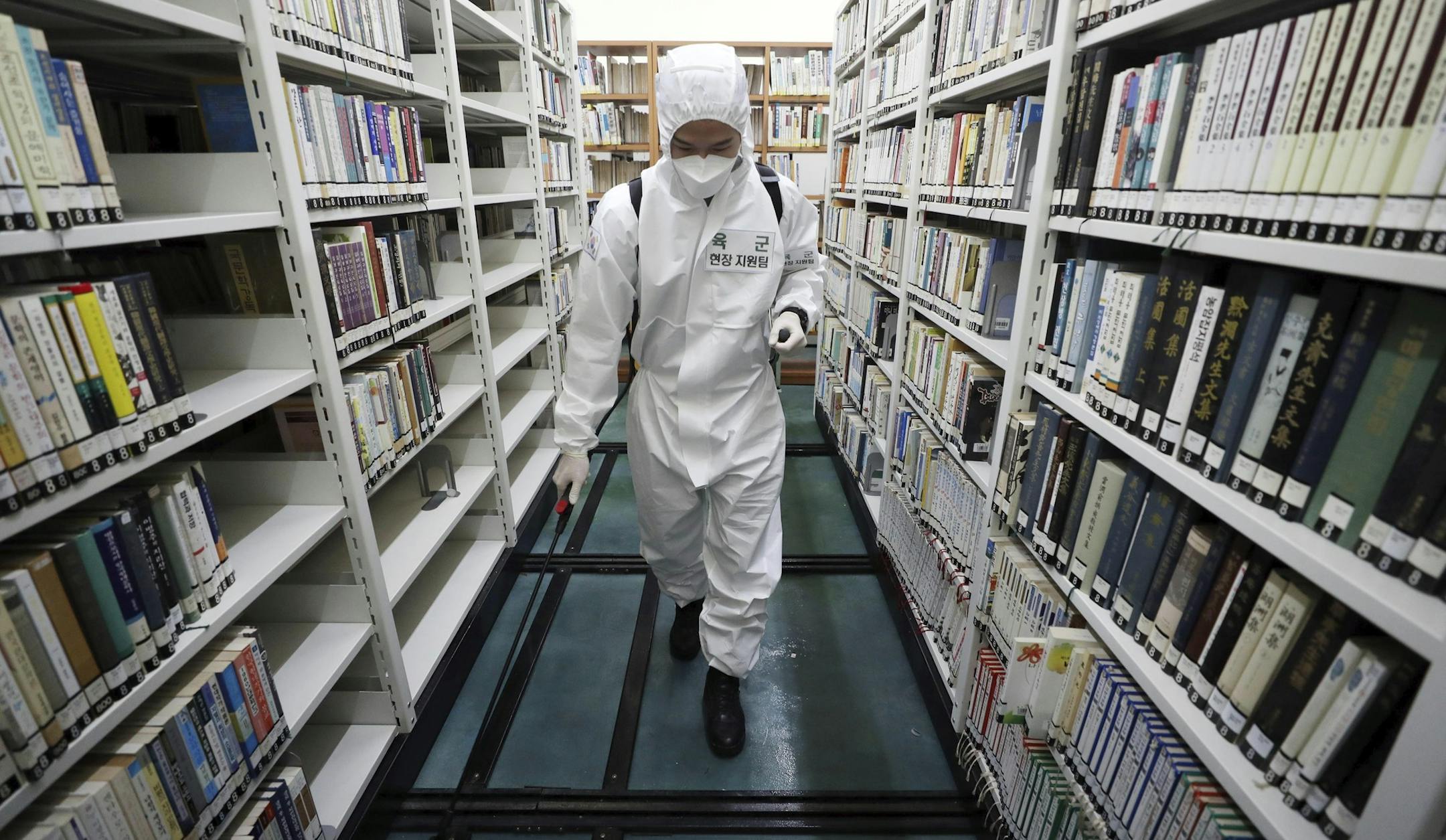
Right around the time coronavirus closed local schools, suddenly throwing parents into a home-schooling situation, the libraries were closed, too. So, parents couldn't pick up books and other materials for their kids. Grocery workers and bus drivers (and others!) can stay at their posts, but librarians don't provide an essential service? And also, consider all the rest of us who depend on libraries in normal times.
How about limiting the number of people inside a library at a time in order to maintain social distancing? If not that, how about curbside pickup? The main thing would be to sanitize books as they are requested, sent to the right branches and shelved for pickup. Presumably, they'd be cleaned again before borrowers came to fetch them at the curbside. Naturally, the librarians' hands would be clean, and they would wear gloves.
Not all bound books have e-book equivalents — and not all of us have e-readers or access to computers. Let us use our libraries again! Keeping them closed is driving some of us nuts.
Phil Freshman, St. Louis Park
VIRUS IN THE NAVY
His voyage closed and done
I was appalled to hear the captain of the USS Theodore Roosevelt, Capt. Brett Crozier, was relieved of his command for taking action to protect the crew members serving under him ("Navy fires captain who sought help for virus-stricken ship," StarTribune.com, April 3). It seems to be the action of a Trump toady, who is not even confirmed in his position as Navy secretary, in retribution for disregarding President Donald Trump's dismissive treatment of the problem.
My father was a World War II veteran, and I recall his stories of command officers who took risks to protect the lives of the men serving under them. I am encouraged to see there are still such men serving in our military.
John Geddes, Minneapolis
COMPENSATION
Pay workers for their risky service
Doctors, nurses, emergency medical technicians, and some police and firemen in this time of COVID-19 are putting their lives in danger just as much as soldiers. I propose that some form of hazardous-duty pay be given to them in the next federal bill dealing with this crisis. It should be made retroactive and details worked out.
This could be modeled on practices of the U.S. military. When I was in Vietnam in the U.S. Army, we all received an additional hazardous-duty pay on top of our regular pay.
In recent days, the U.S. Department of Defense announced that soldiers with COVID-19 or suspected of it will receive up to $100 a day for helping with lodging costs if they cannot get home. It's called "Hardship Duty Pay-Restriction of Movement" pay.


