

•••
I was astounded by Kim Crockett's opinion piece in Saturday's Star Tribune ("I'll end division, restore confidence in elections"). It begins: "Americans are fighting about elections." Um, sadly, no, the only ones fighting the elections are Republicans who would like to restructure the process so they win. Election results were fine until 2020 when Donald Trump didn't like the outcome. The only ones still fighting election results are the deniers. Crockett is a denier and has stated she may or may not accept the election results. How is that building trust and confidence in the process? You will only believe the results if you win? That makes absolutely no sense. That's why it's called an election. You win some and you lose some.
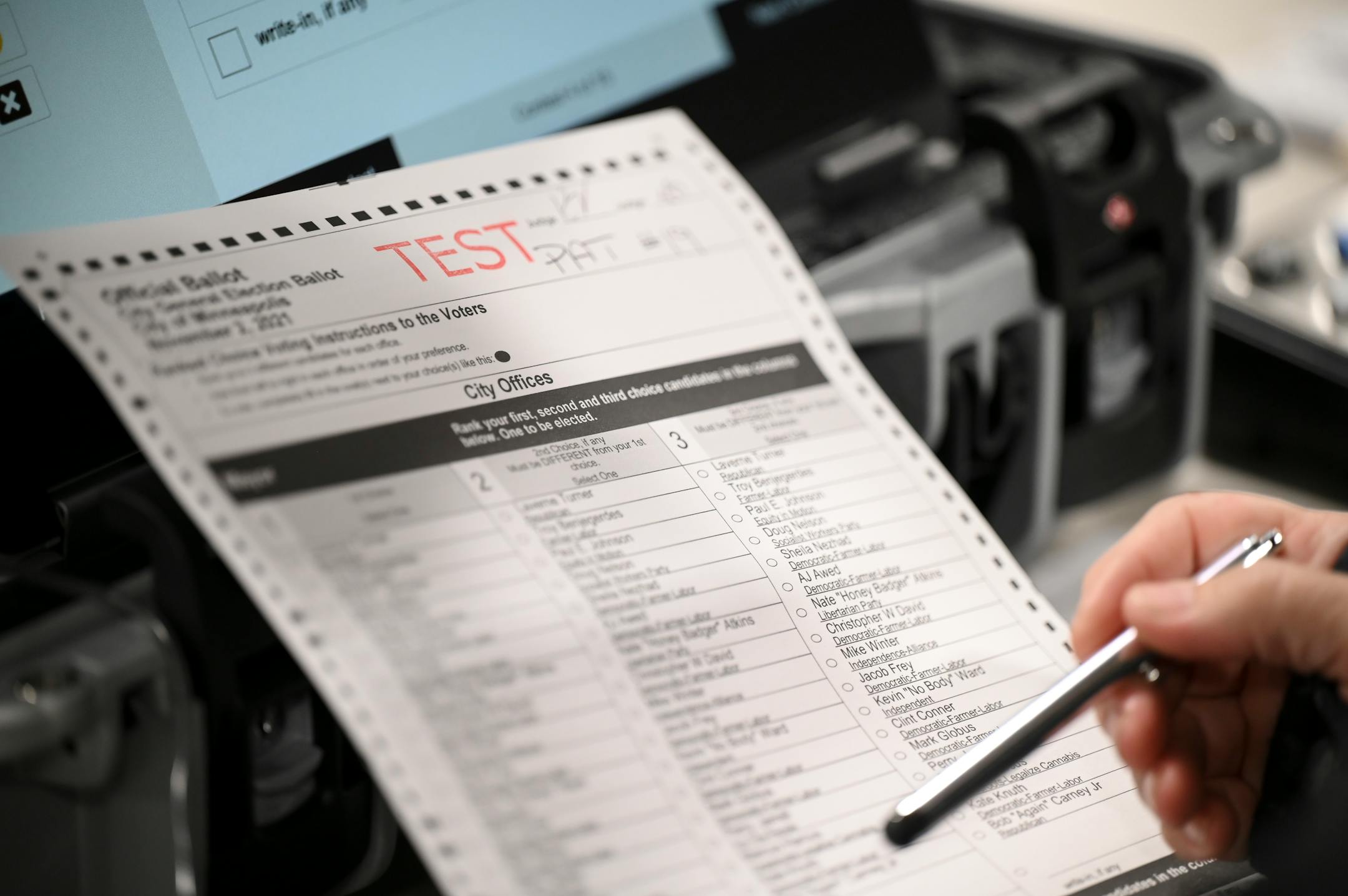
I have confidence in how Minnesota conducts its elections. Having been an election judge for several years, I know firsthand how professional and responsible the election workers are. Every worker I have ever met, both Republican and Democrat, has tremendous amounts of integrity and a deep respect for the process. A person does not get to walk in, grab a ballot and vote. It really does not work that way, ever. It is not Ole and Lena, it is process and there are stringent rules for same-day registration. Just "vouching" for someone does not automatically ensure that person votes — there is really more to it. And when Crockett states that she has received "copies of registration cards for deceased relatives," I wonder just how many? Six, 20, 500? I find it ironic that she states that in 2016 there were 335,000 registered on Election Day and 26,000 were challenged, but by whom? And look who won the election.
The last two years have been exhausting. If after the Jan. 6 insurrection Republicans still support the election deniers' claim that it was "stolen," I cannot in good faith vote for a Republican candidate. If Crockett truly wants what is best for Minnesota, she should know personally how elections work and trust the people and the process. And if you lose, take it with a smile and move on.
Linda Carvel, Plymouth
•••
I am not so naive as to believe that there was no fraud in the 2020 election. The same is probably true of every election of national consequence in our recent history. Examples are many. In the 1960 election there is some evidence that Democratic machine politics cost Richard Nixon an electoral win over John Kennedy. More recently, in what was arguably the closest election in recent history, the conservative 5-4 majority on the Supreme Court stopped the Florida recount prematurely and gave the election to George W. Bush over Al Gore. Perhaps the true margin in that election was a single vote. Both Bush and Gore saw that the national interest would not be served by casting doubt on the election process. They saw their personal interest as subservient to the national interest. There were protests in each case and there was broadly based dissatisfaction with the outcome, but people accepted the new president as legitimate, and the republic still stood. There was a broad acceptance that both parties were patriots before partisans. No one stormed the Capitol.

