

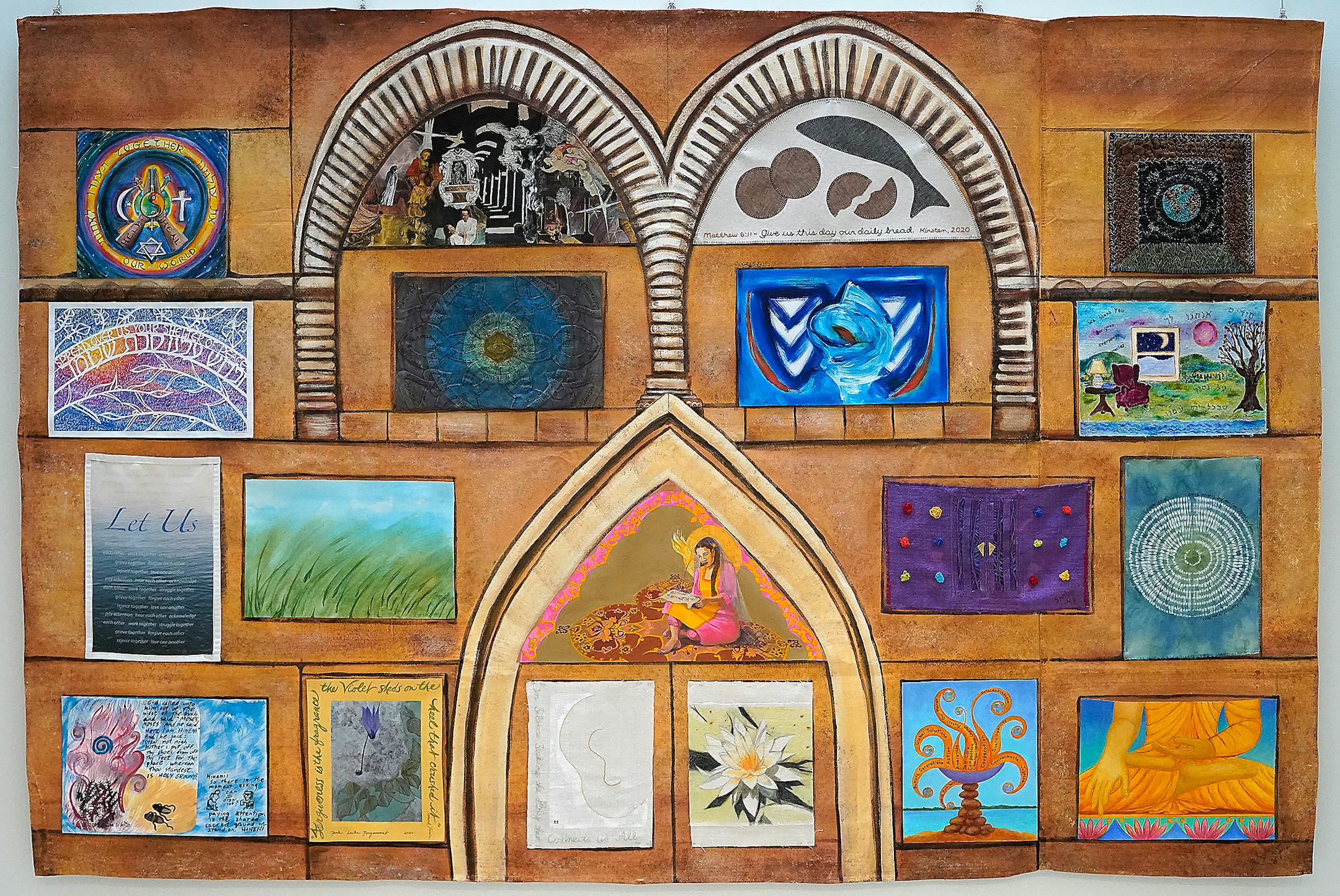
"Keep the faith" is a comment that someone who hasn't experienced an "out of order" death might say ("To keep going, keep the faith," Opinion Exchange, July 15). Our 33-year-old son died last August, and the word "faith" has become a trigger. I no longer have faith that something bad won't happen to me. Our family was just unlucky, and those whose lives haven't been touched by tragedy are simply lucky. Faith can assure us that there is something beyond life on this earth, but it doesn't protect us from the pain of grief. And Thursday's editorial on the random rage on our highways ("Don't get used to a world of random rage") says there is nothing we can do to make ourselves truly safe.
All the faith in the world doesn't give us immunity from sorrow, illness and being in the wrong place at the wrong time.
Rebecca Fredrickson, Burnsville
•••
This could be one for the etymologists and linguists, but Sharon E. Carlson seems to be conflating faith and trust. Though each of these words can have multiple meanings in different applications, faith is usually defined as a belief without evidence. Faith in any particular deity comes from within, not from any external evidence. Trust requires evidence to make someone or something trustworthy to any degree. The only way we get through this life is with constant small steps of trust. Every time while driving down the freeway, I have trust that I won't get into a crash. That is: trust in my own practiced and proven driving skills, trust in my well-maintained car, trust in the demonstrated effectiveness of highway engineering, and trust in the demonstrated high probabilities that the vast majority of my fellow drivers are similarly careful and in reliable cars.
There is no "secular faith." You can't make your religious beliefs more justifiable or true by applying the concept of faith to everyday life.
Faith does not play an enormous, or any, role in our lives for many of us. We prepare and plan and then can comfortably trust that we've increased the probabilities in our favor. For many, their religious faith can provide additional inspiration and encouragement, and that's fine. But succeeding in life requires constant preparation and study to develop trust in your abilities and a keen understanding of the environment you have to deal with, not faith.
Dennis Fazio, Minneapolis


