

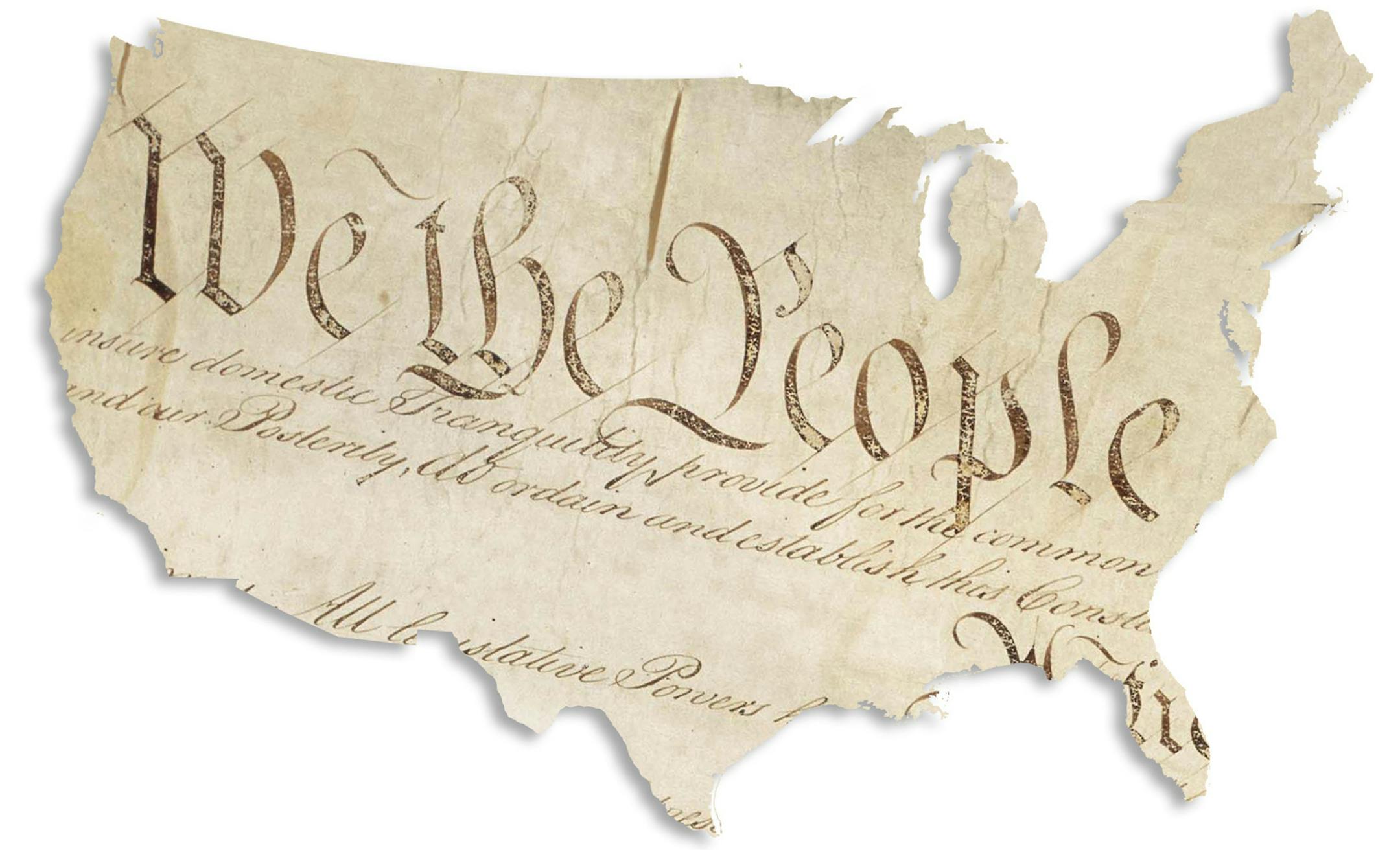
A recent letter writer blasted the concept of rewriting the U.S. Constitution, as proposed in a June 17 commentary ("If we were willing to redraft …"), since the originators were, basically, beyond reproach. When visiting the Jefferson Memorial in Washington, D.C., a few years back, I remember this statement emblazoned on the southeast portico. Thomas Jefferson, arguably the most intellectually gifted of those founders, writes in a letter to a friend:
"I am not an advocate for frequent changes in laws and constitutions, but laws and institutions must go hand in hand with the progress of the human mind. As that becomes more developed, more enlightened, as new discoveries are made, new truths discovered and manners and opinions change, with the change of circumstances, institutions must advance also to keep pace with the times. We might as well require a man to wear still the coat which fitted him when a boy as a civilized society to remain ever under the regimen of their barbarous ancestors."
I think it's time we visit the tailor shop.
Michael Ireland, St. Paul
CIVIL DISOBEDIENCE
What House Democrats did? That's not it. Here's why:
The tantrums by the Democrats in Congress last week have somehow drawn the label civil disobedience. That is the latest affront to the concept masterfully orchestrated by the Rev. Martin Luther King Jr. True civil disobedience involves the following: (1) Laws that specifically affect a particular group defined by an ascriptive characteristic (e.g. race, sex); (2) The group in question has no political ability to change the law because it is excluded from the political process (not just outnumbered — excluded); (3) Members of the group openly disobey the law in question as a means of bringing attention to the unjust law; (4) the disobedient accept the punishment to further emphasize the injustice.
Whether it is the House of Representatives, Black Lives Matter or any other organization that seeks to impose its opinions on others, we should not denigrate the concept of civil disobedience as a term to apply whenever somebody wants to break the law or refuse to follow the rules in aid of a cause. King garnered a lot of sympathy for his position, but the current iteration of civil disobedience seems to be having the opposite effect.
Bob Gust, Bloomington
DISABILITIES
'Me Before You' film has it all mixed up on medical aid in dying
Disability activists are rightly protesting the film "Me Before You," which suggests that life as a quadriplegic is not worth living ("How 'Me Before You' gets the message all wrong," June 21). This plot reinforces clichés about living with a disability. It also may cause confusion about the difference between euthanasia and the practice of medical aid in dying.
Euthanasia, in which a doctor injects a lethal medication, is illegal in every state in the U.S. and bears no resemblance to medical aid in dying. The character Will Traynor in "Me Before You" could not qualify for medical aid in dying in this country. Medical aid in dying is reserved for adults of sound mind who are suffering at the very end of life and who wish to shorten, rather than prolong, the dying process. They do not want to die. They are dying.
With increased public attention on legislation to authorize medical aid in dying, it is important to clarify that having limited physical mobility, being dependent on others, advanced age or requiring daily care do not qualify a person for medical aid in dying. Nor do depression or mental illness. In fact, mental incapacity disqualifies a person from accessing aid in dying.


