

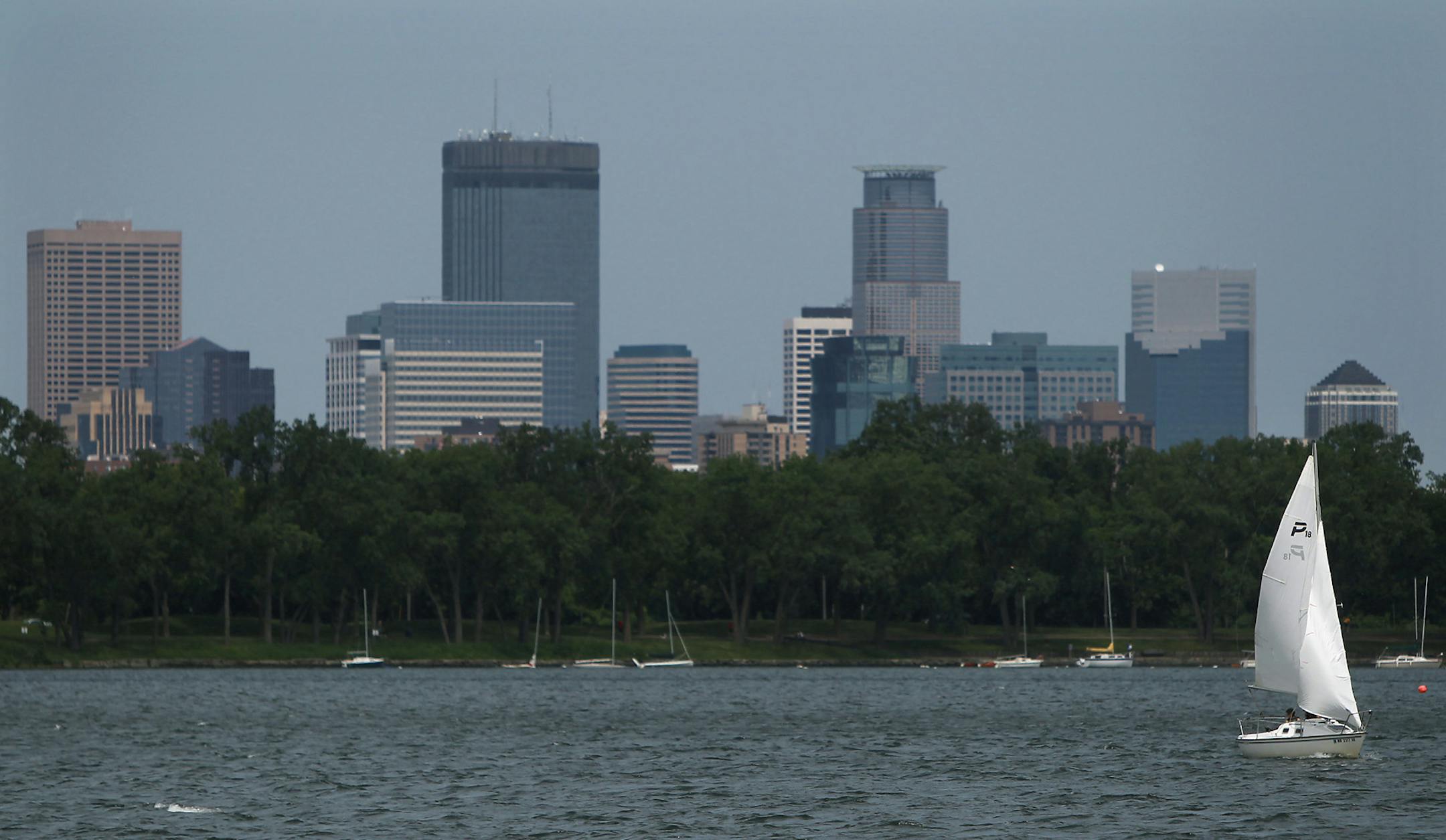
After reading "Why Confederate flag still flies high" (June 21), it's easy to assume the righteous position that those South Carolinians should remove their symbol of white supremacy. But perhaps we Minnesotans can look in our own back yard and deal with our own mess before preaching to others. The name of Lake Calhoun honors a white supremacist who was the chief defender of slavery in the decades leading up to the Civil War. Changing its name would be an important statement that we are building a more inclusive legacy for our children. And there will never be a better time to do it than this year, the 150th anniversary of Lincoln's "With malice toward none, with charity for all, let us strive on to bind up the nation's wounds, to do all which may achieve and cherish a just and lasting peace among ourselves." One possibility for a new name would be Lake Makaska, similar to the original Lakota name.
Ray Dillon, Minneapolis
• • •
I'm befuddled but not surprised to see that the annual effort to rename Lake Calhoun continues. The lack of relevance to other timely, significant problems facing Minneapolis aside, we move along a slippery slope, one filled with agenda and emotion too common these days. John C. Calhoun is quickly portrayed as "racist" by any renaming proponent, an easy and flippant comment; but if we must participate in such an analysis, how much do we know about Calhoun?
The South Carolinian rose from little education to graduate with honors from Yale; he was a very complex intellectual who switched policy views often over time, and remains one of the most influential senators in history. Certainly he was wrong on slavery, but his views on government, trade, opposition to tyranny and war with Mexico should please both sides of today's political spectrum. Like Jefferson, Jackson and Washington, Calhoun died before the Civil War commenced, so we have no idea where he'd stand on secession. All else is speculation. And "activists" looking to call names and rename a Minnesota lake two centuries later are purely playing games.
A.J. Kaufman, St. Cloud
CHARLESTON SHOOTINGS
The value of forgiveness; the danger of granting it too soon
The massacre that occurred this past week in Charleston, S.C., could have been the spark that lit a powder keg of pent-up frustration. Instead, it had just the opposite effect. Rather than the fearful response that the NRA provided to school shootings — more armed guards for school doors — church members across the nation are promoting a response of forgiveness, while encouraging more action to promote racial justice and understanding. As the pastor at our church on Sunday observed: "Fear escalates to violence, while faith escalates to love."
Daniel Johnson, Crystal
• • •
I am stunned by the horrific killings in Charleston. I am also unable to understand the immediate forgiveness of the accused by relatives of those murdered.
I see forgiveness as a process, not an immediate retort, unless someone steps on my toe in an elevator and the pain continues for less than a moment.


