

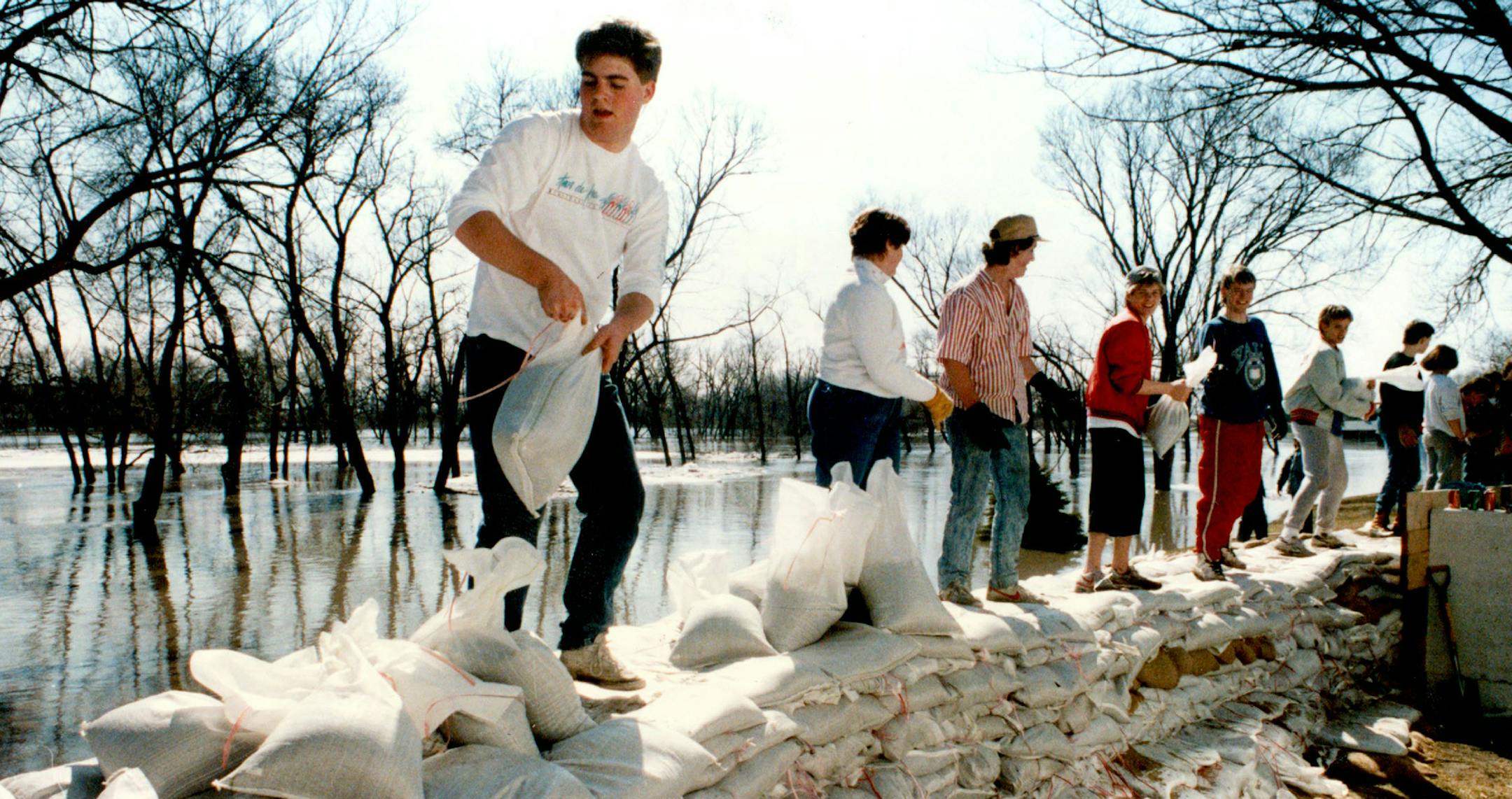
The Red River has been flooding during many springs in the area now occupied by Fargo since the end of the last ice age. When white settlers arrived in the area, some of them chose to build on the flood plain.
Their homes and businesses were repeatedly flooded, but they continued to expand onto the flood plain anyway, heroically sandbagging and defying the river. Now Minnesotans are being asked approve a project to divert much of the river around Fargo. ("Red River diversion moves to permit phase," June 30). The project would cost Minnesota $100 million directly, plus our share of $2 billion in federal funds. Since Minnesota's population is much larger than North Dakota's, we would pay a much higher portion of the federal money. In addition, about 2,000 acres of prime Minnesota farmland would be flooded.
What am I missing here? Why would Minnesota ever approve such a project? These people built on the flood plain in defiance of nature and logic. We should oppose this project with all of the political resources we have.
Jeffrey Loesch, Minneapolis
• • •
As government gets ready to spend apparently billions of taxpayer dollars to save some lucky people from the devastation of the now-common floods and at the same time start flooding some new homes and property not currently being flooded, it's easy to understand the controversy. Clearly they have no easy solution. But with all I have read about this, I don't understand why no one is talking about the real issue.
We have drained well more than 90 percent of western Minnesota's wetlands over the decades. Yes, more than 90 percent. If we still had those wetlands, how much of this floodwater would never end up in the Red River? At the same time, today — yes, today — we are tiling and ditching farmland just helping get the water to the river even faster than ever. In the last decade there has been more of this done than in the previous two to three decades combined. I know, I am out there every other weekend.
As a taxpayer, I hope government does a better job with our money than was done in the Devils Lake area during the last several decades, where one wrong decision was followed by another, each costing us millions/billions.
John Zeglin, Delano
GMOS
A regressive U.S. Senate is poised to diminish labeling
Once again, the U.S. Senate will soon consider legislation to prevent us from knowing if foods contain genetically engineered ingredients, or GMOs. The bill under consideration first would overturn Vermont's mandatory GMO labeling law, which took effect Friday. Then, after two years, it would replace GMO labeling with QR codes, obscure symbols and 1-800 numbers, all controlled by the food manufacturers who oppose mandatory labeling.


