

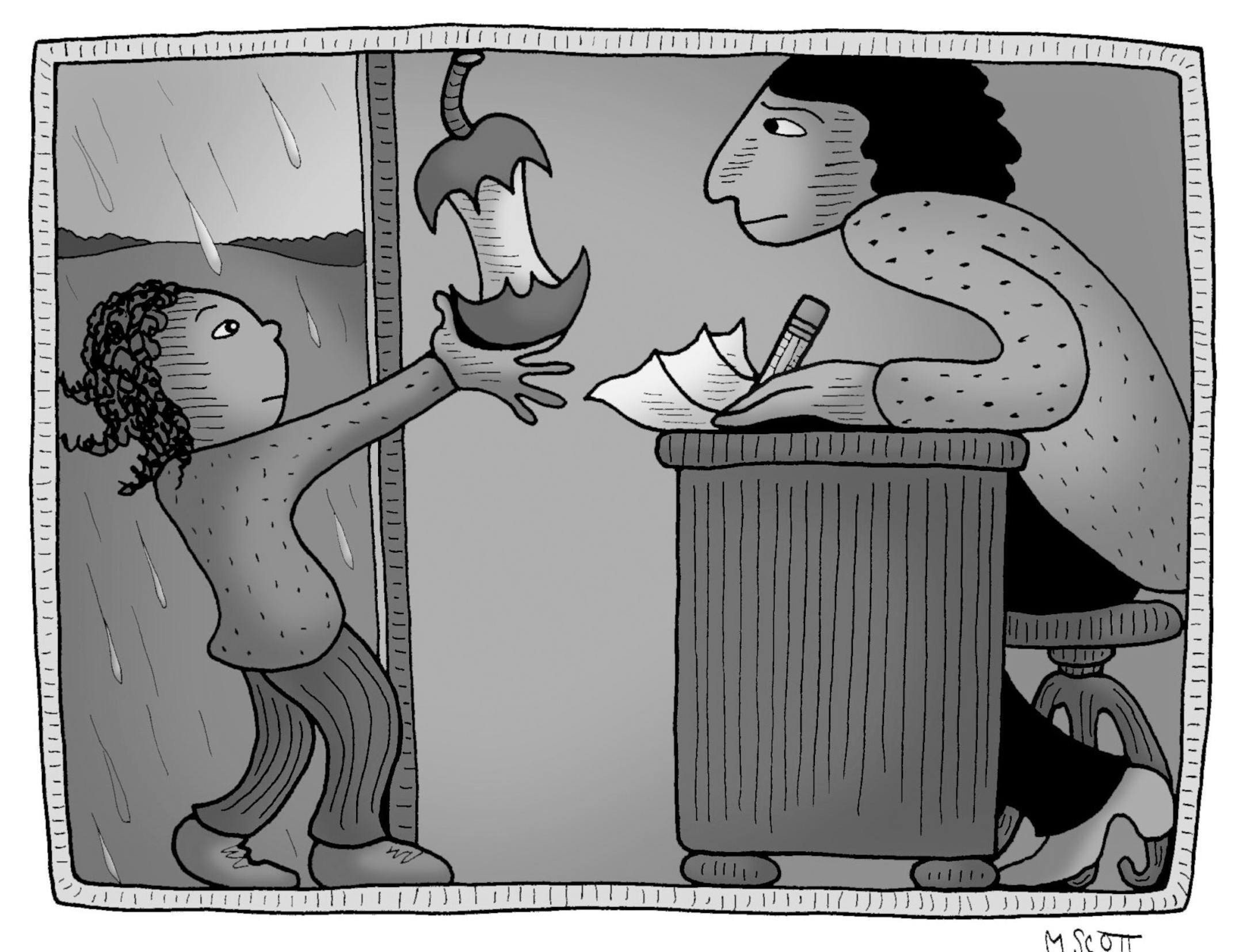
The editorial headline " 'Effective' teachers for all? Yes, please" (July 22) shares much in common with the equally unreasonable title "No Child Left Behind." The latter left much behind — struggling students and the schools punished with a system of "make or break" testing.
Neither will all teachers everywhere be effective. But the next phase of myopic federal reform has an impressive army of teachers marching to struggling schools in poor neighborhoods.
What's wrong with that? First, sending a "great" teacher from a great school, but who is untested in a struggling school, is risky business. As education researchers might suggest, better to pilot a program before sending thousands of incentivized teachers to flop and flee in the toughest schools.
Second, any forced transfers of "great teachers" to tough schools will add to high levels of teacher attrition. The current professional burnout rate is three to five years. Even with a $10,000-a-year honorarium to sweeten the transfer process (totally justified), many would consider this hazard pay at best.
Third, the great teachers might already be there, the ones who academically were not the original stars of the classroom, but who remain dedicated to these tough neighborhoods. They are invaluable (and unquantifiable) among the dadless, neglected children.
There will always be room for classroom improvement, but let's continue to build from the inside, with ample economic and tactical support for education's most dedicated (and underserved) teachers.
Steve Watson, Minneapolis
MIDEAST CONFLICT
Our experience there was persuasive enough
My husband and I lived in the Middle East, he for 11 years and I for seven and a half. While there, we met families and individuals who were personally affected by the Palestinian-Israeli conflict (" 'Other side' of Gaza story is not convincing," Readers Write, July 23). Later we were privileged to visit Israel, where we lived in Bethlehem with Palestinian people, visiting in homes and rehabilitation facilities, experiencing life as they lived it.
Traveling to Jerusalem, we shared space in public cars, from which we observed the humiliation of the Palestinian people at border crossings. In Jerusalem, we observed lines of Palestinian men who were waiting for work, hoping to be hired. These men were under the surveillance of Israeli personnel. I observed a young Israeli soldier taunt an older Palestinian woman at a water fountain. (He stopped when confronted.)


