

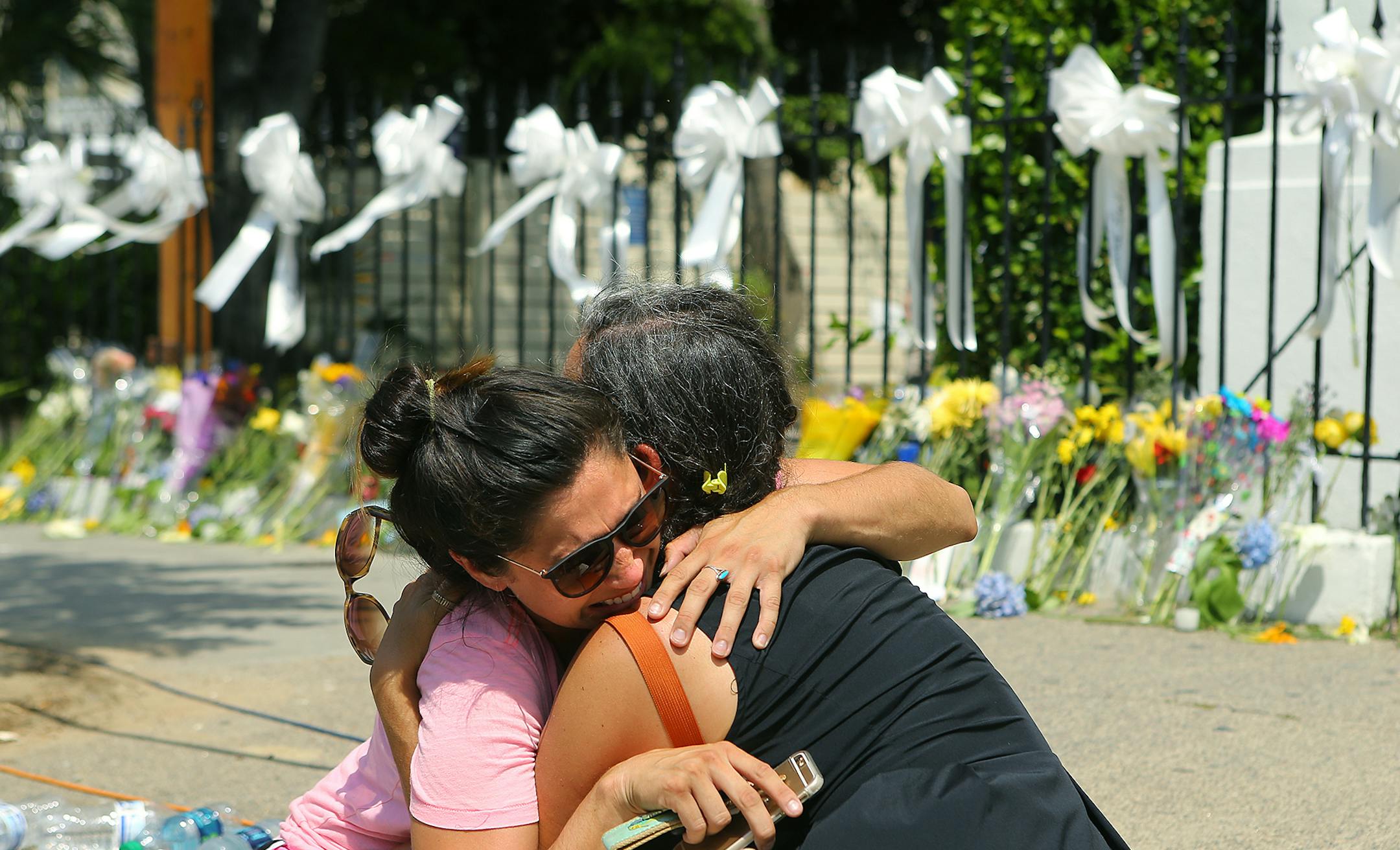
This year, as we celebrate our country's independence, let's remember the nine people who died in Charleston, S.C. And let's begin to heal the wound that began way before 1776 — the wound of racism.
I am a white person who is both proud and ashamed of my country. Proud because we are freer here than in many places in the world. We continue to make progress in humans right and justice, as witnessed by the Supreme Court rulings last week on marriage equality and health care accessibility. We seem to be opening our eyes to the truth with Pope Francis' new encyclical about the immediate dangers of climate change and world poverty.
And yet I am deeply ashamed because the killings in Charleston have shined one more ugly light on the depth of racism in my country, 150 years after the Emancipation Proclamation and 50 years since Selma. I am hoping that this monumental tragedy will bring, finally, national dialogue, apology and a process of reconciliation.
In Australia, every May 26 since 1998, they commemorate National Sorry Day, a popular movement expressing unreserved apology for the history of forced removal of aboriginal people from their families.
We need that here, and more. The U.S. has never apologized for slavery, Jim Crow, stolen lands, Indian schools, and all of the prejudice and white terrorism that continues to this day. It is a national wound that festers and kills. And it won't go away until we deal with it. Let's start with a National Sorry Day. I am deeply sorry – and I ask other white people to join me.
Nancy Kent, Minneapolis
SEX OFFENDER POLICIES
We're not getting the answers we need from leaders, media
Neither in Don Betzold's July 1 commentary ("What the Minnesota Sex Offender Program was meant to be") nor in any other article about this topic have I seen any reference to what other states are doing with this conundrum. Minnesota is an outlier, according to many reports, so how do others handle this problem? Neither reporters nor opinion writers have covered this.
Elected officials are reluctant to touch this tar baby, for fear of getting permanently stuck and politically disabled by it. But they are elected to solve such problems, and so they must, regardless of the risk to their own careers. To let humans languish in prison who no longer need to remain there, simply because of political cowardice, is malfeasance, misfeasance and nonfeasance, wrapped up in a big, ugly package.
Mary McLeod, St. Paul
U.S. SUPREME COURT
Scalia's style is memorable; letter writer's gripe is not
A July 1 letter writer took issue with U.S. Supreme Court Justice Antonin Scalia's dissent on the Affordable Care Act decision for its "reckless, frivolous language" that would shock future generations. Scalia has always written in a blunt, colorful style, receiving praise over the years for the accessibility and entertaining nature of his prose. Naturally, this style tends to grate on those who disagree with his arguments, but instead of critiquing Scalia's arguments and their merits, the letter writer simply opted to insult Scalia. This is a classic case of attacking the messenger and not the message; that is to say, being reckless and frivolous with one's expression.


