

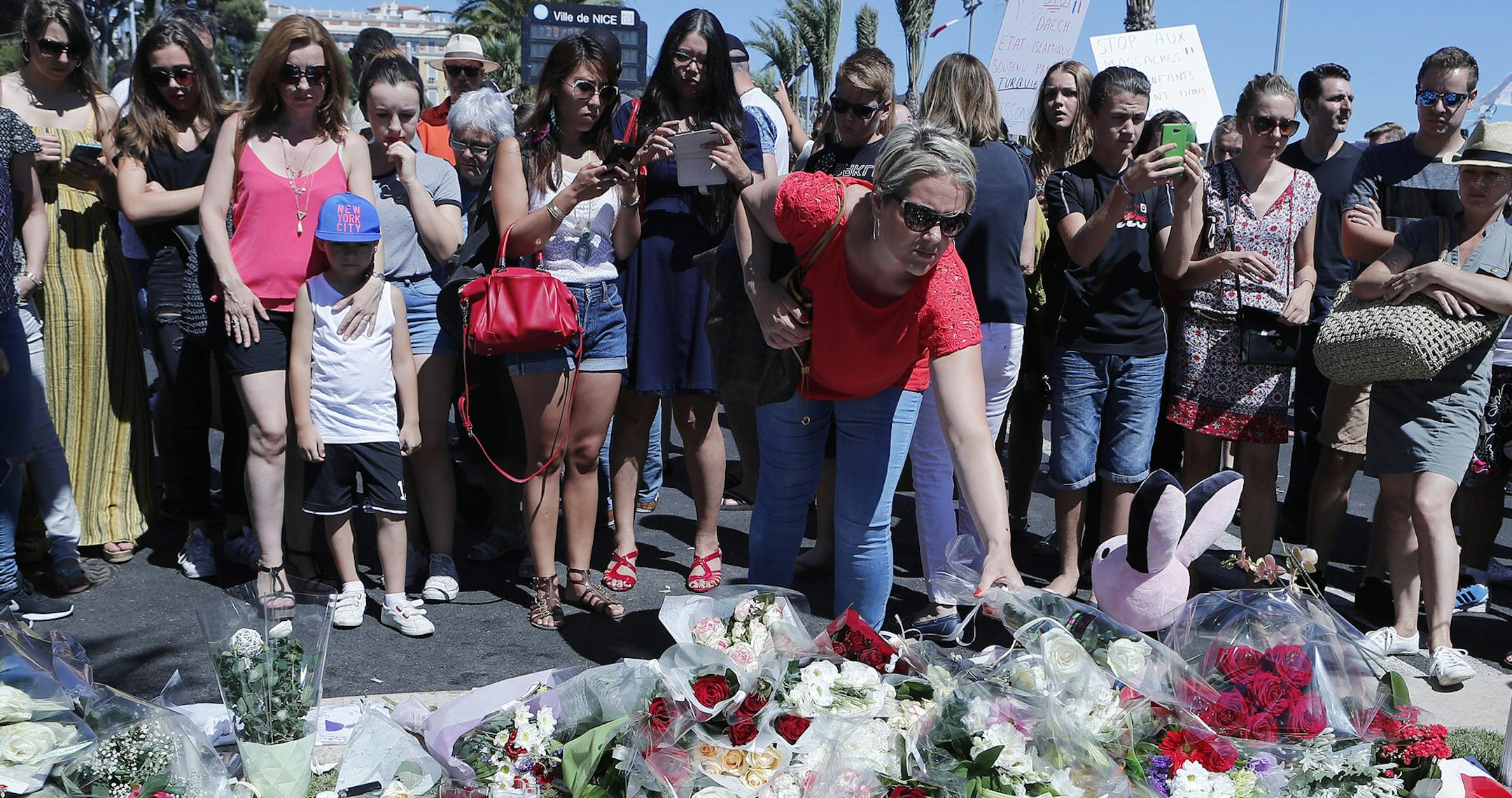
Studies show that you should change your alarm every few months so that you don't get accustomed to the sound. The sound becomes routine in our minds. The world has been waking up to the same alarm clock of sirens and the softened tones of news reporters for the past five months. I thought the only morning that sound would be pulling me from dreams to reality would be the early morning I was riding the metro in Brussels. It was not the constant buzz of sirens but the constant news notifications that opened my eyes. I was just a college kid living in a dream state for a semester abroad until the pinching hurt too much. But the world is not feeling that pinch. There has been a heavy handful of attacks that share the same sounds of sirens and tones, so the question becomes: Has the world let the constant buzz become routine? Is the world accustomed to that sound? While it might not be a dream state, the world is still sleeping through the alarm clocks that are trying to wake us up. There are hundreds of people who will not even be able to set their alarms, all because the rest of us closed our eyes to reality. The fact that Thursday's attack in Nice, France, can even be reported as trailing the wake of another set of attacks is a nightmare. The world needs to stop hitting the snooze button and change its alarm for tomorrow.
Nicole Guetzke, Eden Prairie
• • •
It wasn't a bomb in Nice. It wasn't an assault rifle. It was just a plain, white truck. When an individual with a misguided agenda or a history of mental illness decides to take the life of a fellow human, he or she will find a way. And, no, it wasn't even an assault truck. Trucks don't kill people. People kill people.
Mark Anderson, Minneapolis
RACE AND JUSTICE
Our condolences to families of those slain, and our appeal
We, the members of the Omicron Boulé of Sigma Pi Phi Fraternity, offer our condolences to the Philando Castile and Alton Sterling families on the untimely deaths of their loved ones, Philando and Alton, and to the families of the five police officers killed last week in Dallas. We are outraged, horrified and saddened by the tragic killings of two more African-American men at the hands of law enforcement officers. We are also similarly aggrieved by the actions of the gunman in Dallas. These senseless killings must stop.
We add our voices to those demanding change and a critical examination of the current state of our criminal-justice system, most notably, the circumstances and conditions that contribute to the disturbing and increasing frequency with which the lives of African-American men are interrupted as a result of encounters with law enforcement. We call for our national and local leaders to advocate for and secure meaningful reforms that restore the sanctity of all lives and that hold accountable those — especially those entrusted with the responsibility of protecting and serving — who act with a biased indifference against the welfare of any member of our community. These reforms must go beyond the surface and address the underlying root causes of the issues that disproportionately impact communities of color, namely, those of concentrated poverty, under-resourced schools and inadequate economic opportunities.
We stand ready to engage with all who share a vision for a better tomorrow. It is our belief that real change can only occur as a result of constructive dialogue and a commitment to listening and learning from our many perspectives regarding how to best realize that vision.
This letter was signed by the executive committee (listed below) of the Omicron Boulé of Sigma Pi Phi Fraternity on behalf of the 50 members: Calvin U. Allen, Edina; Alfred Babington-Johnson, Minneapolis; Kenneth Charles, Golden Valley; Walter T. Chesley, Eden Prairie; Woodson Fountain, Edina; Carson Funderburk, Plymouth; Jerome Hamilton, Woodbury; Ronald James, Plymouth; Leo Lewis Jr., Eden Prairie; Cornell Leverette Moore, Edina; Bryan K. Phillips, Minnetonka, and David B. Washington, St. Paul. The Sigma Pi Phi Fraternity, founded in 1904, is the oldest Greek-letter organization composed primarily of African-American men. Its members are doctors, lawyers, businessmen, educators, scientists, community builders and other professionals.
COMMENTARIES ON RACE
Further responses to opinions on personal style, zoning history
In his July 14 commentary "We can't avoid talking about behavior," Richard Greelis argues that police officers are justified in assuming that black men "with the gangster look" are likely to be dangerous. He also says this look "is very easy for police to identify." As a millennial strongly influenced by hip-hop culture, I am bothered and unconvinced by the idea that it is easy for the police to identify those with said "gangster look" as people who are actually dangerous. Is this gangster look a black man wearing Jordans, saggy pants, jewelry and a flat-brimmed baseball hat? If so, it sounds strikingly similar to a typical hip-hop look. While the two may be similar in appearance, the difference between gangsterism and hip-hop culture is clear. Hip-hop dance parties began in Harlem as an alternative to gang activity, not an endorsement of it. As the culture has grown in popularity since then, all types of Americans have embraced it; black gangsters are but one of these types. Because of this, it is absolutely essential to recognize that gangster culture is a faction of hip-hop culture, not a synonym of it. If a police officer assumes any black man sporting the hip-hop look is sporting the gangster look, he is misunderstanding hip-hop culture and incorrectly equating it entirely with gang activity.


