

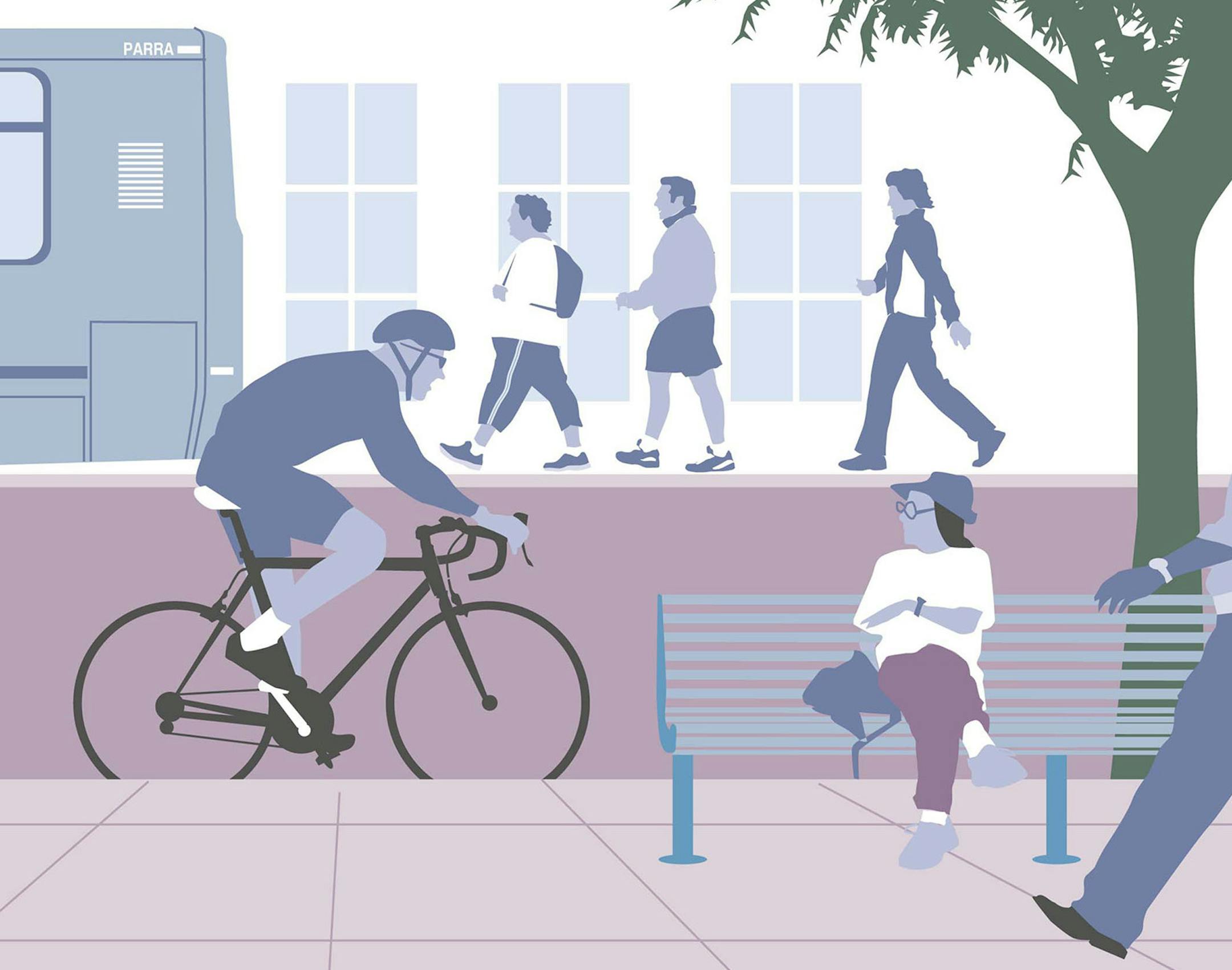
The Star Tribune's Jan. 11 editorial wisely points out the need to make significant long-term investments in the state's transportation infrastructure. What was missing was a reference to the need to also make similar investments in walking and bicycling infrastructure so that pedestrians and bicyclists and automobile drivers can coexist safely and efficiently.
I can tell you from experience in Rochester that Minnesotans are walking and biking more and that infrastructure dedicated to assuring their safety makes sense. Businesses, especially retail stores, have become significant beneficiaries of these bicycle and pedestrian routes, which is one of the reasons business and community leaders have championed their development.
If we are going to rebuild roads and bridges, it makes good economic and design sense to also create safer, more convenient and more economical pedestrian and bicycle routes at the same time. Dedicated funding for such infrastructure should be part of any transportation package the Legislature funds.
Ardell F. Brede, Rochester
The writer is Rochester's mayor.
AFFORDABLE HOUSING
There's more to it than mere guidelines
The Jan. 19 editorial recognized the real problem of concentration of poverty but missed the mark on solutions. Changing Metropolitan Council guidelines will not force suburbs to build affordable housing nor change the economics that constrain developers of affordable housing and the residents who will live in it.
If we want low-income households in the suburbs as they are now, we need to provide subsidized auto ownership as well as subsidized rent. We also need to make it safe for young men of color to go to suburban shopping malls without being victimized by the security apparatus that often focuses on skin color.
It is magical thinking to believe that dropping the requirement to build affordable housing near good public transit will somehow disperse poverty. The result will be less affordable housing overall and continued housing segregation. Getting rid of racial isolation and poverty will take major investments in equitable transportation systems, economic development and a whole lot of cultural progress in race relations. The Star Tribune Editorial Board is helping to distract us from the bigger issues by supporting Band-Aid solutions that will only make things worse.
Tim Mungavan, Minneapolis
CHILD PROTECTION
Access to records is key to accountability
Thank you to the Star Tribune for bringing the issue of child protection to the public ("Abuse shouldn't be kept under wraps," Jan. 18). There is little research on court proceedings related to maltreated children, so we don't know how well families are being served by the courts. My colleagues (Richard Gehrman, Jamie Lawler) and I conducted a study several years ago in which we coded publicly available CHIPS (Children in Need of Protection) cases of 88 families in Hennepin County and published two articles in peer-reviewed journals. We found (http://tinyurl.com/kym8cv8) that the court was complying with permanency deadlines, appointing guardians ad litem for the children and heeding their recommendations. However, a third of the children continued to be maltreated while under protective supervision of the court, and a third were still at risk at case dismissal. We also reported (http://tinyurl.com/pktfuc3) that caregiver compliance with case plans was often not recorded and that compliance seemed to be predicated more on attendance (e.g., going to parenting education sessions) than on actual change in behavior. These findings could not have come to light if records were inaccessible, and there is much more work to be done. We strongly believe that court records should be publicly accessible so that courts can be held accountable and maltreated children can be served better.


