

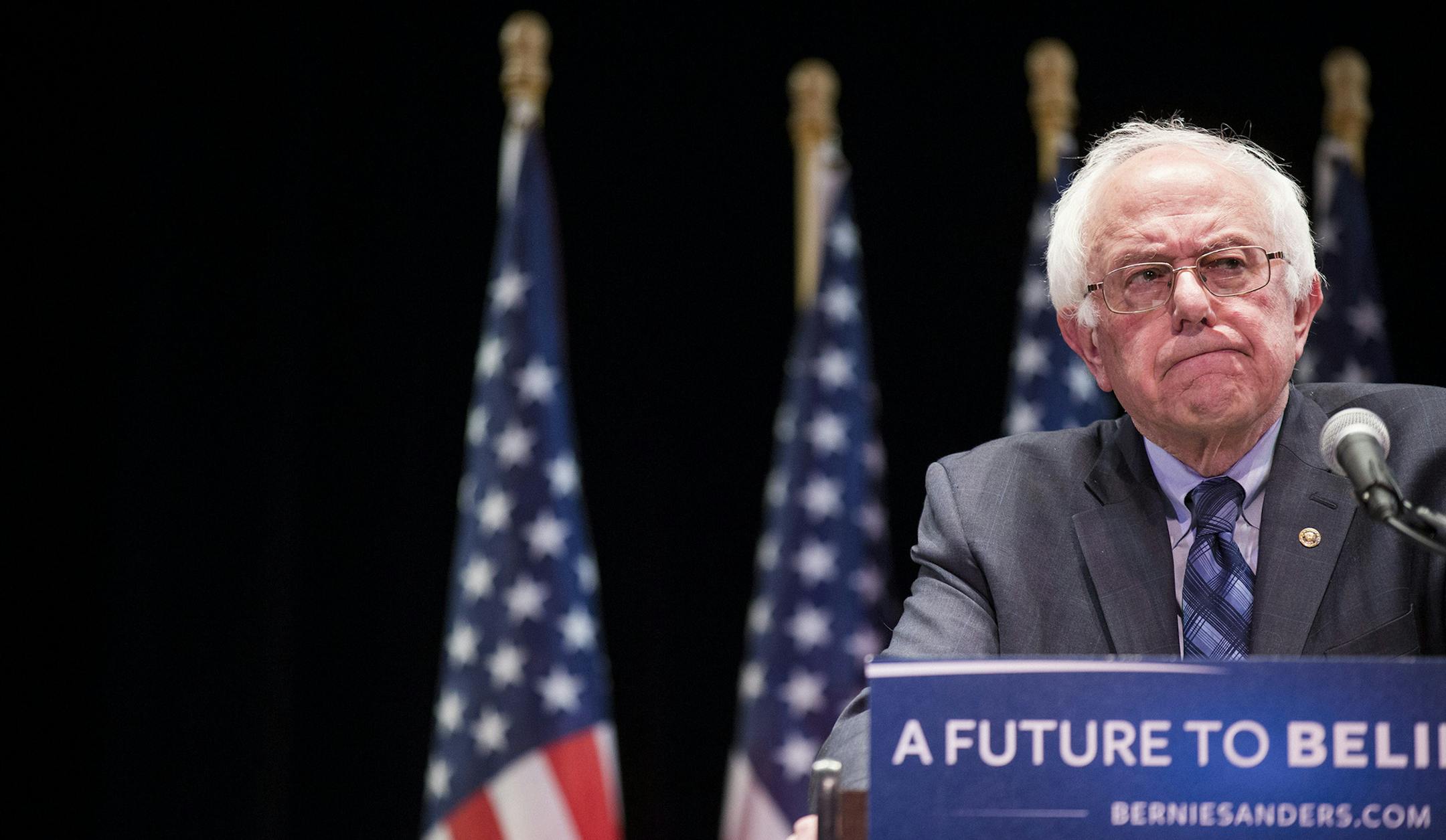
A writer suggests that Bernie Sanders' plan to tax Wall Street speculators will be difficult because it is impossible to determine what he actually means.
No, it isn't. Sanders is referring to a financial transaction tax (FTT). It simply means that a very small tax, something in the neighborhood of 1/2 percent or 1/10 percent be imposed on every stock transaction.
An FTT has numerous beneficial effects. One is that it would raise a large amount of money even though it is small because of the immense dollar volume of daily stock transactions. Another is that it would limit speculation. There are computer programs that automate buying and selling of stock in such a manner that a profit of 1/2 percent is worthwhile.
These transactions add nothing to the economy, and they would be discouraged by an FTT because of the small profit margins.
Meanwhile, an FTT would be virtually unnoticed by small investors who are buying stock for the long term. A $10,000 purchase might cost $10. To learn more, check out the website for the Center for Economic and Policy Research. A quote from that website:
The FTT is not a new idea. From 1914 to 1966, the U.S. levied a tax on stock issuances (0.1 percent in 1965) and transfers (0.04 percent). During the Great Depression, Congress more than doubled the tax to help financial recovery and job creation. Over 30 countries — including Australia, Hong Kong, Singapore, Switzerland and the U.K. — have some form of the FTT. Of the G20 nations, 16 have an FTT. There is a 0.5 percent tax imposed on each trade on the London Stock Exchange. In fact, the U.S. still has a very small FTT, which is used to finance the Securities and Exchange Commission.
David M. Perlman, New Hope
REPUBLICAN DEBATE
The night the candidates pulled the hate card
Well, we didn't learn anything new at Thursday's GOP presidential candidates' debate, but they certainly did affirm, in capital letters, that the only people they hate as much as Barack Obama and Hillary Clinton are each other.
They've pulled the hate card, they're flailing it wildly and it doesn't look as if they can let it go, even to debate substantively. As soon as an interesting point was made in debate, someone on that stage of enemies attacked the debater personally, promptly killing any chance of authentic deliberation.


