

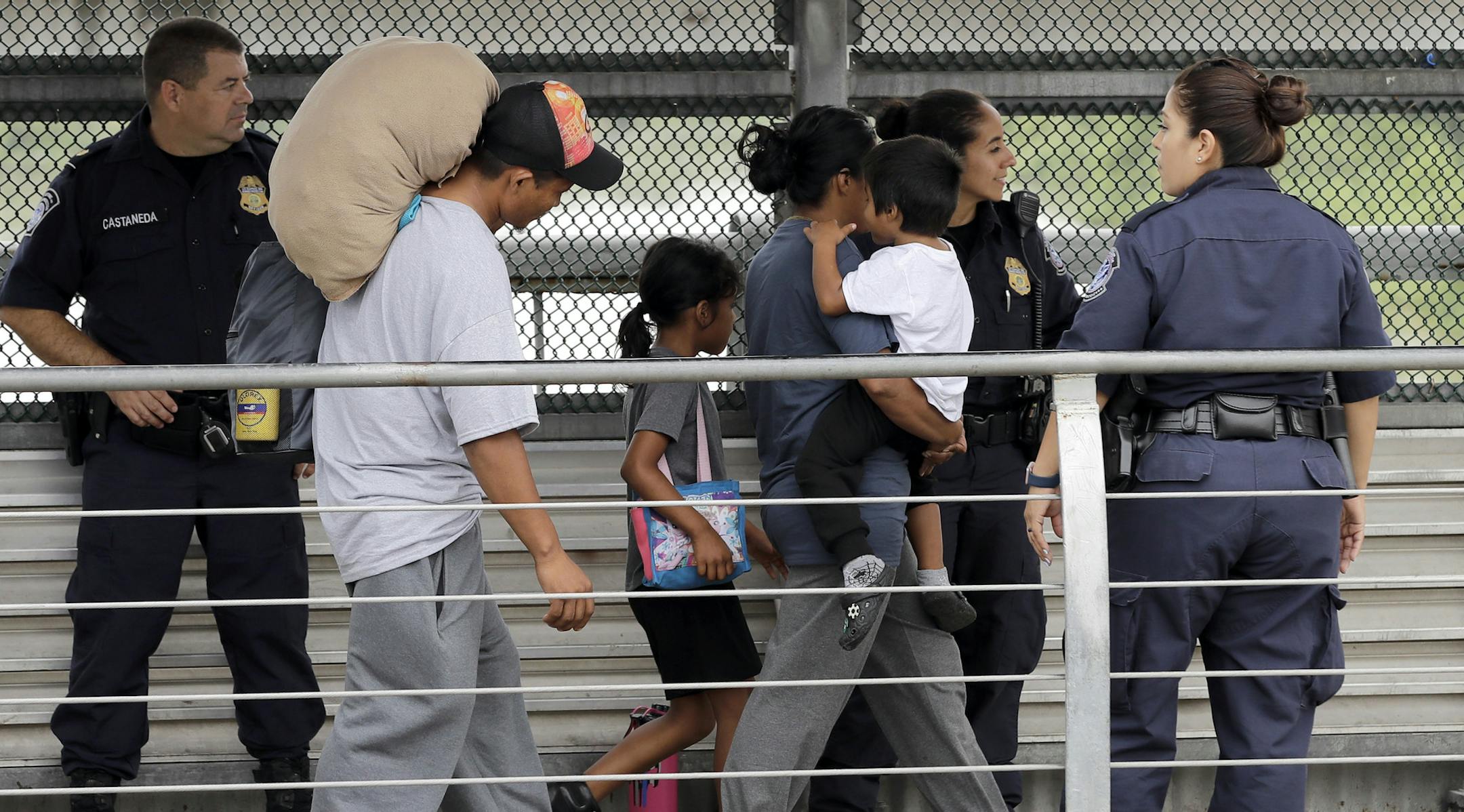
The refugee crisis is a tragedy of failing to invest in the capacity of other countries. People pour across America's borders seeking asylum from corrupt governments, violence in their neighborhood, and towns ruined in the wake of natural disasters. If we truly wish to help these people seeking aid, it is in everyone's best interest to invest more money in positive democratic development, where institutions have the power to enforce laws, and people have the ability to choose who creates those laws.
The U.S. Agency for International Development (USAID) and the State Department, the executor of the country's diplomatic and humanitarian missions, experienced a $17 million cut between 2017 and 2018. As the government continues to defund its diplomatic arm, humanitarian concerns grow more severe and widespread. This is the natural consequence of failing institutions in one part of the world receiving less and less support from prosperous countries in another part. We cannot expect people to try to stay in a place that threatens their family's livelihood. When we fail to invest in the governing, economic and development capacity of other countries, we fail to address the cause of America's current societal debate. We need U.S. Sens. Amy Klobuchar and Tina Smith and all of Minnesota's U.S. representatives to push for increased funding of diplomatic missions.
Thomas Crawford, Princeton, Minn.
• • •
How can we know what is required of the Justice Department (under its "zero tolerance" policy) as to applicable current law regarding treatment of minors detained at the border? The 23-page Flores settlement of 1997 (Flores vs. Reno, available online) provides such guidance. Under the settlement's legal requirements, it is the responsibility of the Immigration and Naturalization Service (INS) that:
1) Section V: All facilities must provide contact between minors and family members from whom they were separated. (It's unclear if this is being currently done.)
2). Section VII: All minors must be placed in "licensed" programs, such programs to provide not only specific care guidelines but also oversight. (It's of some concern that the June 20 executive order directs future placement facilities be constructed at federal Army bases, where "licensing" guidelines and their enforcement, now under state and local purview, would be optional).
3) Section X: "Up-to-date records of all minors" placed for more than 72 hours must be documented and retained. Statistical information gathering is required as to minors' placement, where and with whom — including transfer, removal and release. (It's unclear if this is presently being done.)
4). Section VI: Families must be reunified, and the INS must "make and record the prompt and continuous effort" toward that end. (It's unclear whether the INS has established an adequate record system — as noted above — documenting the whereabouts of minors, such that required reunification takes place.)


