

•••
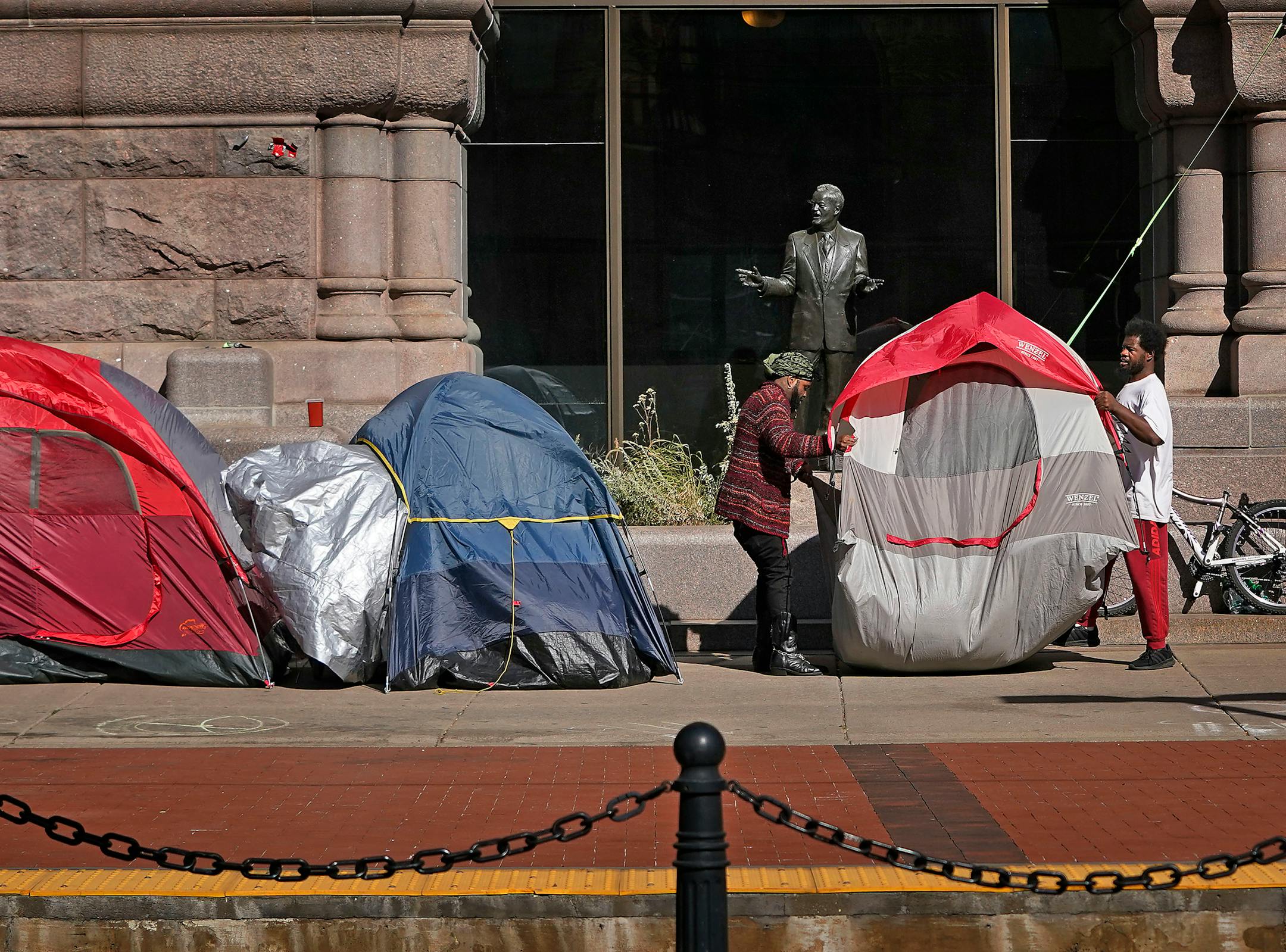
As someone who has had to deal with housing insecurity and homelessness for over a dozen years, I see very little broad and sustained success, at any government level, to substantially reduce the homelessness of the unhoused population of Hennepin County, let alone the state. Has the editorial writer of "Find safe alternatives for the homeless" (Oct. 14) questioned the politicians of our state at all levels to find out why, even though we have billions of dollars in budget surplus in our state, in addition to federal aid, we still have not made a substantial dent in reducing homelessness in Minnesota? Despite the fact that placing unhoused people temporarily into hotel/motel rooms until they've received permanent housing has proved successful here and elsewhere, Hennepin County abruptly shut down that solution last winter. Not only has the Centers for Disease Control and Prevention stated that homeless encampments should not be moved or broken up if residents have nowhere else to go, the Star Tribune has previously reported on numerous occasions that unhoused people prefer encampments or tents to the documented chaos of traditional congregate shelters.
Until editorial writers actually speak with the victims of the "homeless industrial complex," as we like to call it, they have no right to judge or presume they know what the unhoused population wants or needs from them.
Brian Gooley, Hennepin County
STREET FEES
How about a fair fix?
In many cities, property owners are assessed a fee when an adjacent road is repaired ("After pushback, some cities rethink street fees," Oct. 24). This can result in thousands of dollars in unexpected debt. It's unfair for several reasons, including the fact that most people who use the road are not the ones being assessed.
Alternatives, such as a yearly tax on all properties, based on their value, make for a more predictable financial situation. But this can be unfair to people who recently paid a large assessment. One way around this is to temporarily exempt from the new tax properties that have been recently assessed. It could work like this: For a period of 10 years after a property is assessed, it would be exempt from the new tax, but only up to the amount of the assessment.
So, if a property was assessed two years ago, it would be exempt from the new tax for the next eight years. A property assessed nine years ago would only be exempt for the next year.

