

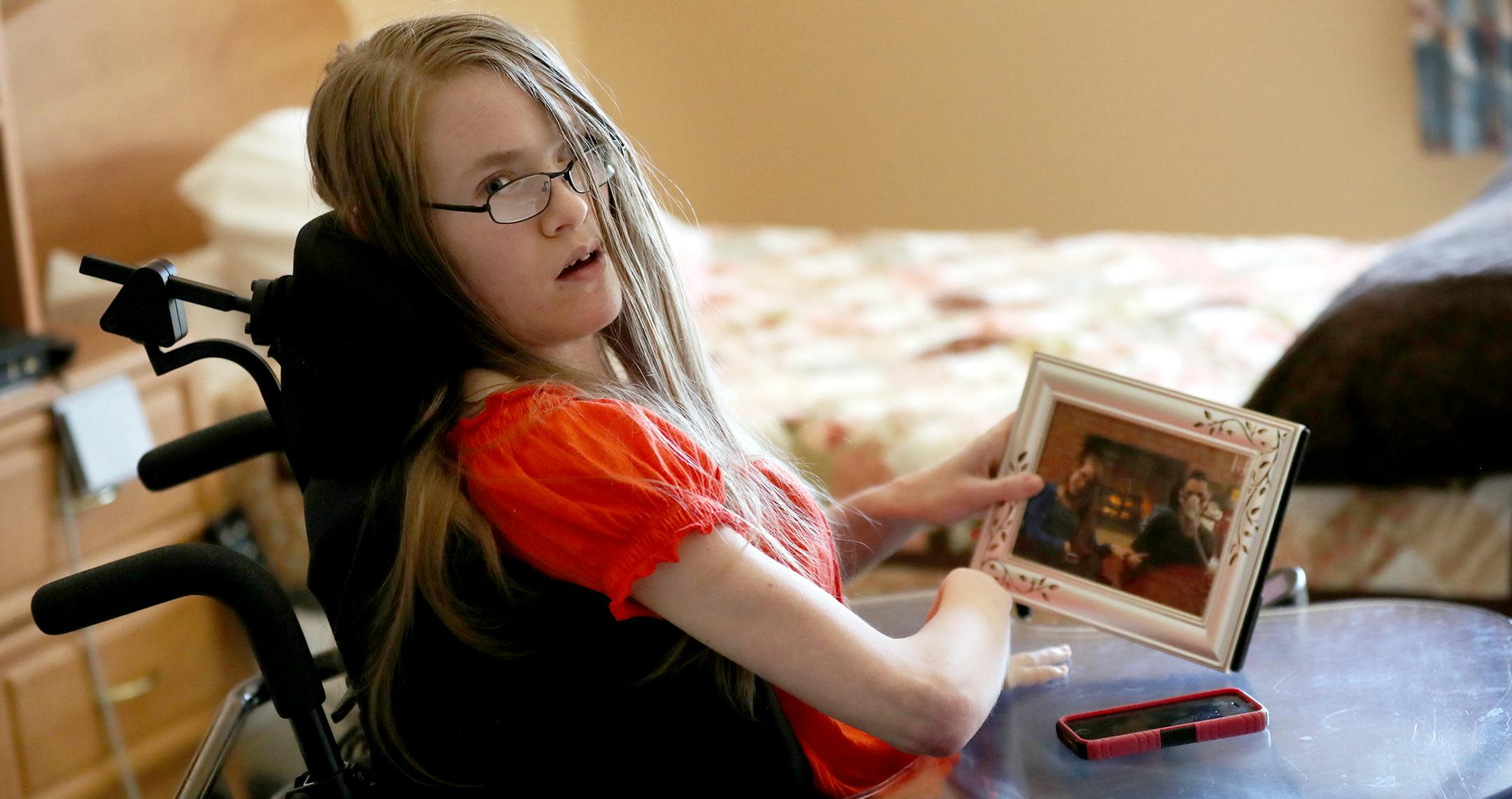
The May 6 article about young disabled people forced to live in nursing homes because of a shortage of home care services (" 'No place for someone my age' ") moved me to tears. Then I read two other articles: one about the shortage of workers in fast-food restaurants and one about shortages in garden businesses. I agree that increasing wages in all three fields would help to ease shortages. I also believe that employing immigrants who are willing to work here is a solution that is right in front of our noses. However, we recently have learned that Hondurans who were allowed to come here after Hurricane Mitch in 1999 must leave our country within 20 months. Immigrants from El Salvador, Haiti, Liberia and Nepal have been given similar warnings to leave the country or face deportation. Why in the world, when these hiring shortages exist, are we exposing our own disabled citizens to suffering and also thwarting entrepreneurs by deporting part of our workforce? Where is our common sense and compassion? This is an issue which ought to unite people across the political spectrum.
Martha Bordwell, Minneapolis
• • •
I read Chris Serres' article about the home care shortages with great dismay. I fear that the individuals featured in this story are signs that Minnesota is backpedaling on its commitment to include all people with disabilities as fully as possible in their communities.
As a parent of an adult son with lifelong disabilities, I and other families have spent much of our lives ensuring that our sons, daughters and other family members are not segregated from the rest of society — even when their needs for support are intensive. For several decades now, Minnesota's service system has moved in the direction of greater inclusion, more independence and fuller participation in the community — and have invested in paid staff to help make this happen.
Today my son, who has significant cognitive disabilities and communication challenges, lives in the community, is active during the day and is a happy man. This is due in part to the direct-care professionals who meet his needs around the clock.
I don't want our state to go back to the times when our children were isolated and restricted in where they lived and what they did each day. Serres' article reminds me that it's possible for the clock to be turned back.
Bette Rosse, Brooklyn Park
PRISONS AND SENTENCING
Commentary offered a needed explanation, left one point out
Finally! Someone willing to address the issue of sentencing guidelines in a mainstream news source ("How Minnesota's prison population got out of control," editorial counterpoint, May 6). The prison population crisis going on in Minnesota has little to do with crime rates (which are low) and more to do with irresponsible sentencing guidelines and ignorant assumptions about retribution trumping rehabilitation as a way to manage crime. At some point, we must ask ourselves what good is it doing to relegate people to cages and what outcome are we getting from the Department of Corrections with all the tax money pouring into this government agency? It must be monitored and held much more accountable.
I am disappointed at the lack of oversight of our prison system by our Legislature and the nerve the DOC has to continue to ask for more money year after year. The solution isn't more money; it is how to shed our prison population, because it is unnecessarily high. Dan Cain made all terrific points in his May 6 commentary, but one point he left out was how many third-party vendors (JPay, GTL, Aramark, 3M, the University of Minnesota, etc.) have invaded the prison industry and continue exploiting inmates, earning millions off their labor and their incarceration, which is another huge incentive to continue to keep more and more bodies relegated to cages.


