

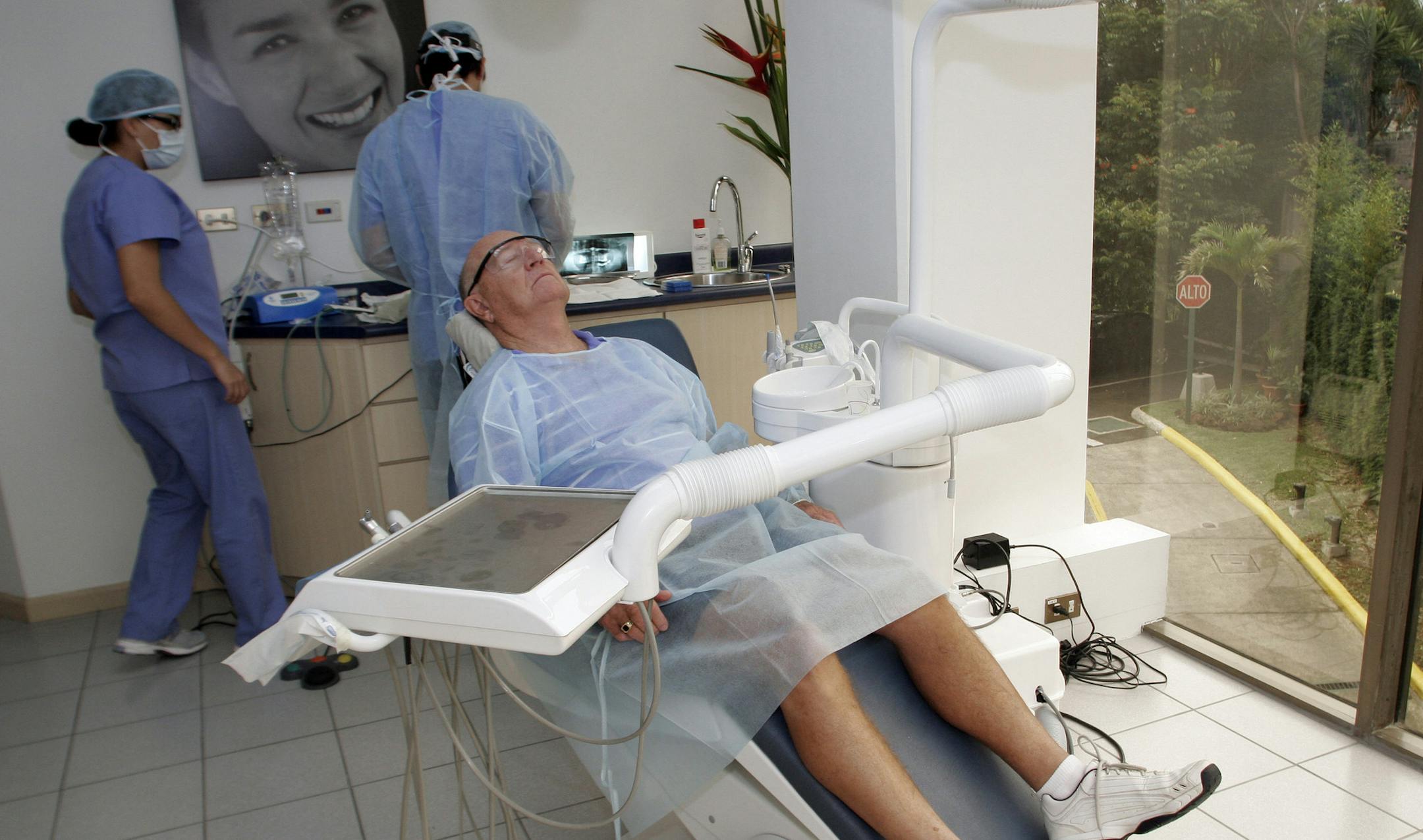
Health care is in the news again as the Trump administration moves to end the Affordable Care Act (Obamacare) once and for all ("Justice Dept. seeks total repeal of Affordable Care Act," March 26). The debates over this will surely include the usual allusions to the Canadian system as an example of everything to be avoided. But here's an interesting tidbit that might aid evaluation of such spurious claims — medical tourism. Medical tourists are folks going abroad for medical treatment. Most recent statistics I found hold that the U.S., with a population (2018 estimate) of 327.16 million, had 1.4 million medical tourists; i.e., Americans traveling abroad for health care. Canada's estimated 2018 population is 37.28 million, which should, if Canadians go abroad for health care in the same proportion as do Americans, result in 159,530 medical tourists. The actual number, however, was just 65,000. The American Journal of Medicine, January 2019, quoted the medical economist Uwe Reinhardt as stating that "medical tourism can do to the US health care system what the Japanese automotive industry did to American carmakers after the Japanese products developed a value for money and reliability reputation." That would be a banner day indeed.
Steven Boyer, St. Paul
REDISTRICTING
Minnesota can do the right thing, but legislators need to help
At 3:45 Tuesday morning, I joined a long line of citizens outside the U.S. Supreme Court, hoping to receive public tickets for oral arguments in two nationally publicized cases of partisan gerrymandering — by Democrats (Maryland) and by Republicans (North Carolina). A couple from Mankato arrived around 4:15 a.m. First in line was a savvy guy in a sleeping bag who had come at 9 the night before. He was guaranteed entry. We Minnesotans were not. Six cold and suspenseful hours later, at the very last moment, we were hustled inside, taken through security, issued strict instructions and silently ushered into the chambers.
Common Cause, a nonpartisan group, helped wage the fight for fair maps in both cases. The justices avidly questioned whether the egregiousness of the partisan gerrymandering warranted their intervention and, if so, how. We must now await their decision, helplessly.
We are not, however, helpless in the fight against partisan gerrymandering here in our own state. Common Cause Minnesota has proposed a bipartisan solution (SF 2575/HF 1605) to establish a redistricting advisory commission. Voters must weigh in to get the bill a hearing in the State Government Finance, Policy, and Elections Committee by this Friday's committee deadline — without it, the bill will die.
Minnesota has a long history of partisan gerrymandering favoring incumbents; our Supreme Court has repeatedly redrawn our maps, at great cost. SF 2575/HF 1605 was developed over two years, with statewide public input. Maps would be drawn in a transparent process by a commission of retired judges and a balanced number of citizens self-identified as DFL/Republican/Other or non-party-aligned; commissioners may not be lobbyists or current or former legislators. For the first time, we'd know how our voting maps were drawn.
Meanwhile, SF 2255 (author, Sen. Mary Kiffmeyer, committee chair) has been heard in the committee. This bill calls for a referendum to amend the Minnesota Constitution to create a redistricting commission comprised of four members appointed by Senate and House leadership; commissioners may be lobbyists or former legislators.
We should not risk inserting a hyperpartisan commission into our Constitution. Nor should we risk inaction. SF 2575/HF 1605 offers a fair alternative that would protect the 2021 redistricting cycle and road-test a process for any future constitutional amendment.
Deborah Zvosec, Minneapolis
TRUMP ADMINISTRATION
Mueller report, Barr summary, whatever. We still have Trumpism.
Since the release of the Barr letter summary (not the full Mueller report), President Donald Trump and his allies in Congress have been busy trying to make America great again.


