
Readers Write: Freedom of speech, Charlie Kirk, Minneapolis homelessness

Speech restrictions will come back to bite you.

The Minnesota Star Tribune
September 17, 2025 at 12:00AM
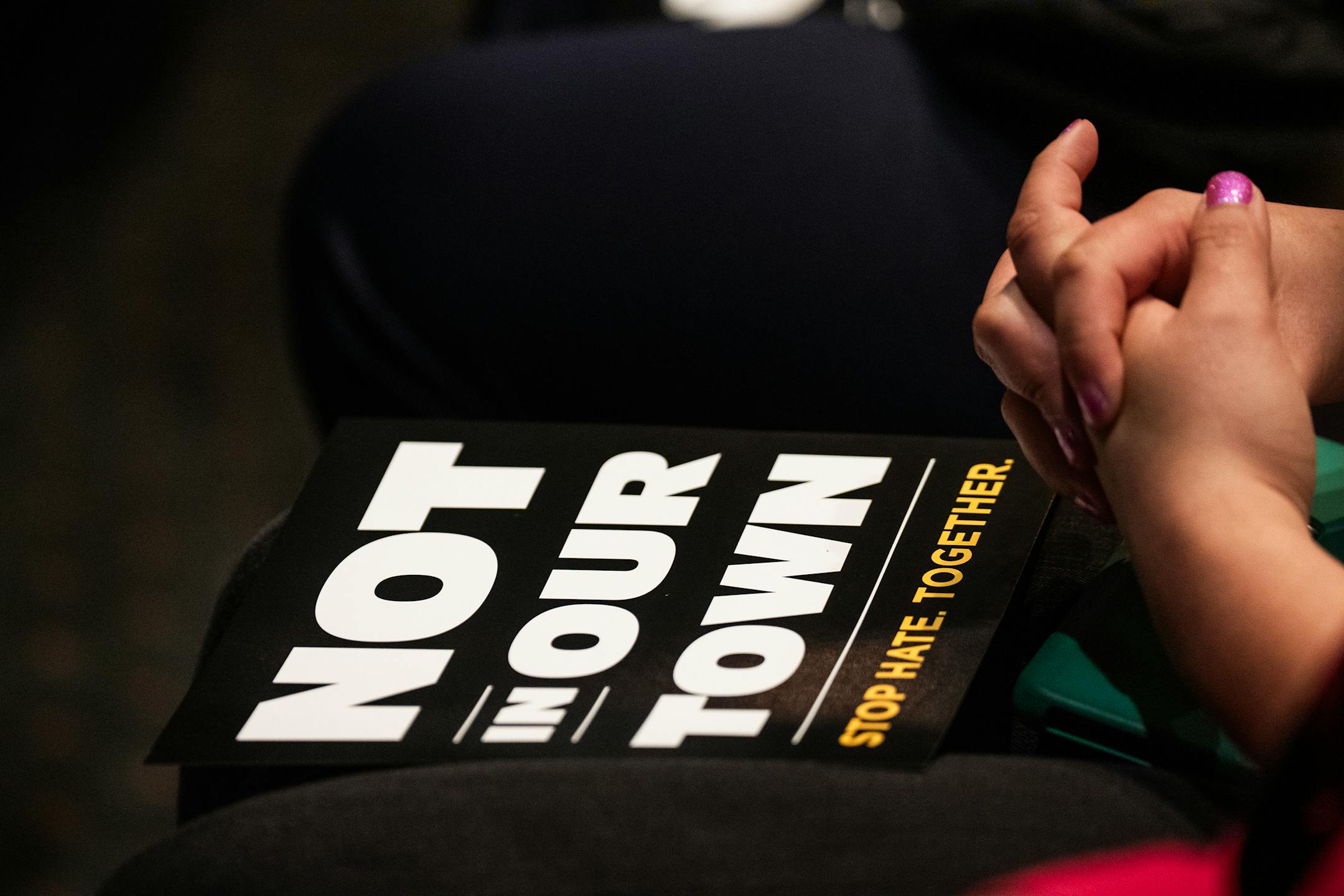
Signs were handed out at an event at the Rochester Civic Theatre on May 7 in response to a viral video of a Rochester woman, Shiloh Hendrix, using a racial slur against a young boy at a local park. Hendrix will be charged with three misdemeanor counts of disorderly conduct. (Richard Tsong-Taatarii/The Minnesota Star Tribune)

Opinion editor’s note: Strib Voices publishes letters from readers online and in print each day. To contribute, click here.

•••

So when, in response to Charlie Kirk’s assassination, the U.S. Department of Justice begins prosecuting liberals for “offensive … or abusive language that would reasonably tend to arouse alarm, anger, or resentment in others” (or for violating some similar, meaninglessly broad speech restriction), Myron Medcalf will no doubt applaud the DOJ as he does the Rochester city attorney (“Medcalf: Thanks, Rochester, for not playing the ‘Minnesota Nice’ game,“ StarTribune.com, Sept. 15). Because apparently we now look to politicians and bureaucrats to save us from mean people saying hateful things — via speech restrictions that attempt to dilute our constitutional rights.

Mr. Medcalf, the current administration is avidly working to weaken First Amendment protections, including yours as a journalist. Maybe we should be on the other side of that. All the way on the other side.

Jonathan Gelperin, St. Louis Park

CHARLIE KIRK

Freedom for me, not for thee

The assassination of Charlie Kirk forces us, once again, to reckon with the inherent tensions our way of government. Most of us recognize the evil of this incident — without attaching any secondary political agenda into the mix. But here we are, witnessing the outcry of those who preach “freedom of speech” — except when it’s speech that they abhor (“After Kirk’s killing, calls to ostracize, fire his critics,” Sept. 15). U.S. Sen. Katie Britt of Alabama is proposing punishment for those who exercise their free speech rights by criticizing Kirk’s free speech. Her diatribe also takes aim at those who compare President Donald Trump to Adolf Hitler. (Oops! Maybe Britt forgot that Vice President JD Vance once framed Trump as possibly America’s Hitler.)

So, high school kids, pay attention. The stuff you’re being taught in civics class is playing out in real time. Hopefully, you’ll learn that it isn’t always easy to support the freedoms that don’t jibe with your personal beliefs. Furthermore, the present challenge reveals a sad reality — that there are elected officials in high places who haven’t learned that lesson.

Richard Masur, Minneapolis

•••

It would seem that freedom of speech also died with Kirk. It is horrifying the number of people who are being criticized, threatened and even fired for doing as little as quote Kirk in his own words. Whether you loved or hated Kirk rested exclusively on the things he said. It seems highly hypocritical for his fans to deify him while finding his words inconvenient to that end. It is becoming frightening how often people are told to sit down and shut up. We have seen Trump do this on many occasions. It is unbecoming of a world leader. We are rapidly descending in this country to rule by fear and intimidation. Anger Trump and fear his retribution. Or as his MAGA followers warn, “mourn Kirk properly, or else.” Do divisive statements like this make violence more likely or less likely?

We live in too diverse a country to expect we can force people to live a specific way or think a specific way. Compromise cannot be a dirty world. You can have either a meaningful back-and-forth or you can have civil war. “My way or the highway” is a death sentence, not a governing paradigm. But the human race has always been committed to learning this the hard way.

Thomas Jesberg, East Bethel

•••

Regarding the article “After Kirk’s killing, calls to ostracize, fire his critics”: Does this make any sense at all? To support Kirk’s messaging as free speech, and then to criticize, or ostracize or even fire his critics for their disagreement of him and his messaging, and to not see it, too, as free speech? We do have political divisions, but let’s respond more heavily with reason rather than emotion.

Lynn Bollman, Minneapolis

•••

Influencers on the right are creating a legacy of a champion of respectful dialogue and free speech for Kirk, but that is not the truth about him. Even as he was on college campuses talking with students, he also targeted and attacked the free speech of college professors. When people protested his presence on campuses for his sexist, anti-LBGT and possibly racist views, he asserted he had free speech rights and he should be free to discuss and dialogue with attendees at his events.

Conveniently forgotten by right-wing influencers over building Kirk’s legacy as a champion for free speech is that Kirk, in 2016, launched a “Professor Watchlist,” a list of professors he claimed advanced leftist propaganda and discriminated against conservative students. Many on the list have received threatening messages, and many live in fear that they and their families will be attacked.

The claim that he was a pure champion of the democratic value of free speech and respectful dialogue is simply a distortion of how he should be remembered, considering his attacks on college professors. He insisted on his free speech rights when he went to college campuses, but he also maintained an ongoing assault on the free speech of college professors, listing them and thereby inviting terror attacks upon them and their families. He stood on the mantle of free speech for his “Prove Me Wrong” events, but he led an all-out assault to kick that same free speech mantle out from under well-educated college professors whose speech he didn’t approve of.

Paul Rozycki, Minneapolis

•••

Kirk wasn’t the president nor a member of Congress. He was assassinated by another individual, which certainly was horrible for his family. But proposing that he lie in honor at the Capitol and having moments of silence at professional athletic events seem a little overdone. I realize that he was a close friend of Trump but he held some controversial views that offended a good percentage of the population.

I also don’t understand why someone should be fired from their job just because they put something on social media that wasn’t complimentary to Kirk. Did we suddenly lose our First Amendment right to express our opinion? This entire situation has me baffled. Flying the flag at half staff for him but not for an assassinated Democratic speaker of the House in Minnesota is also confusing.

I would never condone the killing of another person, no matter what the situation. I’m simply confused about what has happened following the shooting of someone who holds no public office. Someone please explain.

John M. Schwanke, Cumberland, Wis.

MINNEAPOLIS HOMELESSNESS

City needs a new approach, new mayor

When Jacob Frey ran for Minneapolis mayor in 2017, a major claim of his campaign was that he would end homelessness in Minneapolis within five years. While he cannot be blamed for the effects of the COVID pandemic, it is fair to say he has failed miserably at this goal (“City begins clearing Minneapolis landlord’s homeless encampment hours after another mass shooting,” StarTribune.com, Sept. 16).

The response to this week’s mass shooting at an encampment highlights the lack of empathy, imagination and leadership that mark Frey’s tenure. His administration seems to only know how to pull two levers: eviction and fencing. It is reasonable to expect another four years to look like the last eight. The police will continue to play Whac-A-Mole chasing encampments around the city, destroying the possessions, legal documents and medications of our most vulnerable residents. Meanwhile more and more open public and private spaces will be fenced off or filled with concrete rubble, a concession of helplessness that makes our city uglier and less accessible.

Frey has failed, and it is time for an aggressive, housing-first approach that treats the unhoused as clients and a symptom of bigger problems, rather than as the problem themselves.

Fred Beukema, Minneapolis

about the writer

about the writer