

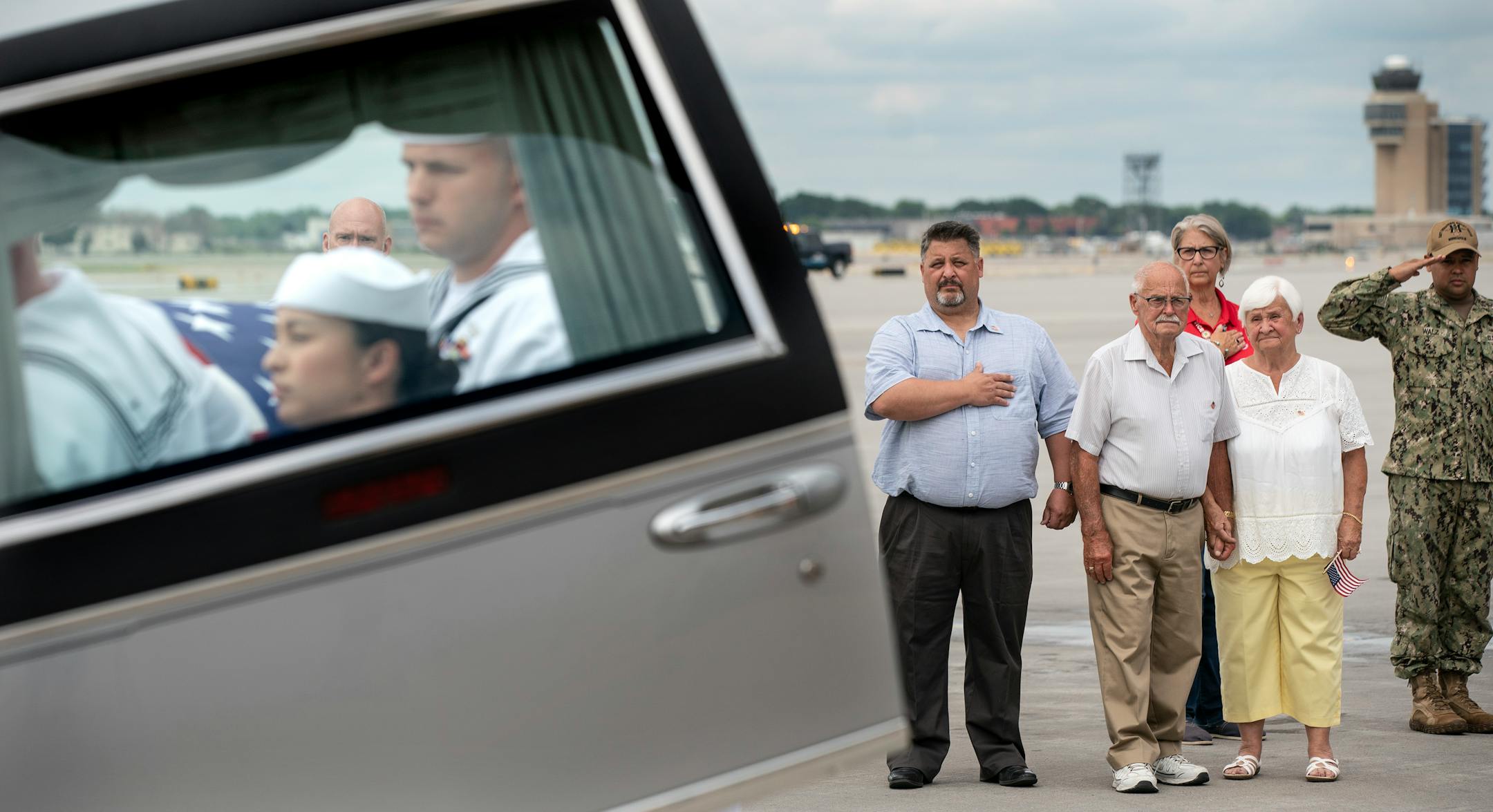
I know I speak for many, in expressing my gratitude to the Star Tribune staff, especially Matt McKinney and Jerry Holt (photo), for sharing the heartfelt story of 1st Class Neal Todd's homecoming to the Todd and Staffenhagen family for final rest ("Home, at long last, from Pearl Harbor," front page, July 9). No one of us can imagine the excruciating pain of nearly 80 years of not knowing the fate of a loved one lost during military service: the endless uncertainty, the wondering — did he suffer, where and how was he lost, will a chance to say "goodbye" ever happen? What we can do, however, is today celebrate with this family, together honoring him on behalf of this nation, assuring his sacrifice will never be forgotten. No matter the circumstances, Todd's long-awaited "coming home" is a proud moment, one we all joyfully share!
Judith Monson, St. Paul
MINNESOTA'S BUDGET
Bipartisanship notwithstanding, long-term challenges persist
Two weeks ago, the Star Tribune Editorial Board approvingly noted a number of bipartisan compromises contained within the state's budget deal. Some of these, such as increased education funding and bonus pay for emergency workers, are indeed worth celebrating. But it would be a mistake to conclude that "bipartisan" means "reasonable."
The truth is that Minnesota's budget has become entirely decoupled from the state's spending needs. Total state and local spending has declined by 15% since the 1990s, and our basic services are suffering as a result.
Minnesota schools, for example, receive less per pupil (adjusted for inflation) today than they did in 2001 and are short an estimated 6,000 nurses and guidance counselors. Likewise, experts estimate that the Department of Transportation is $900 million per year shy of what it needs to meet minimum safety and sufficiency standards for our roads, bridges and transit.
Considered in this light, the problem is less with where budget negotiations ended and more with where they began — a status quo that is unacceptable to Minnesotans commuting on potholed roads and sending their children to underfunded schools.
To help close the investment gap and address Minnesota's staggering racial disparities, Gov. Tim Walz and the DFL proposed a series of tax hikes on corporations and the wealthy. But Republicans refused any tax increases, even on millionaires and corporate tax avoiders.
Republicans and the DFL can be commended for the country's only bipartisan budget, but long-term funding challenges will persist so long as the revenue shortage goes unaddressed.


