

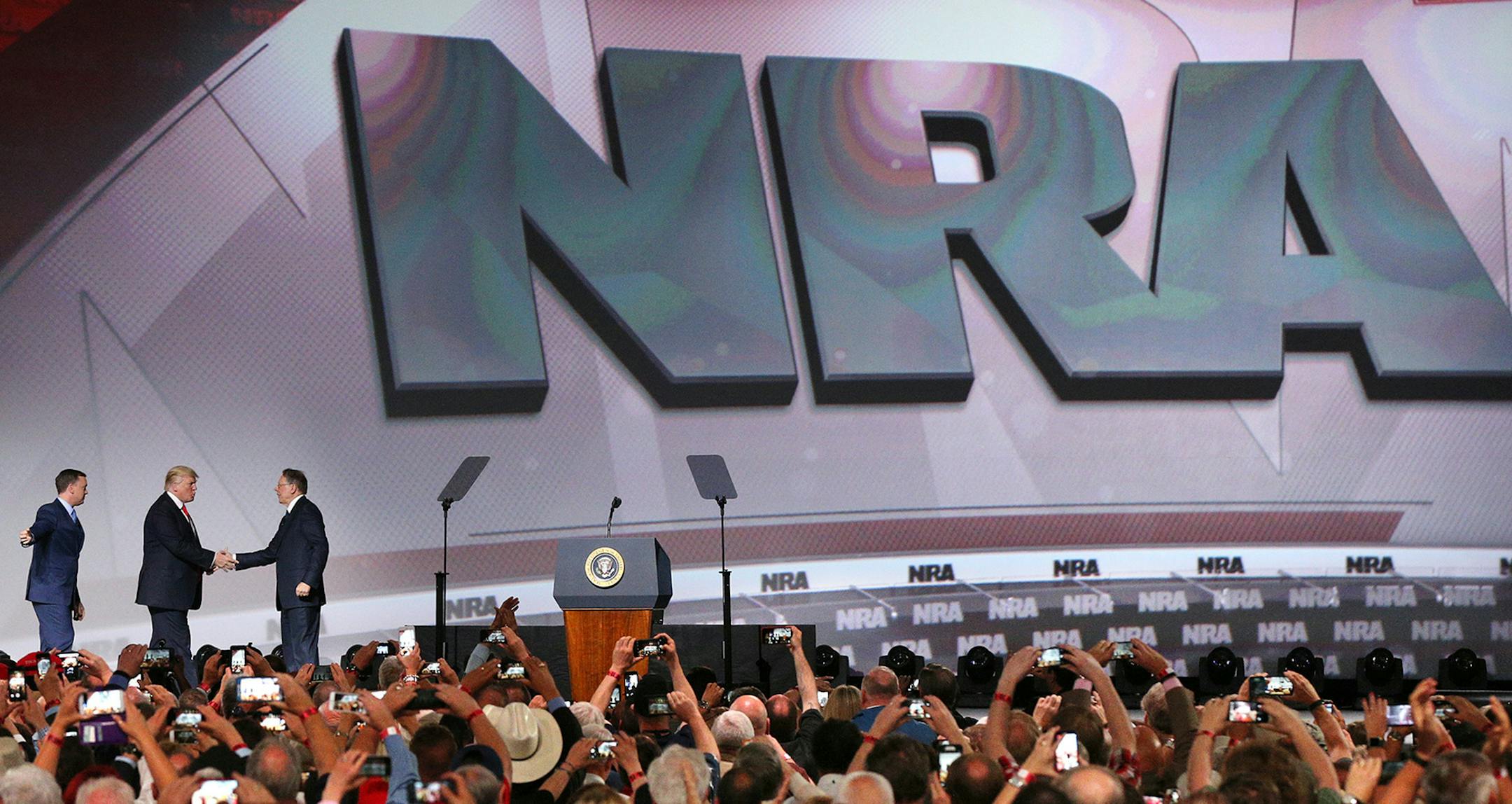
It would be a relief to readers who value the TRUTH if the Star Tribune (and its editorial cartoonist, Steve Sack) would exercise some much-needed journalistic integrity and do their research into what the NRA is really all about — which is law and order, patriotism, teaching and preaching gun safety, and preserving the First and Second Amendments to the Constitution. When an outrage is committed, whether with guns, knives, ball bats or bare fists, the person responsible is the one who did it — not the NRA, not Congress (which has dozens of gun laws on the books), not a troubled childhood.
Ever since President Bill Clinton tried to connect the NRA to the Oklahoma City bombing and called the organization (of which John F. Kennedy was a lifetime member) his worst enemy, the left has deemed it politically correct to blame the NRA for any and all crimes committed with firearms. It is time for you in the media to get your facts straight, cease the vile slanders against the NRA and tell the truth! The Bible says, "Thou shalt not bear false witness." Maybe you should read that, too, while you're at it.
Dean C. Nelson, Mounds View
• • •
One of the major but overlooked reasons the NRA and its acolytes oppose any meaningful efforts to address gun safety through background checks of aspiring purchasers of firearms is economics. Requiring commercial vendors to undertake reasonable background checks would not only prevent some of those who should not have firearms but also deter a number of others who ought not have access to even trying to buy them. This would have a deleterious economic effect on manufacturers of firearms and ammunition and other accoutrements, as well as on those who sell these items.
Imposing this kind of economic pressure on the industry could have a prophylactic effect on keeping guns out of the wrong hands.
Another salutary economic device would be to require all guns to be registered, at least prospectively, and impose a fee on the registrants, much like vehicle registration. Additionally, increased taxes or surcharges could be assessed on the purchase of firearms and ammunitions.
Despite the impasse at the federal level, these steps could be undertaken by state and local units of government. Placing reasonable, realistic economic constraints on the acquisition of guns would, like raising the cost of tobacco products through taxation, lead to fewer people buying and selling firearms.
This approach would not be a panacea; firearms and ammunition could still be acquired from private parties or by criminal activities or from those who engage in them, bypassing the official registration and taxation process. But it would be a means of raising the financial ante for gun owners in a way consistent with their vaunted Second Amendment rights.

