

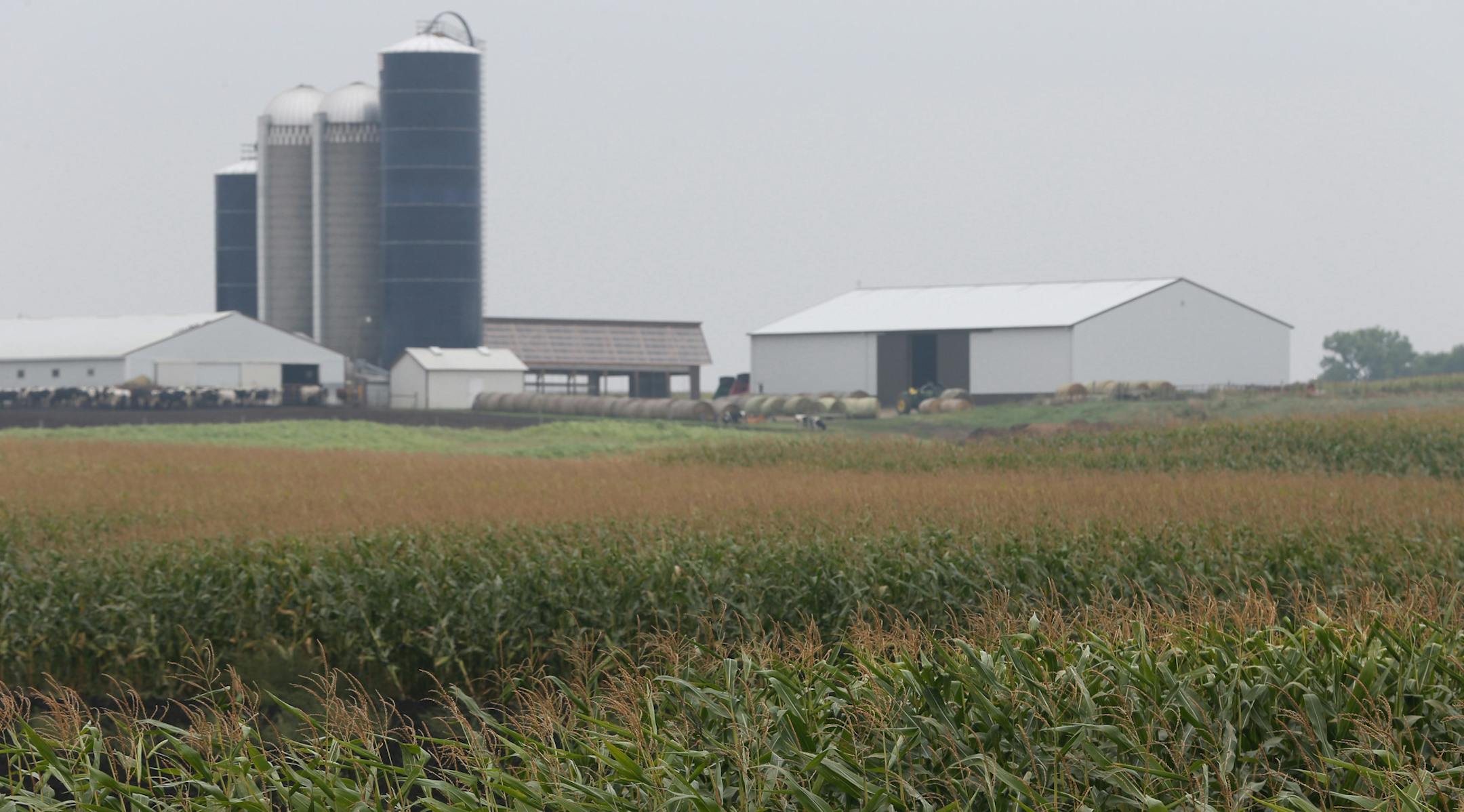
Brown County farmer Keith Lendt's Jan. 15 editorial counterpoint ("Why farmers like me oppose state plan to test Brown County wells") misrepresented the case for monitoring nitrates in the soil. But it gave poignant expression to the fears of independent family farmers that their days are numbered. We should keep the two issues separate. They are separate problems. Both are important, but I can speak only to environmental monitoring.
We monitor environmental hazards so that they don't creep up on us with reservoirs of pollution and abatement costs we can no longer afford to fix. It's true that if we don't look for environmental hazards, we won't find them and won't have an excuse to regulate them. But this is like saying that if we don't monitor the incidence and locations of communicable-disease outbreaks, then we can save the cost of controls. That's nonsense. If we look for cases of foodborne infections, we'll discover outbreaks. In past years, if we aggressively looked for TB cases, we would have an increase in the reported prevalence of the disease. But looking was not meant to justify the existence of public health departments in state and local government. It was to know where the hazards were that needed to be addressed for the public's safety.
Nitrates used as agricultural fertilizers are not as hazardous as some of the organic pesticides and herbicides on which farmers are forced to rely, but huge amounts of nitrates are used, and they can accumulate (even as road salt has accumulated in many Minnesota lakes). Best to get a baseline on nitrate prevalence in groundwater across the state before too many more years go by. Best to give farmers a heads-up about what's happening before their costs for adapting get too high.
Paul Farseth, Falcon Heights
MINING
When judging the PolyMet plan, read about this Montana locale
"The Best American Travel Writing: 2016" was a thoughtful Christmas gift from my daughter. Surprisingly, more than a few stories were about places and cultures only an investigative reporter would want to visit. One, "What's Left Behind" by Kea Krause, features Butte, Mont., a place that has little going for it but notoriety as home of the Berkeley Pit. The half-square-mile, 1,780-foot-deep pit is a "massive hole filled [to 900-foot depth] with battery-acid-strength water … the nation's largest body of toxic water." What's left behind at the depleted Bell-Diamond mine is "one of the greatest American copper-mining calamities of the 20th century," Krause tells us.
Butte, once the highest-copper-producing city in the world, is now struggling with environmental, economic and social decline. The toxic pit water would eventually escape to the groundwater aquifer if not for the Superfund "solution" to pump and treat infiltrating water "in perpetuity." Like forever. On a less pessimistic note, an emerging cleanup technology is discussed, but to this engineer it sounds like a stretch despite dramatic laboratory demonstrations. Time will tell.
Butte is not on my travel wish list. But our beautiful Minnesota Northland is, and I hope it will be appealing "in perpetuity." Anyone for, against or just curious about the PolyMet copper mining plan should read "What's Left Behind." It's on the web at schoolbag.info/science/american/14.html.
Ron Carlson, Lake St. Croix Beach
AMAZON'S HQ2
Minnesota's out in time
Luckily, Minnesota was not on the Amazon list of 20 contending cities for its second corporate home (Business, Jan. 19). Why do I say that? Because Amazon has already decided where its HQ2 is going. The winning city (along with 19 red herrings) is now being encouraged to improve its incentive package. Eventually the list will fall to 10, then seven, then three before a decision. Again at each step, the winner will be encouraged to sweeten its incentive package, and it will.
Ask yourself this: Why wouldn't Amazon build its headquarters in the exact perfect spot for itself?


