

•••
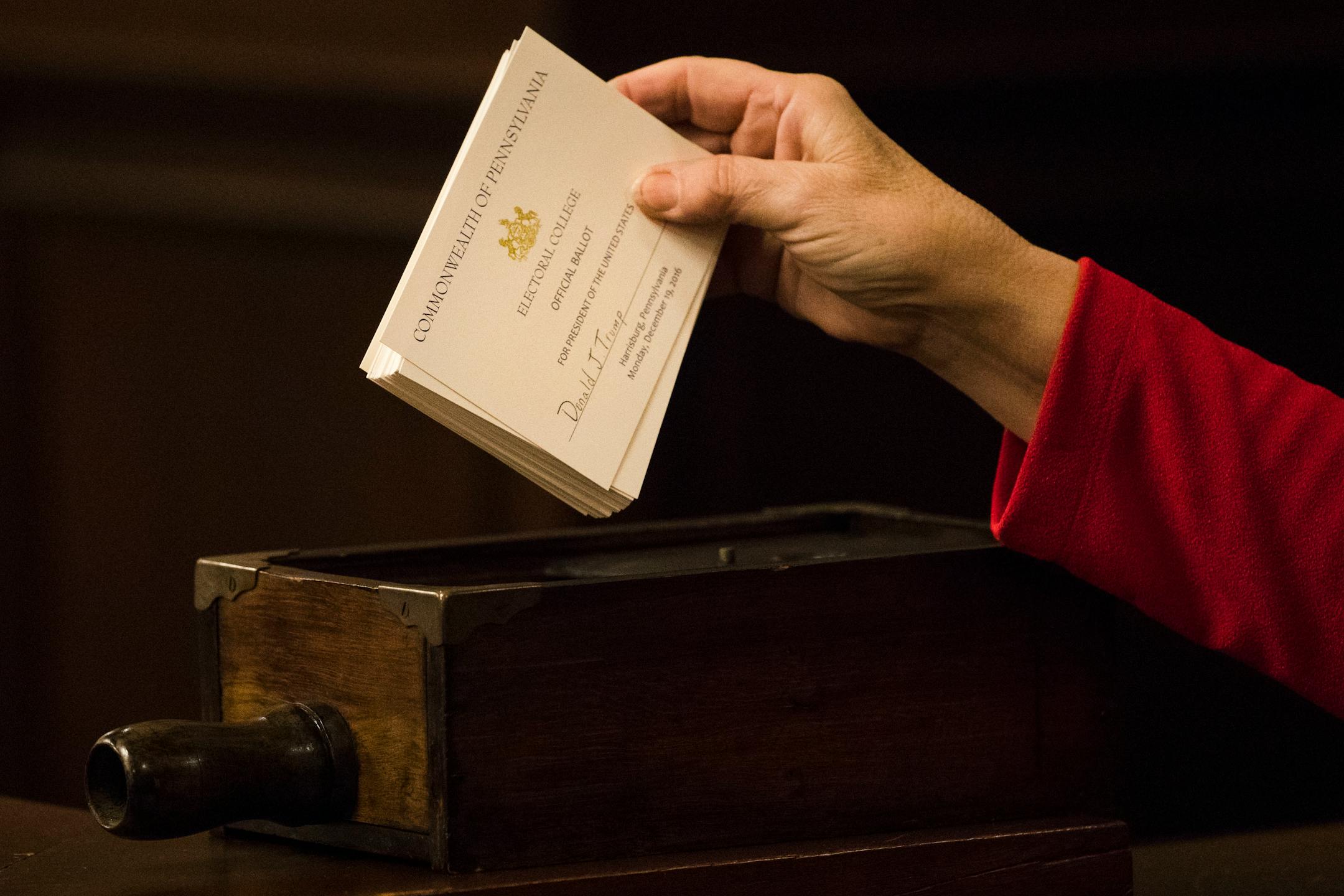
As usual, D.J. Tice's electoral college column ("The Electoral College: democracy's best defense?" Opinion Exchange, July 30) was thoughtful and well presented. It may even have some merit. It is important, however, to keep in mind the context of the original intent of the Electoral College. It was created as a compromise for the slave states (the Three-Fifths Compromise) as well as those that simply wanted state legislatures to select the president. In essence it was created because the founding fathers did not trust the "common voter." (A fear that has certainly been borne out by the last couple elections.) It failed immediately when tested in 1796, which then resulted in the 12th Amendment. Then it was essentially turned over to the two political parties. (Keep in mind there is no mention of political parties in the Constitution.) It has generally worked. In only five elections has the loser of the popular vote won via the Electoral College — two of those in the last 23 years. But that was when there was only one America. Like just prior to the Civil War, we no longer are.
The results of the studies quoted, while interesting, are wholly theoretical. Here's what is not theoretical: In 2016 Trump lost by a "mere" 3 million popular votes but won the presidency. In 2020, if he had earned just tens of thousands more popular votes in a few states, he would again have won the election — while losing the popular vote by 7 million. At what point do all those disenfranchised voters (both blue and red) and states say, "That's enough, we're done?!"
I submit that if the results in 2016 had been reversed, we would have already voted on a change to the Constitution, which would negate the need for the National Popular Vote Interstate Compact that Tice laments.
D. Roger Pederson, Minneapolis
•••
Tice's July 30 column proposed that the Electoral College might be the safest way to protect the presidential election against fraud. He cites work by two academics that purport to show via a complex mathematical model that changing the outcomes of an election is made more difficult by the intense scrutiny in closely divided swing states and that running up totals in solidly red or blue states is useless because of the Electoral College. Not mentioned by Tice nor the academics in their paper is the effort that actually happened in 2020: the intentional creation of fake electors in solidly red states. Although the scheme failed, it only failed because of a few elected officials of the same party refused to collaborate on the fraud. Ignoring such a near miss when discussing electoral fraud seems to be a mistake when discussing the value of the Electoral College in avoiding it.

