

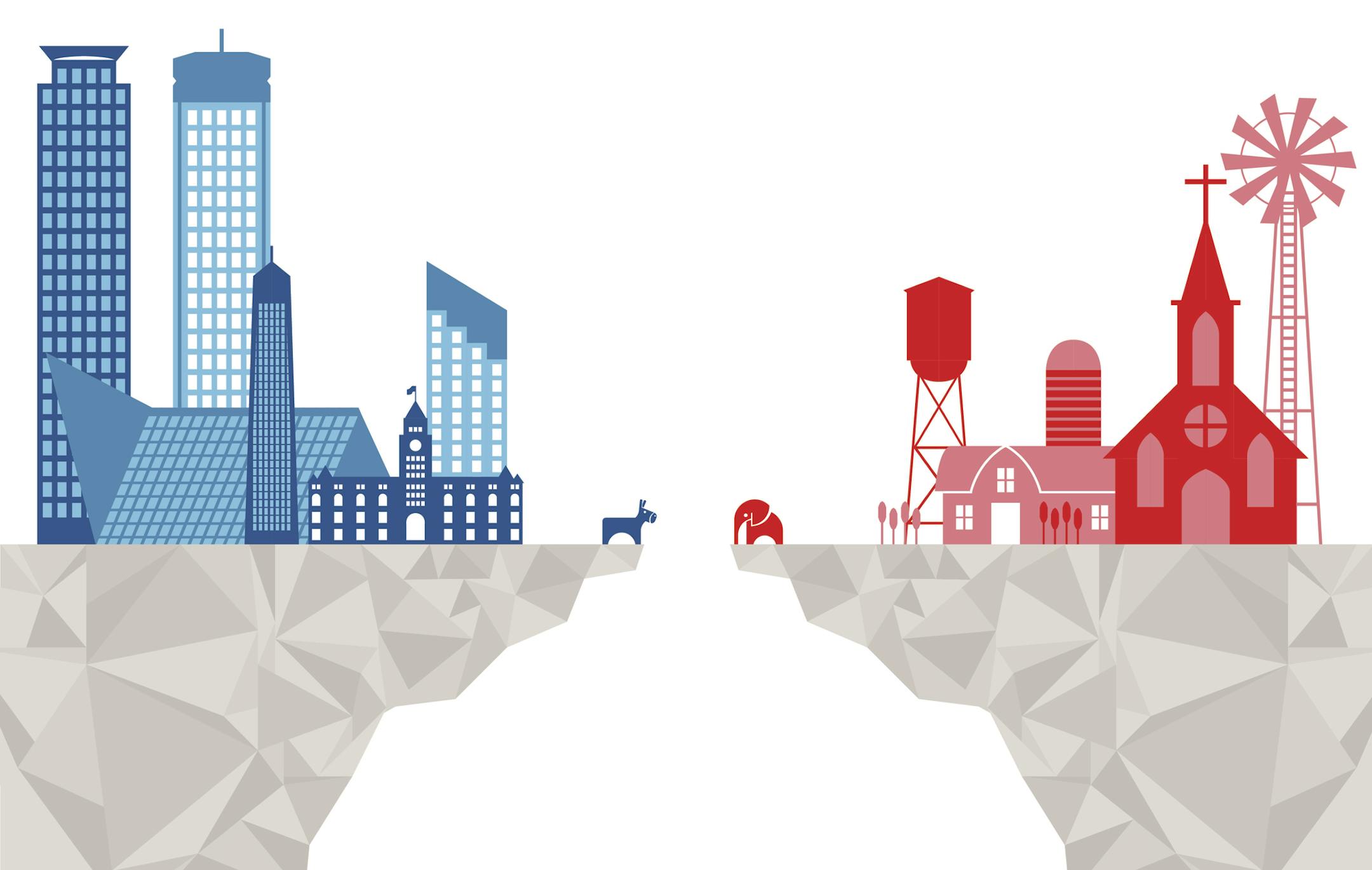
Looking at the virtually implacable red/blue split of our nation — across and within states — that the electoral map in 2020 now so clearly demonstrates, I want to suggest that we have way underestimated the culture wars ... those deep inner-conviction splits about matters of sexuality, gender, sexual preference, abortion, personal and social values, and the perception of the validity and/or respect for religion in the public sphere.
Both sides, left and right, have functionally moved ahead as if their perceptions on these matters were correct and nonnegotiable, both working to push their agendas into legal dominance, without much, or any, genuine conversation beyond their own echo chambers.
The normal-curve theory of social change says that on most issues we the public want to be in the large middle of the curve, with small percentages at either end. And the way one can effect change — a shift of the curve out toward one end on an issue — is not necessarily by thoughtful (or "scientific") discourse, but by some group moving one of the ends outward by taking an "out there" stance that then shifts where the middle is. Think of the significant moves in public opinion in recent years on a number of hot-button issues (pick your own).
The problem with this is that it exacerbates the moves outward and away from a genuine middle where we can live as if in some version of commonality and community.
It is time to face our culture wars, not flee from them, to begin to address the real issues and values that they represent, so that we can as a people find our genuine commonalities, and our community.
Leonard Freeman, Minnetonka Beach
POLLING
Fundamental flaws in that data
There could be several reasons the polls got it so wrong in 2016 and again in 2020. But there really is one overriding reason — people don't always tell pollsters what they really think or believe. When people are asked what they think or how they will vote, they might tell pollsters what they think pollsters want to hear or what they think would be the right thing to say.
But whatever they tell pollsters, if they really believe something else, in the privacy of the voting booth they can vote their beliefs, their fears, their racism or their anger. Polling depends on respondents telling the truth. It also depends on asking the right questions. If either of those two elements are not valid, the results will not be correct either.
My guess is people who actually have racist beliefs or underlying fears or anger tell pollsters one thing, but cast their vote differently. Until pollsters can figure out how to overcome that basic problem, polling results will always be suspect.


