

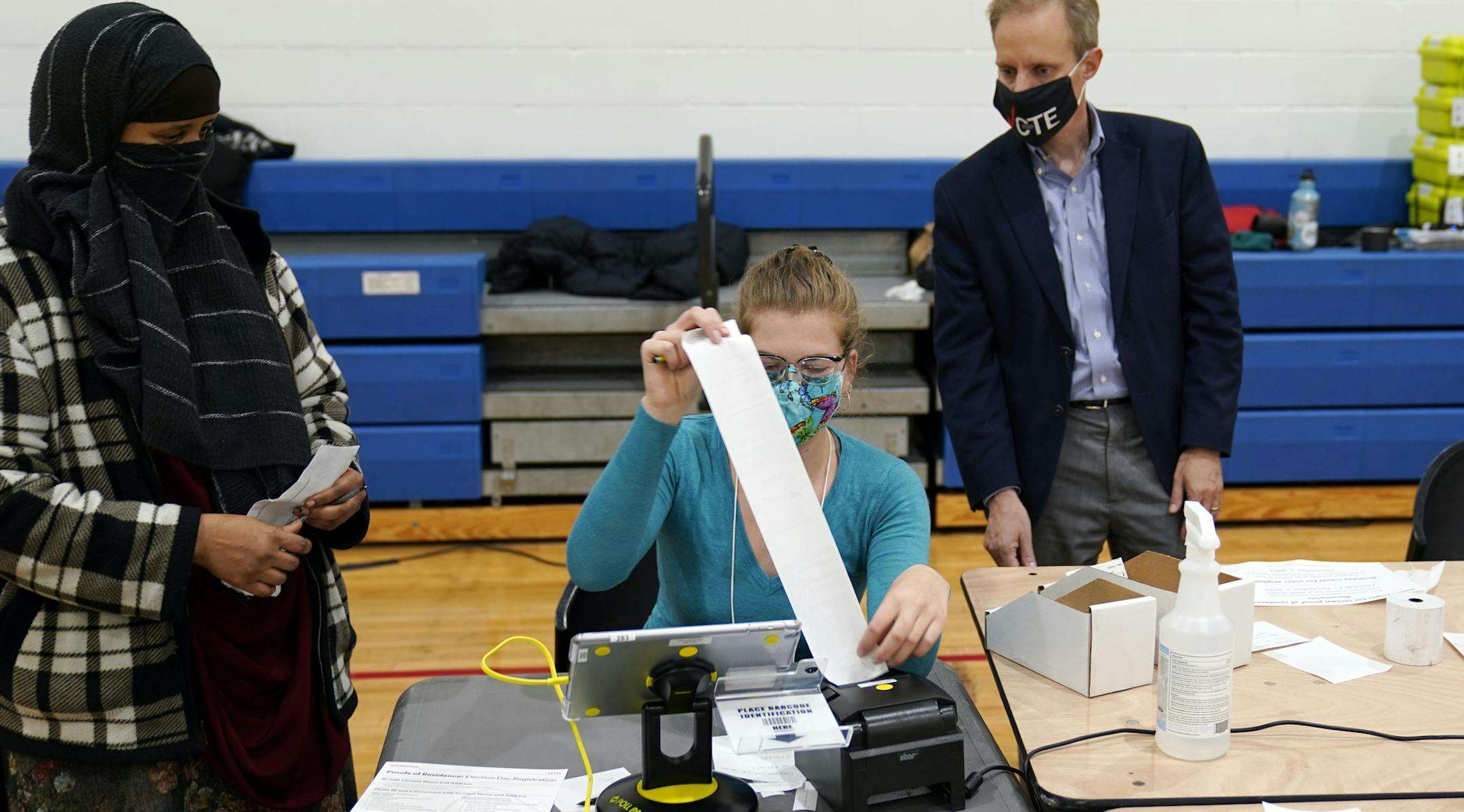
Andy Cilek and Kim Crockett complain that Minnesota's voting system is an open invitation to fraud ("It's clear that election reforms are needed," Opinion Exchange, Nov. 25). And yet, in a year in which record turnout and COVID-19 challenged the system, and which prompted random audits in all counties, there were no indications that we experienced fraud ("Panel affirms Biden's win in Minn.," front page, Nov. 25). Crickets. I have to ask: If Trump had won, would these people be so quick to cry fraud? Somehow I doubt it. President-elect Joe Biden won in a free and fair election. Let's move on.
Linda Russell, Minnetonka
• • •
I read the commentary from the Minnesota Voters Alliance (MVA) with interest. I'd like to ask the authors some questions:
1) What is your evidence that half of Minnesota voters believe the 2020 election was unclean? You cited none.
2) We all want fair elections, but what is your proof they were not fair this year? Other than the GOP-led disinformation campaigns, including the evidence-free lawsuit filed as the 2020 election in Minnesota was being certified, I'm aware of none.
3) You implied absentee ballot boards in all but two counties did not follow the state-mandated party balance rule, but again, where is your evidence? I served on the Minneapolis absentee ballot board and can confirm I sat across the table from a member of the opposing party every time we processed ballots. Election officials worked hard to maintain such balance. There were observers taking notes also.
4) You cite Secretary of State Steve Simon's state court agreement to extend the ballot receipt deadline to Nov. 10 as an opening to fraud. Weren't these ballots segregated via court order? Can you declare a single race that was affected by the very low number of such ballots? Reasonable people can disagree on the methods, but wasn't it important to voter safety to make accommodations for voting in the face of the current pandemic?
5) Voter registration here requires a state photo ID with current address; a state photo ID with proof of current residence (bank statement or utility bill, for example); or the last four digits of the voter's Social Security number. If none of those are available, a registered voter in the same precinct can vouch, under penalty of perjury, that the person resides at the stated address. If election officials are doing their job, they'll root out such corruption and make the perpetrators pay a heavy price. Are you saying they are not doing their job?

