

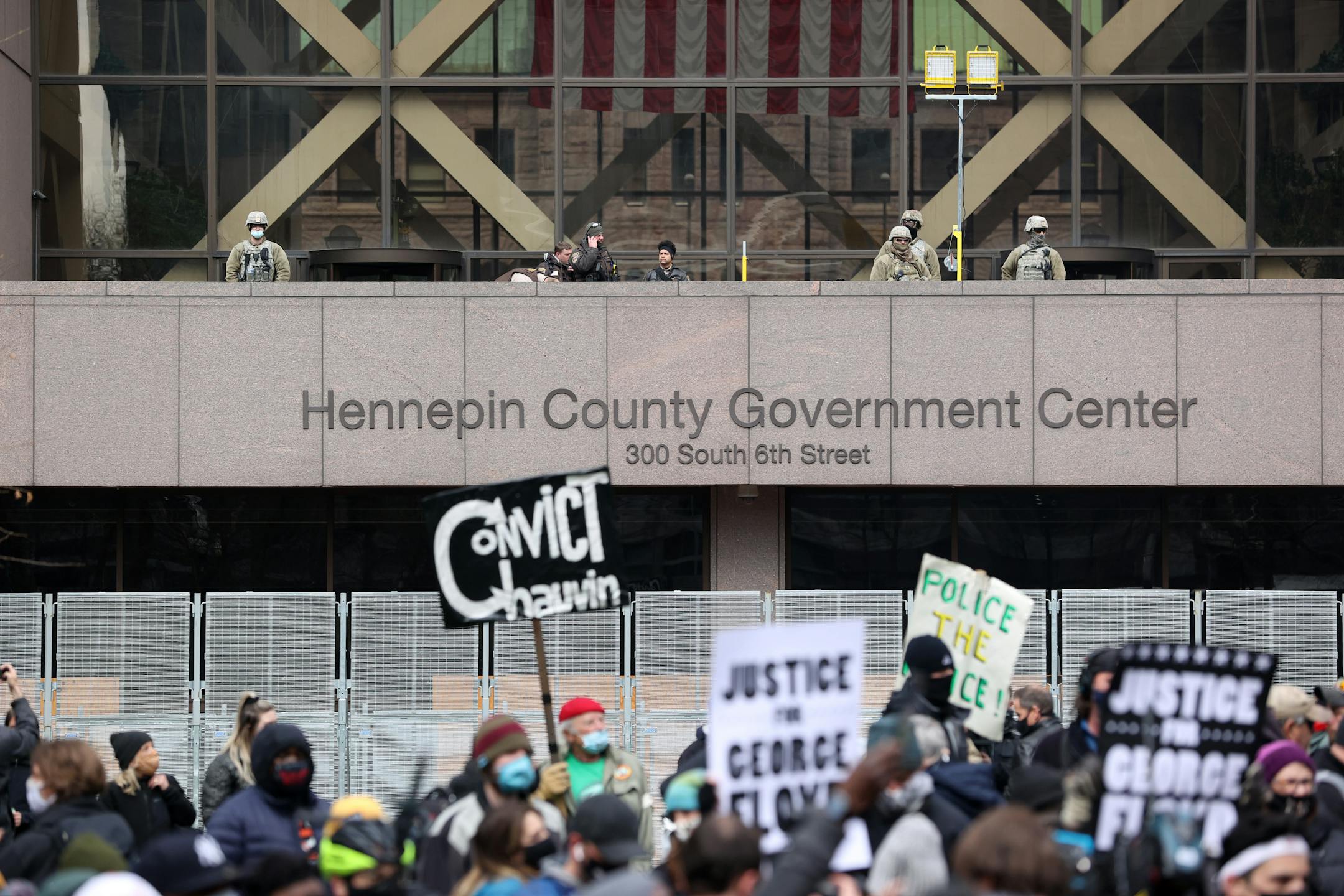
What is the goal of imprisonment in this country? It is to punish and rehabilitate. In the case of Derek Chauvin, he will be punished for his violence against another human being, and rightfully so ("Chauvin term is 22.5 years," front page, June 26). Rehabilitation, however, will remain a question mark. Chauvin will also continue to be restricted to a form of solitary confinement while occasionally being allowed inside a courtroom for upcoming appeals. So far, he has kept his sanity throughout this horrendous, self-inflicted ordeal. Due to possible threats on his life he will remain in isolation for months and years, making his life pure torture. Consequently, severe mental illness is the probable outcome and a justifiable punishment for killing a local citizen ... I suppose. Sadly, George Floyd's family, Derek Chauvin, and of course, taxpayers are all the losers here because of Chauvin's despicable act. Case closed.
Still, I harbor a vision, perhaps even a fantasy, that in a better world we could imagine a repentant Chauvin and a forgiving judicial system that would allow this "bad cop" to do some good. After a period of time and due punishment, a remorseful Chauvin might speak out against racism in schools and workplaces throughout the country. In Black communities he might volunteer at food shelves, sweep the sidewalks, scrub floors and so on. He could become a loud and proud advocate for all people of color on so many levels. Yes, this is my imagination running away with me because there is so much hope in the air.
Leaving Chauvin in prison to rot for many years serves as punishment with no rehabilitation, and that's too bad.
Sharon E. Carlson, Andover
•••
Although a disgraced former police officer being sentenced to 22 1/2 years in prison for the murder of a criminal suspect is a punishment whose magnitude we have not seen before, it is light given the enormity of the crime — the fact that George Floyd suffered a hideous and slow death at the hands of someone who wore a badge and toted a gun in our name, the life squeezed out of him over a long period of time as he lay helpless on the ground. The defendant refused to relinquish his hold on Floyd long after he lost consciousness, brushing aside the pleas from an assembled crowd to allow anyone to render aid and ignoring the request of his nervous fellow officers to turn Floyd on his side. The defendant's cold, callous, cruel treatment of Floyd was evident in his demeanor during the killing. It was simply another day at work for him, dealing with someone he had seemingly come to regard as subhuman.
The defendant can be expected to be a model prisoner if he survives his time in prison without anyone killing him, and he will be eligible for supervised release after just 14 1/2 years, at which time emotions over this highly charged case can be expected to have cooled. His attorneys will argue with likely success that he poses no danger to the public.
Was justice served in this case? Only in part.

