

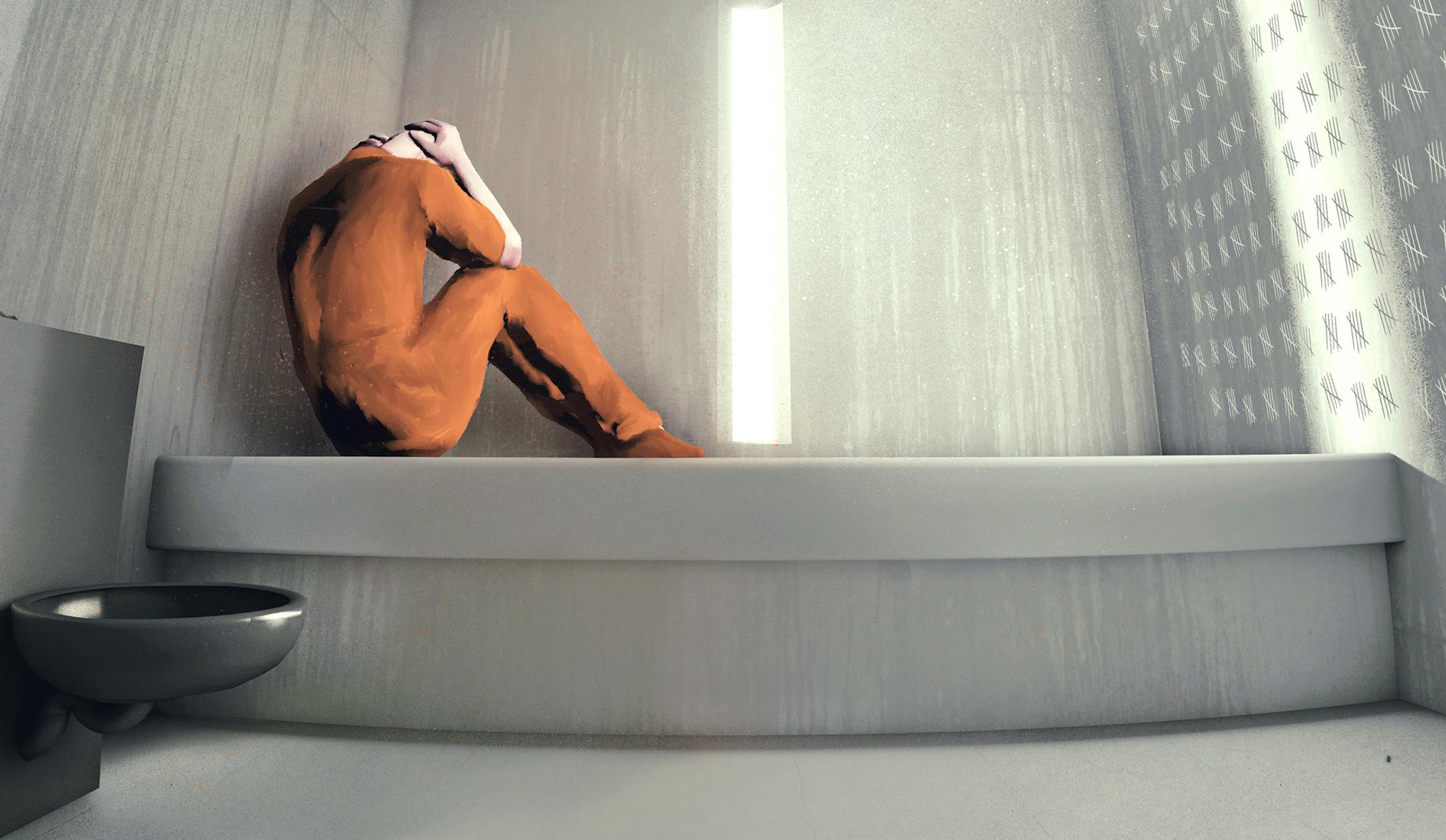
In response to a Dec. 11 letter writer who, responding to the Star Tribune's Dec. 4-7 series about solitary confinement, asked "Are we supposed to feel bad?": Please do not consider working at a facility of incarcerated people. Judging by your callous reaction to the series, it seems that you are assuming that all incarcerated people put in isolation were fairly and justifiably incarcerated in the first place; were fairly and justifiably put in isolation; that prolonged isolation was deserved (and not an overreaction by those in power), and that such a response improved the operation of the facility and therefore helped lower the recidivism rate. Did you know that privately owned prisons are not even accountable for prisoner maltreatment — that looking at a guard wrong could get you thrown in the hole? (Read "My four months as a private prison guard," by Shane Bauer, in Mother Jones magazine.) People of color are incarcerated for petty crimes that whites commit all the time yet aren't incarcerated. Does that inspire respect and law-abiding behavior? Even prisoners who try to follow the rules because of a stupid mistake get caught up in a web of horror just to survive. That respect you speak of is lost in the quagmire of the system, and without an ounce of compassion, we will continue on this downward spiral and continue to lock up a huge percentage of the population, many of whose lives will be ruined, not because they broke a law and had to serve time for it, but because they couldn't survive solitary confinement.
Yes, some behaved horrifically and should be held accountable. Does that justify our horrific treatment of them?
Elizabeth Streiff, Minneapolis
FOSSIL FUELS
Some bury their heads in the ground, but others know better
Apparently the Star Tribune Editorial Board didn't get the memo ("A misguided attack on Wells Fargo," Dec. 11). Climate change is escalating; 2016 was the hottest year on record (surpassing the record set in 2015), causing havoc across the globe — shrinking sea ice, rising sea levels, killer storms, record droughts and floods, etc. And we all know — climate-change deniers included — what's causing it is our addiction to fossil fuels.
What that means is that if we truly want a future for our children and grandchildren, we need to keep the oil in the ground. So whether pipelines are safe or not (they're not), it is simply suicidal to keep building infrastructure that will keep us dependent on oil for another generation or two. These projects need to be halted now, and divestment has proved to be an effective tool for achieving that end, now that we can no longer rely on government agencies to do the right thing. The point is not to punish banks like Wells Fargo but to encourage them to stop funding fossil-fuel extraction. The Minneapolis City Council, with its recent motion asking staff to explore ways the city could "stop doing business with financial institutions that invest in the fossil-fuel industry and in projects such as the Dakota Access Pipeline," was listening to the people for a change, because we actually care about what's happening to the Earth we all depend upon, and we're sick and tired of business as usual.
Kurt Seaberg, Minneapolis
• • •
Can anybody please explain to me why the U.S. continues to concentrate on pursuing fossil-fuel energy resources instead of building our resources for energy from sources that are renewable and/or not likely to endanger our fragile ecosystem? Did anybody else notice the Dec. 13 article "Monitoring equipment failed to detect North Dakota oil leak"? How many times do we have to witness failures in oil equipment (monitoring, pipeline, etc.) which lead to major assaults on our lands ("rupture spewed more than 176,000 gallons of crude oil into a North Dakota creek")? Yes, of course, this changeover in energy resources cannot happen overnight, and it has started, but not quickly enough. Staying with the known way of doing things just isn't going to help our country or our lands. We need to shake ourselves out of the early- to mid-1900s and invest in the future.
Mary Schuenke Udseth, Bloomington
• • •
Regarding "Edina biker takes climate conversation cross-country" (Dec. 12): While Mindy Ahler's cross-country bike trek is laudable, the reason behind it is somewhat misguided. She does not seem to realize that by supporting the idea that our carbon dioxide emissions are causing dangerous climate change, she is unwittingly helping prop up one of the most immoral situations in history.


