

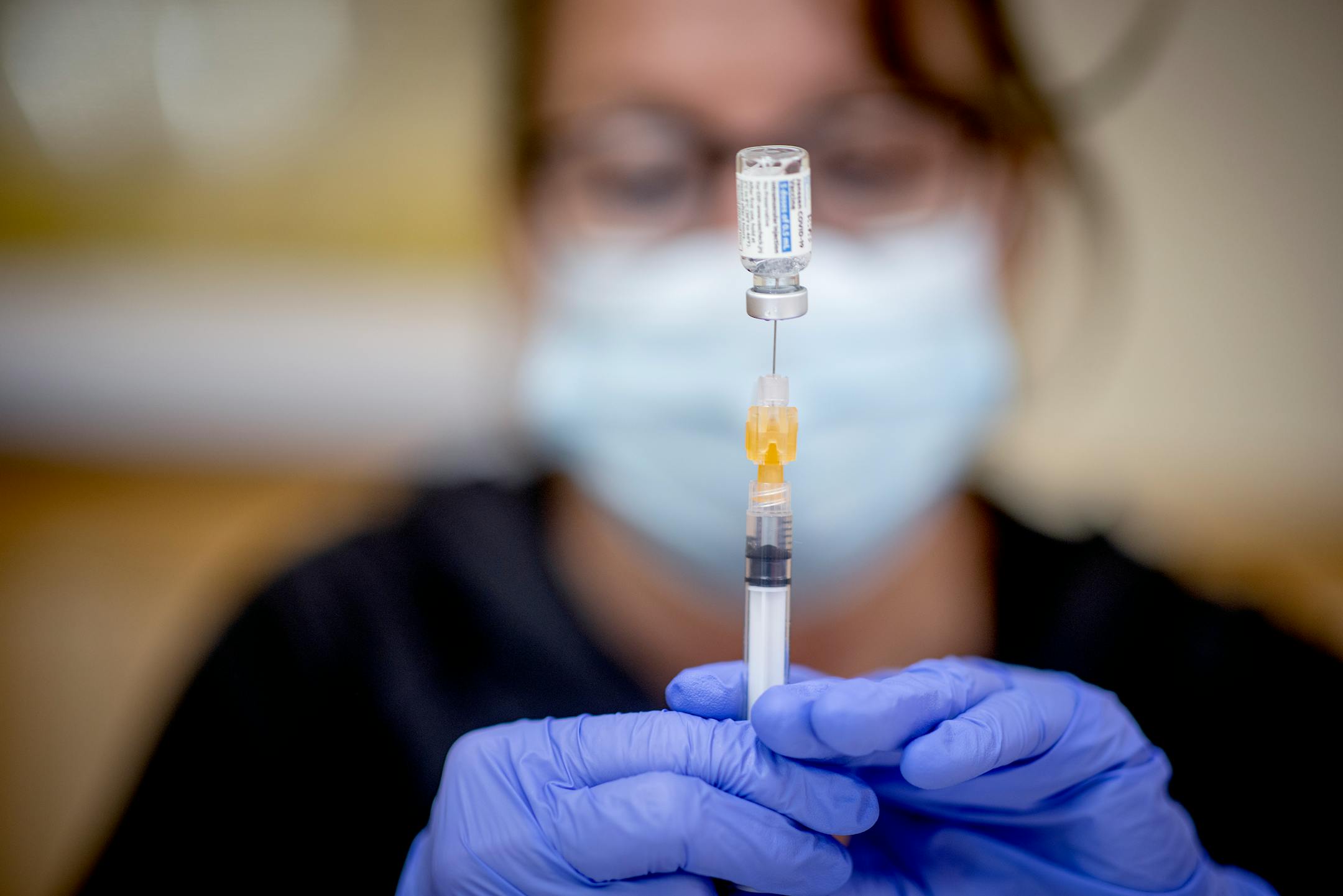
In his Nov. 11 commentary, Kevin Roche's statement that 44% of the people who recently died from COVID-19 in Minnesota were vaccinated may have misrepresented the effectiveness of the vaccine ("Time to face hard truths and get on with life — virus and all," Opinion Exchange). This percentage requires context to be fully understood — specifically, the prevalence of vaccination. With 92% of the people who are 65 and older — and 74% of those 18 and older — fully vaccinated, most of Minnesota's adults are vaccinated. While they have a very low risk of COVID-19 deaths, the fully vaccinated are a large majority of Minnesota's population and will thus represent a significant proportion of those who die because the vaccine is not 100% protective. Because those older than 65 years are at highest risk of COVID-19 death and because over 90% of them are fully vaccinated, Roche's report that 44% of those who died from the virus were vaccinated really reflects the high prevalence of vaccination in the highest risk group and the protection afforded by the vaccination. If the vaccine had no effect, we would expect that 80-90% of those who died had been vaccinated. The relevant information for someone considering vaccination is what the risks of serious illness or death are by vaccination status. Such data are available from the Minnesota Department of Health (MDH).
From May 2 to Oct. 3, for those at highest risk (i.e., 65 years and older), MDH reports the rate of hospitalization was 127.2/100,000 for unvaccinated and 8.7/100,000 for vaccinated people, representing almost 15 times higher risk for unvaccinated seniors. For people 65 and older, the rate of death for unvaccinated people (29.3/100,000) was 16 times higher than that of vaccinated people (1.8/100,000).
Roche thus neglected a fundamental consideration: If an exposure is very common, as COVID-19 vaccination is, and is not 100% protective, then the exposed (in this case, the vaccinated) will contribute cases and deaths. To understand the benefit of the vaccines, one must look at risks among the vaccinated and the unvaccinated.
Wendy Hellerstedt, St. Paul
The writer is an epidemiologist and professor emerita of the University of Minnesota School of Public Health.
•••
Many have bemoaned the political nature of COVID-19-related public health decisionmaking. This is misguided. We need more politics, not less.
We do not live in an unelected technocracy. It is the duty of our elected representatives to absorb expert opinion and balance it against the wishes of their constituents. This is necessary because many experts, especially those in medical and scientific fields, are trained to optimize for a single or a limited number of variables. This is undesirable in scenarios where public health decisionmaking can have unexpected second and third-order effects.


