

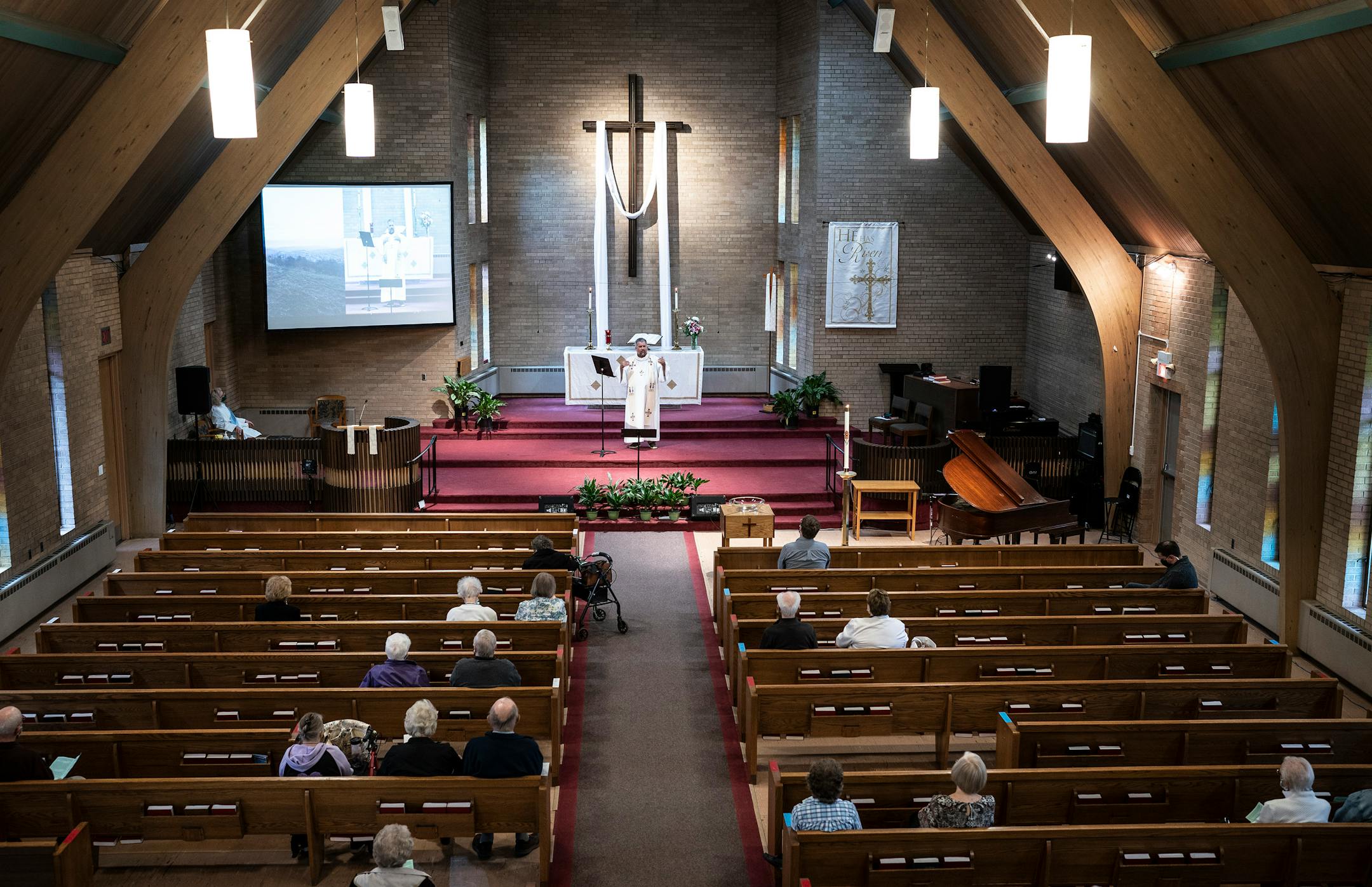
The May 23 front-page article "More pews empty than ever before" considered several reasons for the decades-long decline of the religious segment of society: that people today do not need a church to have faith, that there are "available alternatives for people to engage in activities traditionally led by churches," that "there's a loss of faith in institutions in general," that people are finding alternatives to churches for "milestone events" like funerals and weddings, and that churches cannot "compete with secular culture."
The reasoned rejection of belief in gods and the supernatural is, however, not considered. Over 50 years ago I concluded that belief in the supernatural could not be justified. Religion became completely insignificant to me. Beginning in the 1980s, with the rise in political activism of the religious right, my esteem for religion has fallen sharply negative. I have dozens of friends with the same opinion who have gone through a similar development. We have concluded that secular government leads to far better results than the political quest of any sect to impose religious doctrines on the nation.
George Francis Kane, St. Paul
•••
The May 23 article about churches discussed a trend that's been taking place over the past 40 years. But it is also interesting to note that several recent peer-reviewed studies show significant benefits of belonging to religious organizations.
For example, in 2020, the Nurses Health Study II, which involved about 100,000 health professionals, was analyzed by the Harvard T.H. Chan School of Public Health. And the results showed that women who attended services at least once per week had a 68% lower risk of death from despair, including deaths related to suicide, drug overdose and alcohol poisoning compared with those who never attended services. And men who attended services at least once per week had a 33% lower risk of death from despair.
Also, a meta-analysis that involved over hundreds of studies that examined the association between religion/spirituality (R/S) and physical and mental health was completed by Dr. Koenig of the Department of Medicine and Psychiatry at Duke University. And this analysis showed that about 80% of the people who were studied attributed an improved sense of hope, well-being, meaning, compassion and purpose in life to their R/S practices. Plus, improved physical health was shown to be a benefit, too.
Social media and many other factors obviously have changed the environment that used to attract folks, especially those younger, to join churches. Plus, religious involvement is not everybody's cup of tea. And while I often don't take scripture literally, nor do I make it to church many Sundays, I still do believe that being involved with faith-based organizations can be a real plus in life, as the studies have shown.

