

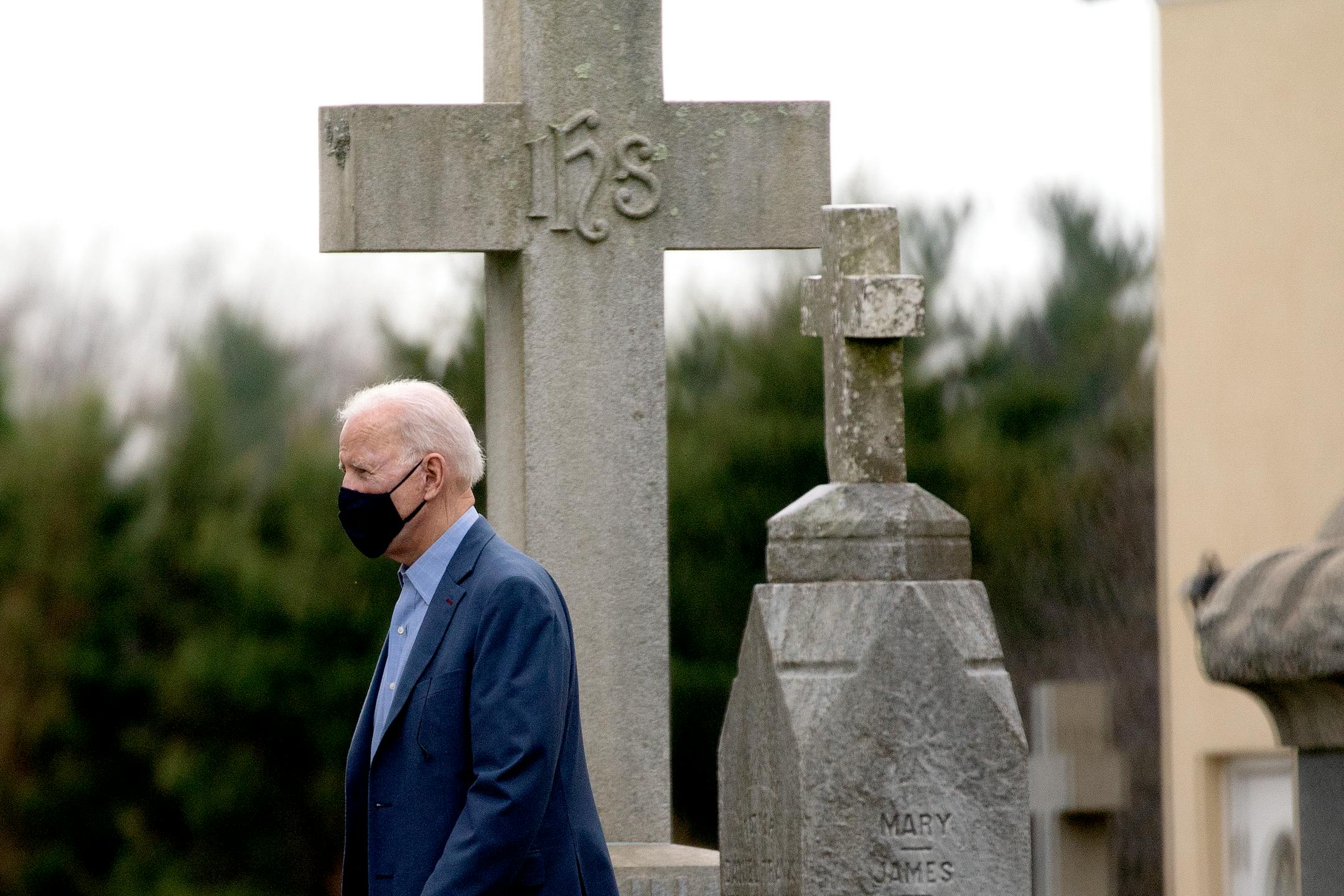
I'd like to see the U.S. Roman Catholic bishops become more proactive, not reactive, in their response to the problem of abortion. Denying communion to politicians is a knee-jerk reaction to those who are pro-choice ("Catholic bishops advance political communion plan," June 19). A proactive approach, in order to make abortion the least desirable method of birth control, would be to support mothers and their infants born into poverty and homelessness and who make the desperate choice to abort because they see no other way.
Another proactive approach would be to advocate for and provide sexual education for young people and open the door to easier access to contraceptives. Yes, a unique approach for the Catholic Church, for sure! But the church is sure not helping to reduce the number of abortions performed in the U.S. by denying communion to President Joe Biden! It's only adding to the list of reasons why people are leaving the Catholic Church.
Mary Lu Jackson, Bloomington
•••
I like to think of myself as a faithful Catholic, although, to be fair, my faithfulness is selective. I lean on the teachings of Jesus, which skewed heavily to the poor, and he spoke often of love (about 200 times in the New Testament). On my way to mass this weekend, I found myself raging about the group of bishops who decided that their priority was to deny communion to Catholic leaders who do not follow Catholic doctrine. Notably, the focus seems to be on Biden and his support of abortion.
I do not agree with this recommendation. However, if it does become final word, I'd like to make sure it is extended to any Catholic leader who does not follow Catholic doctrine, including supporters of the death penalty. According to the U.S. Conference of Catholic Bishops, Catholic social teaching also calls Catholics to protect human rights, put the needs of the poor and vulnerable first, protect the rights of workers to fair wages and to join unions, and care for the earth.
Come to think of it, the recommendation should apply to all Catholics, making it time for me to consider whether I can rightfully receive communion. Before I decide that, I will take direction from Pope Francis who stated that "the Eucharist ... is not a prize for the perfect but a powerful medicine and nourishment for the weak." Maybe I'll receive communion after all.
Patty Schmitz, Minneapolis

