

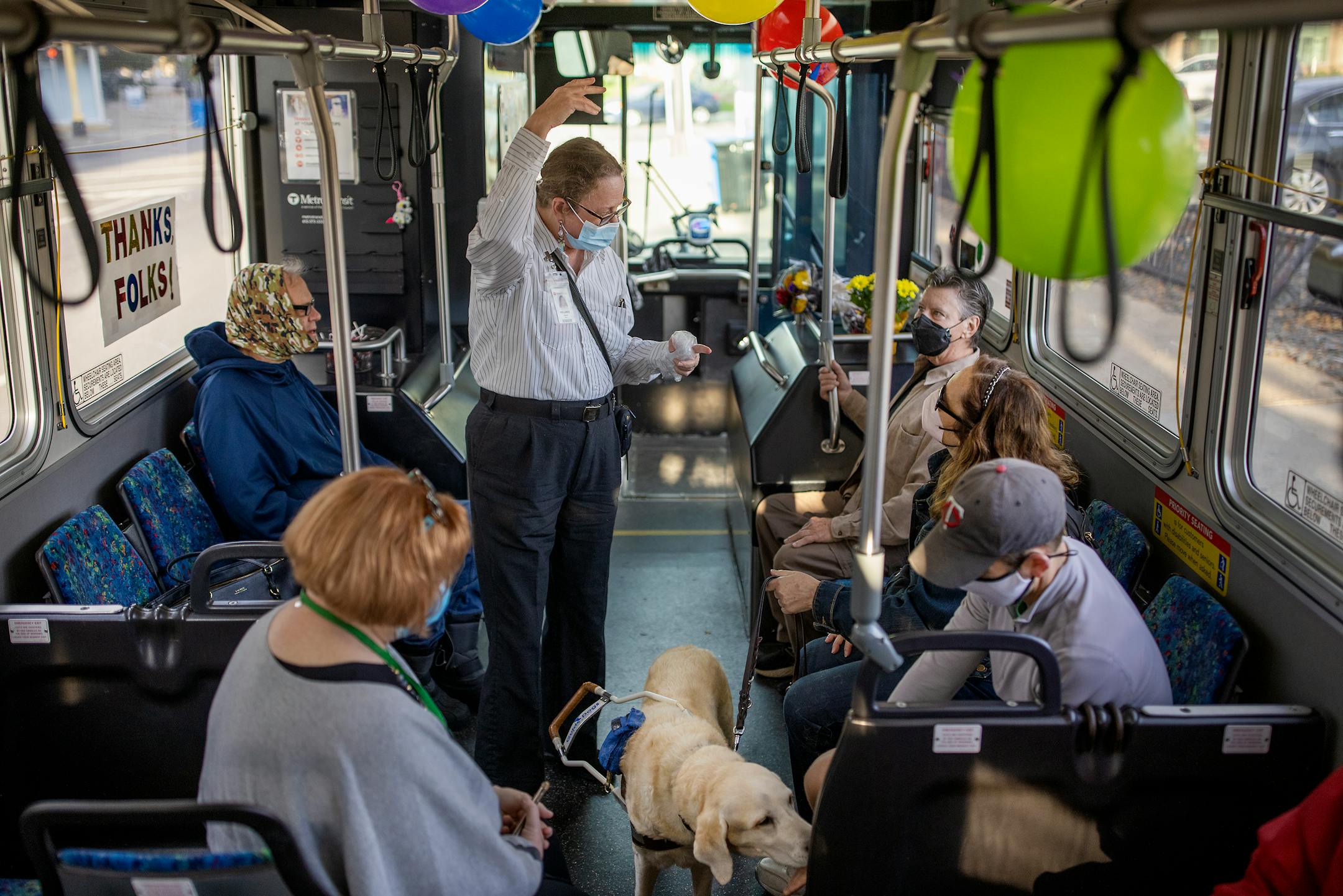
Thank you for the inspiring article about Melanie Benson, the beloved Metro Transit bus driver ("That's how she rolls," Oct. 13). I first met Melanie years ago when I boarded her bus for the first time and she complimented me on my earrings. That led to a longer conversation, and after several other rides, we realized that I taught at the same school her nephews attended. I never had the pleasure of having them in my class, but it's been fun over the years to follow their lives and careers through Melanie. She shows what we all should be doing in our lives, striking up conversations with strangers. When I rode with Melanie the other day, I told her I thought riding on her bus should be a required class for prospective police officers. She has a way of defusing situations. She deals with the same public police officers do — all of us — with a greeting and a smile.
Thank you, Melanie, for many safe and stimulating rides. You help us make connections — to our next bus, and more importantly, with each other.
Mariann Bentz, Minneapolis
JUSTICE SYSTEM
Diversion is a key player
I write to voice my disappointment with the Star Tribune's recent piece on Ramsey County's juvenile diversion program ("Crime – but no punishment," front page, Oct. 17). My objections are the imbalanced nature of the piece that played into a common but intellectually weak analysis of an important and complicated issue.
This Collaborative Review Team diversion initiative was not done in secret. Rather it was an organic outgrowth from a community that was frustrated with the ineffective outcomes for kids who are petitioned into the juvenile system. As a member of the group that assisted in developing this initiative, I can say law enforcement was at the table and participated in these discussions.
Law enforcement expressed frustration with the poor outcomes for youth in Ramsey County who go through the traditional juvenile process. Everyone agreed that the current system labels and stigmatizes children. Further, petitioning kids into court six to eight months after an offense is completely counterproductive to brain development and for appreciating consequences for behavior that needs to be corrected.
Correcting youth behavior requires immediate intervention to allow meaningful impact. It does not require harsh, punitive measures. Further, holding kids accountable but requiring victim-offender mediation is a key component for brain development and for growth in children. The current traditional juvenile system misses these touchstones.
Your piece inaccurately suggested that very serious offenses are ignored and diverted. This is not at all true. The county attorney decides which cases are sent to diversion and the Collaborative Review Team. Victims have voice in this process, and I argue that they will be heard through this process. The voice of a grandmother who wants her grandchild to go to jail is not at all representative of the vast majority of people in Ramsey County.


