

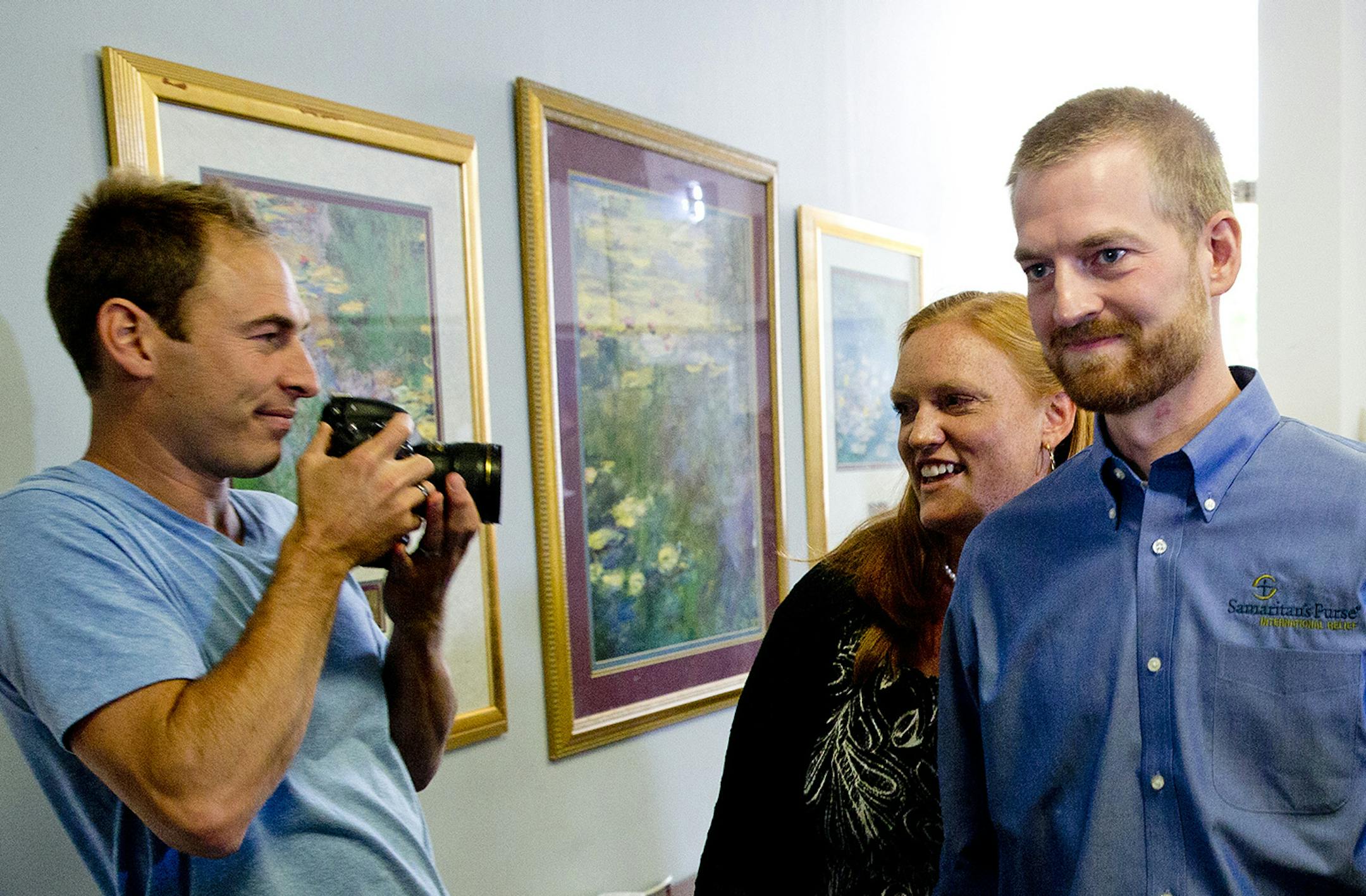
The headline "God saved my life" (front page, Aug. 22), served to reinforce some of the worst of American Christian theology. I'm sorry the Star Tribune chose to promote this view.
The facts in the case of the American doctor brought back from Africa after he contracted the Ebola virus are clear. Being a white American contributed to his healing far more than God did. The privilege granted him by his skin color and place of birth allowed him to be whisked across the Atlantic on a special chartered plane, allowed him to be given new, rare, experimental drugs, and afforded him the best medical care the world has to offer.
If we buy into his toxic theology, what about the millions of people who are currently trapped in quarantined parts of their country, left to die of starvation or disease? Does God not care about their lives?
Caring for the sick is wonderful, but it is hubris, and only contributes to our own sense of ourselves as savior, to substitute God for our wealth and privilege.
Daniel Wolpert, Minneapolis
VIKINGS STADIUM
Look, the team can afford bird-safe glass
The Minnesota Vikings have increased their contribution to the new stadium by $26 million, including $8 million for "capital improvements concession stand upgrades" at TCF Bank Stadium, but still do not possess enough funds to spend $1.1 million on bird-safe glass. Does the team not have an obligation to be sportsmen for the city and its environment?
It doesn't take a bird brain to realize how simple of a problem this is to solve, yet the Vikings plead poverty. According to a bizjournals.com poll, 57 percent of readers believe the stadium should include bird-safe glass. On Aug. 1, the Minneapolis City Council formally requested such glass to be used on the stadium, but the Minnesota Sports Facilities Authority refused.
Part of being a sportsman is ensuring that resources will be around for others in the future. Minneapolis is a beautiful city with great natural scenery, and it would be just as nice without building a new Vikings stadium, half of which is publicly funded, on the banks of the Mississippi River. Spending $1.1 million would be a low-cost way to preserve the beauty of our city for the life of the stadium and beyond.
Brad Omland, Apple Valley
• • •


