

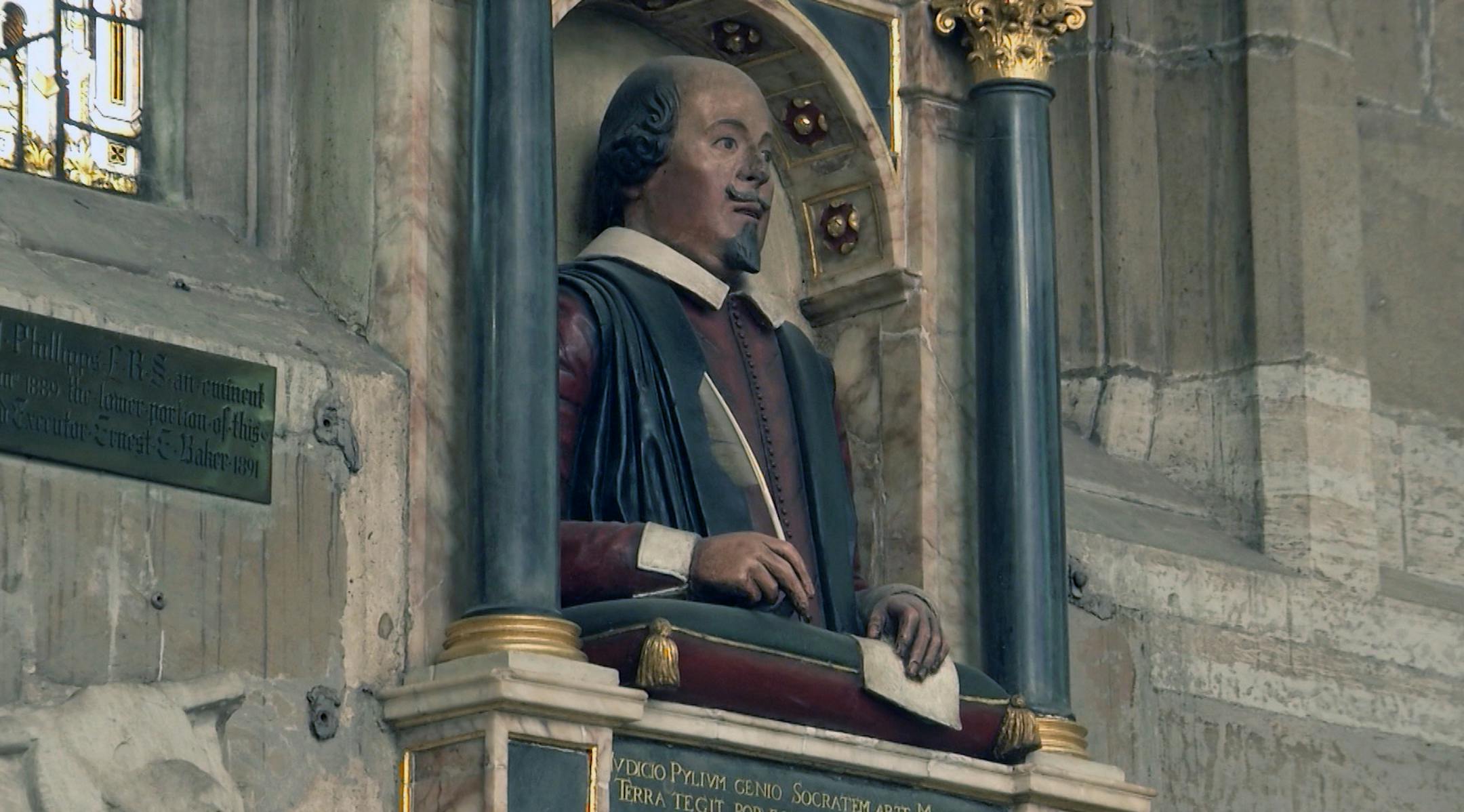
Stephen B. Young's April 27 commentary "400 years later, Shakespeare is still our guide" was a curious piece. Though it begins by noting the recent death of Prince, it hardly mentions him. Rather, its crux is that the genius of another man, Shakespeare, has never been, and will never be, surpassed: "Greatness had happened. At best, the rest of humanity could only achieve something less" and "I am not, in any really important sense, the equal of Shakespeare — and neither are you." I love Shakespeare, too, but I don't know why it's necessary to assume that his genius will never be equaled, and imply, thereby, an infallible means of rating genius. Was Shakespeare smarter than Einstein, or more musical than Prince?
But more than that, I object to Young's facile application of his Shakespearean learning to contemporary political figures. So he suggests that Hillary Clinton bears resemblance to both the murderous Lady Macbeth and the patricides Goneril and Regan — that she has not the loving character of either Cleopatra or Cordelia and is more like the shrewish Kate. Where does he get this stuff? Why isn't Hillary rather comparable to the wise Portia, or the witty and independent Beatrice? These are Shakespearean heroines, at least the equals of the men in their worlds. Sorry, but Young's view reeks of the worst kind of sexism, thinly veiled as literary erudition.
Then there is his comparison of President Obama to Brutus and Hamlet, due to Obama's supposedly being "consistently unwise in decisionmaking" and lacking the "willingness to act." Again, he presents these as insights gleaned from the genius of Shakespeare, rather than the quite common political biases that they clearly are.
Michael Woolsey, Eden Prairie
• • •
Many men are listed in Young's article about genius. Where are the women? For example: Sappho, Elizabeth I, George Sand, Margaret Sanger, Eleanor Roosevelt, Marie Curie, Georgia O'Keeffe, Mary Shelley, Jane Austen, Harriet Tubman, Susan B. Anthony — to name but a few off the tip of my virtual pen.
Fred L. Klein, Minnetonka
MET COUNCIL
Opponents of 'unelected body' seemingly would prefer gridlock
So, in other words, what the writers of the April 28 editorial counterpoint "Met Council needs more than tweaks" want is for the Metropolitan Council to succumb to the modern American version of democracy: two equally sized voting blocs having diametrically opposed visions of how the world should be, refusing to compromise with each other. No, thanks.
TYLER LEKANG, Minneapolis
TRANSGENDER ACCOMMODATIONS
Do those resisting understand what this is really about?
An April 28 letter writer, responding to the "Credit Target for transgender policy" editorial of April 27, wrote: "Target has no right to force the vast majority of its customers to cave to the highly unique needs of the transgender people." I found myself wondering what "unique needs" those are. A nicely dressed to-all-appearances female goes into the women's restroom, goes into a stall, emerges a little while later, washes her hands and exits. A to-all-appearances young (or older) man goes into the men's restroom, goes into a stall, emerges a little while later, washes his hands and exits. What are the "unique needs" of either of those people? And how can an outside observer tell if either one — or both — are transgender?
I have also heard objections to transgender people using their identified-gender restrooms based on the possible confusion for children. Tell me — wouldn't it be more confusing to a young child to see a nicely dressed to-all-appearances female going into the men's restroom?


