

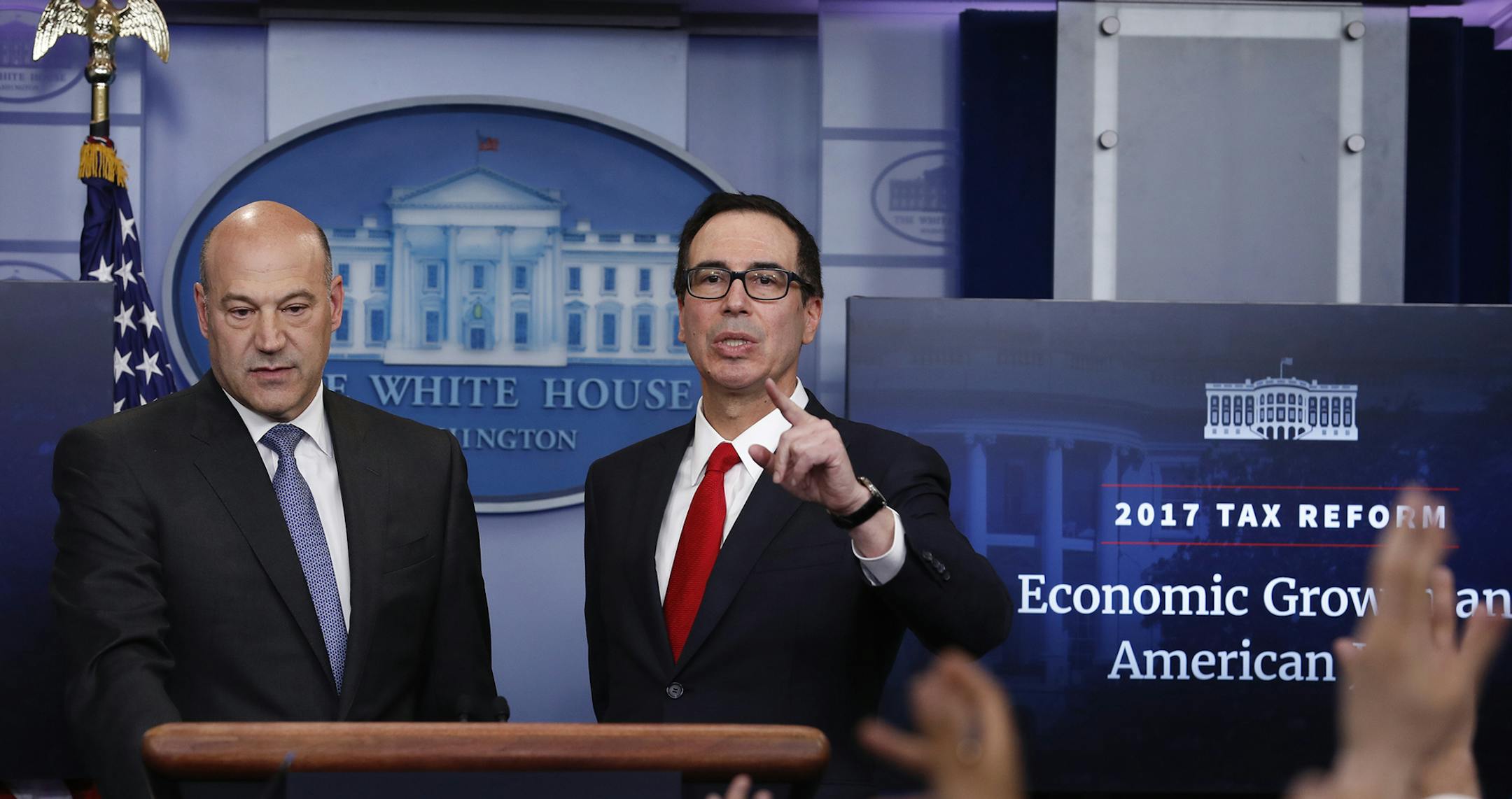
Such hypocrisy. Republicans blast Democrats and the Obama administration for the size of the national debt, then President Trump and the Republicans in Congress propose huge reductions in the tax rates for businesses.
Their story is that the cuts will stimulate the economy and promote job growth (think trickle-down economics), but history tells us otherwise. Presidents Ronald Reagan and George W. Bush had big cuts in taxes, and we ended up with large deficits and little or no job growth. The only effect this had was that the rich became much richer and the poor and middle class paid the price for the economic decline.
When will this madness end? If anyone ever had doubts about big business and the well-to-do controlling our government, this should remove those doubts.
Mark Anderson, Ramsey
• • •
Trump's tax proposals and deregulation proposals raise conflict-of-interest concerns of how much his own business interests will benefit. Criticisms of his refusal to release his tax returns have focused on what they might show about his sources of income, his foreign and other business ties, his debt structure, and the propriety of the tax deductions he claims. Those are all legitimate concerns, but there are others, such as identity of investors and partners, specific identification of his taxpaying and regulated entities and how much they would benefit from Trump's proposals, and much, much more. If he has legitimate disputes with the IRS, there are noncriminal procedures to handle those disputes. The extent to which his businesses will benefit from his tax proposals and his deregulation proposals is more than a mere curiosity.
Thomas W. Wexler, Edina
MARCH FOR SCIENCE
It made me change my mind about vaccine responsibility
"1-2-3-4, SCIENCE is what we're fighting for! 5-6-7-8, everyone should VACCINATE!" The chants are still ringing in my ears days after the recent March for Science in Washington, D.C. In the midst of my excitement, my mind continues to return to a recent patient under my care in Minneapolis.
About a month ago, I was called to admit a 2-year-old boy from the ER for respiratory distress. He had been diagnosed with pertussis (whooping cough) and was struggling to breathe. I walked into the room to discover his condition was quickly deteriorating, and we quickly transferred him to the Pediatric Intensive Care Unit. As his bed was rolled away, I spoke to his mother who confirmed what I feared: He was not vaccinated.
My patient was in the hospital for two weeks. During that time I sometimes found myself feeling judgmental about his parents' choice not to vaccinate. On the day of discharge, she broke down in tears, saying, "I understand I was wrong to not give him vaccines — he will never miss any again."


