

The wisdom gained from a student with huge debt ("Let the student beware: A story of college debt," April 10) was best summarized by her plaintive conclusion: "I wish someone had explained to me — in words I could understand — about interest, credit and how the decisions I'm making will affect me in the future." She is lamenting the consequences of her well-intended college loan decisions.
Actually, her sympathetic and easy-to-understand problem is similar to the challenge our Legislature has. The April 10 editorial on the cover of the Opinion Exchange section phrases the so-called dilemma prophetically: "How to divvy a $1.03 billion state surplus."
Before we spend any of that so-called surplus, let me act like the adviser our frustrated student requests. I am among the many who say: "Give it back — it isn't yours." I'll add that the editorial's consequences would be additional, perpetual and unrelenting bureaucracy. The so-called onetime expenditures add to an already out-of-whack spending spiral.
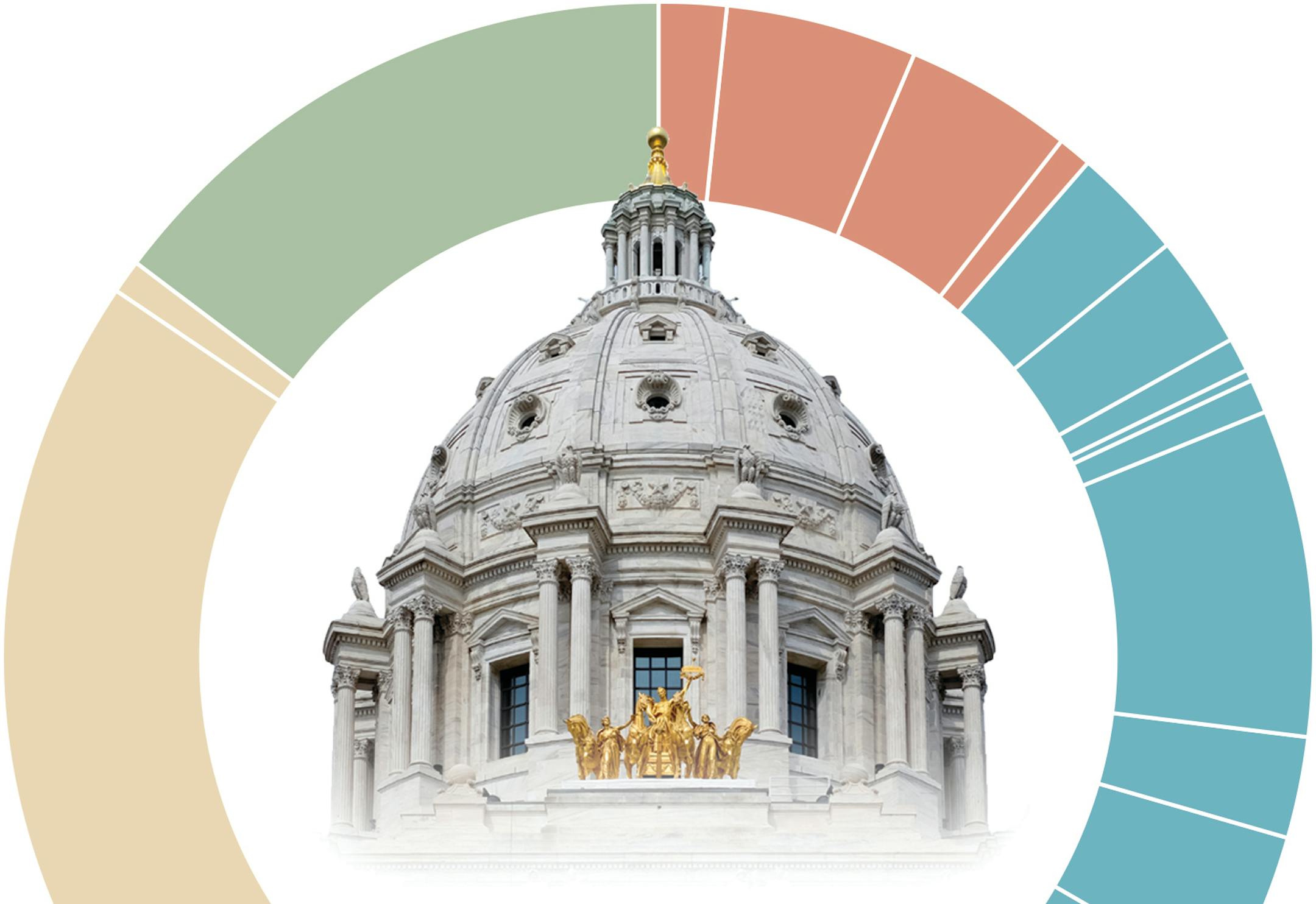
I must give credit to the Star Tribune Editorial Board, however, for creating the graphic that shows its recommendations. It details the millions — yes, more than a thousand million — in spending. The tyranny of large numbers makes the individual requests of "merely millions" seem small.
Mike Welbaum, Edina
• • •
I appreciated the editorial's synopsis statement that "[n]ot all of it should be spent, but the opportunity to strengthen the state's future mustn't be missed." As a school board member in St. Louis Park, I have struggled with school budgets for the past 14 years. The state has a lot of needs, but the Legislature really needs to step back and look at our schools. Our students are our future — they are our best investment!
This is a nonfunding year, so I don't think we will get much school funding from the Legislature. Some legislators will say that they gave a lot last year — 2 percent. The modest increase to the funding was generous based on the past increases, but funding for special education has not been increased by the state (or the Congress) in a long time. In a year with such a surplus, now is the time.
As I walked through a special-education class a few weeks ago, one of the students asked me why I was there. I told him that I was talking to people as I prepared to testify at the Legislature. He was excited for me to talk to the Senate and said "Look around you. These kids are the future. You tell them this is the best investment they can make."


