

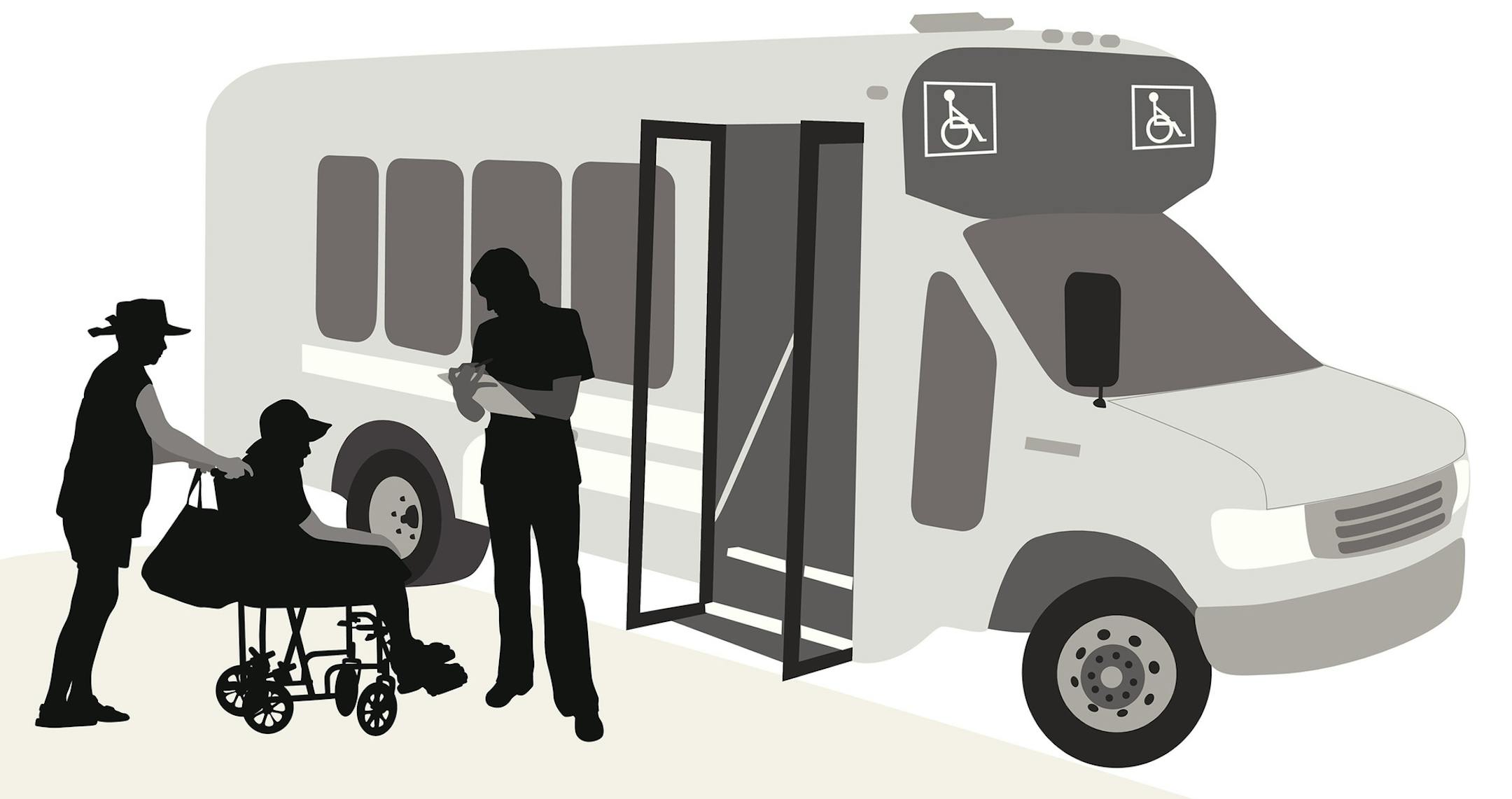
Regarding "Disability transit exacts a rising toll" (April 9): I remember how the world receded from my 84-year-old mother after she lost her battle with glaucoma. Disabled and lonely, entirely dependent for mobility upon her busy adult children, she lost her freedom and her sense of having a purpose in life. She deteriorated mentally, physically and spirituality. She lost her will to live.
Now in my mid-70s, I vowed never to be deprived of my freedom and dignity simply because I could no longer drive. I live within walking distance of shops and restaurants, and have easy access to public transportation, including services like Metro Mobility should I become disabled. But Republicans in the Legislature want to take Metro Mobility away from thousands of elderly and disabled people by cutting its funding.
Boston may want to "think outside the box," but I'll be damned if I'm going to ride with largely unregulated Uber or Lyft, gig-enterprises that undercut the business and decent wages of taxi drivers.
There must be a way to fully fund Metro Mobility with a combination of funding sources, including slightly higher fares. Elderly and disabled people are members of our community who deserve to live out their lives with the basic dignity and independence provided by its services.
L. Hope Melton, Edina
• • •
Two recent family ambulance bills of $3,600 per trip reminded me how expensive medical transit can be. There are various ways to reduce the increasing deficits on disability transit and all public transit in our metro area. Choosing any public transit offers great savings from the high costs of car ownership. The average cost of a car and parking could easily be $30 per day. Charging only $4 for a $24 average Metro Mobility ride is certainly not the answer! Individual fares should be based on income and wealth — some could easily pay $24 for Metro Mobility rides or $5 for bus and light-rail rides.
Many families move their disabled members in their personal vans, and churches often provide some of these services. We should study the best-financed transit systems of other cities countrywide for ideas to improve our system. Perhaps competitive bids could improve the costs, along with more efficient scheduling. Employers often subsidize parking and bus transportation and could do likewise for any disabled workers' transit needs.
The financial drain of public-transit deficits will continue to be criticized by taxpayers until all riders pay their fair share. We can no longer continue to escalate subsidies on this broken financial model. Save the subsidizing for the individuals who truly need them.


