

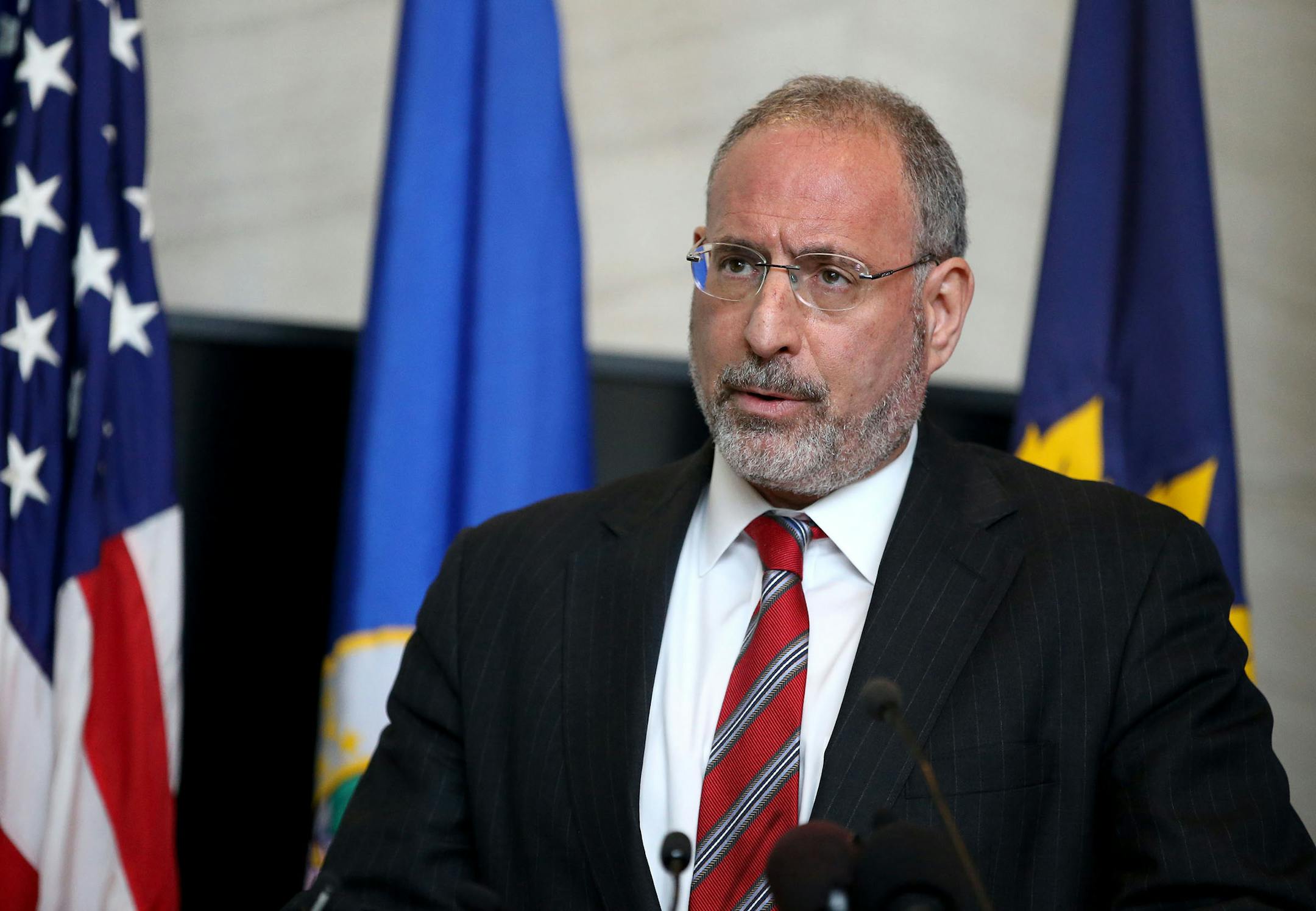
We are former United States Attorneys for the District of Minnesota, nominated by presidents of different political parties. The recent article on Andrew Luger, the nominee to return to the U.S. attorney's office, suggesting that he has an "ethical bind," was seriously incomplete in two respects ("U.S. Attorney nominee caught in a catch-22," front page, Dec. 13).
First, the article fails to note that investigations into the "pattern and practice" of police departments are not run by local U.S. attorneys' offices, but by the civil rights division of the Department of Justice in Washington. Such "Main Justice" investigations are not rare, and their protocols minimize the involvement of local prosecutors, such as the U.S. Attorney, who necessarily work often with local law enforcers. Therefore, Luger would not be in a position to "block" or "denature" a Main Justice civil rights investigation — not that he would, anyway — as one critic irresponsibly asserts.
Second, it is not in the least unusual for an incoming U.S. Attorney to recuse from matters involving clients represented by the attorney's former firm. Each of us did so. We followed — and undoubtedly Luger is well into — the long-established vetting process by which the incoming official, working with ethics professionals in the department, identifies all such ethical issues and resolves them as professional responsibility rules require.
We have worked closely with Luger, and we know him well. He is a gifted, ethical lawyer who has again passed a stringent check of his background, qualifications and professional responsibility. Minnesota is fortunate that he has chosen to return to public service.
This letter was signed by Thomas Heffelfinger, U.S. Attorney, 1991-93 and 2001-06, and David Lillehaug, U.S. Attorney, 1994-98.
•••
In debate, as in law, it is the participant's job to defend their assigned position and present the best argument to defend it every time. There should be no inclusion of personal bias. The real question is, can a judge or attorney do their job competently — and the answer does not depend on whether they have been a defender or prosecutor in the past. The lack of understanding this principle is leading to the decline in respect for the law, even up to our highest court.
David J. Anderson, Richfield


