

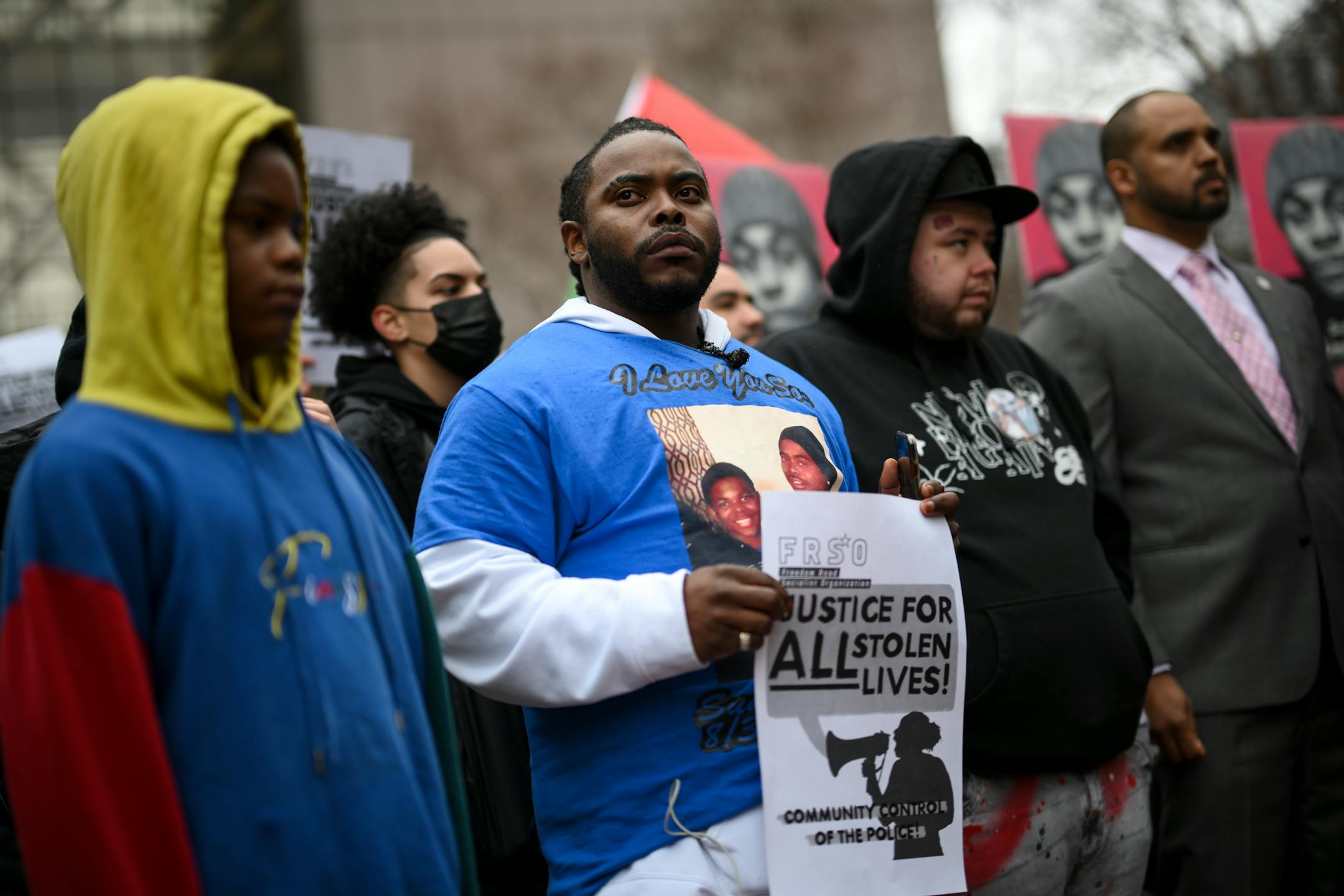
A letter in Friday's paper includes this statement: "We all know from watching cop shows on TV that police know which judge to go to for no-knock warrants — the "easy judges." ... [T]hey killed him, too." As a law professor and lawyer for decades, I cannot say this too forcefully: Do not understand the legal system based on what you see on television. Furthermore, according to the detailed timeline in Thursday's paper, it was Judge Peter Cahill who approved the warrant. Judge Cahill served both as a public defender and as a prosecutor and is so widely respected for his fairness and intelligence that he was tapped to preside over the Derek Chauvin trial.
The death of Amir Locke is a tremendous tragedy, and we should focus our commentary and hopes for reform on what actually happened.
Deborah A. Schmedemann, Mendota Heights
•••
The Star Tribune published five letters on April 8 critical of law enforcement without at least one different view over the Locke incident. As someone who participated in many no-knock warrants, I'd like to offer a different perspective. Search warrants are a court order authorizing an officer to search a person, location or vehicle. The officer must make the case that probable cause exists for the warrant with a narrative of the existing investigation. In the article "No more no-knock warrants for Mpls." (April 6), we see politics overshadow police/public safety. Omitted from the article is that fact that the affiant officer (sworn in by the judge) must make a convincing case that a no-knock is needed. The article misleads the reader into thinking that a no-knock is guaranteed. Request for no-knocks are more frequent in drug cases due to the high probability of the presence of firearms. The purpose is to keep officers and the occupants safe as a quick entry could result in a "startle response" that freezes any reaction. What "research" went into creating the 20-second rule by day and 30-second rule by night? Has this become a game of "fairness"? Officers already have to navigate residences with motion sensitive cameras, doorbells with audio and visual capabilities, and dogs. Forewarning occupants that police are at their door might elicit a "flight or fight" reaction that could increase the threat level for all. Has Mayor Jacob Frey ever seen the preplanning done for a no-knock warrant? Has he observed from a safe distance the entry and aftermath? When was the last time he or any council members did a late-night ride-along in high-crime areas?
As tragic as Locke's death is, he did violate a safe gun-handling practice. By literally sleeping with his handgun, his likely foggy response to the noise of the police entry ensured the deadly response.
Mayor Frey continues to reimagine the Minneapolis Police Department in a fashion that puts everyone at greater risk. It is unfortunate that common sense is so elusive in a city where crime is so rampant.
Joe Polunc, Waconia


