

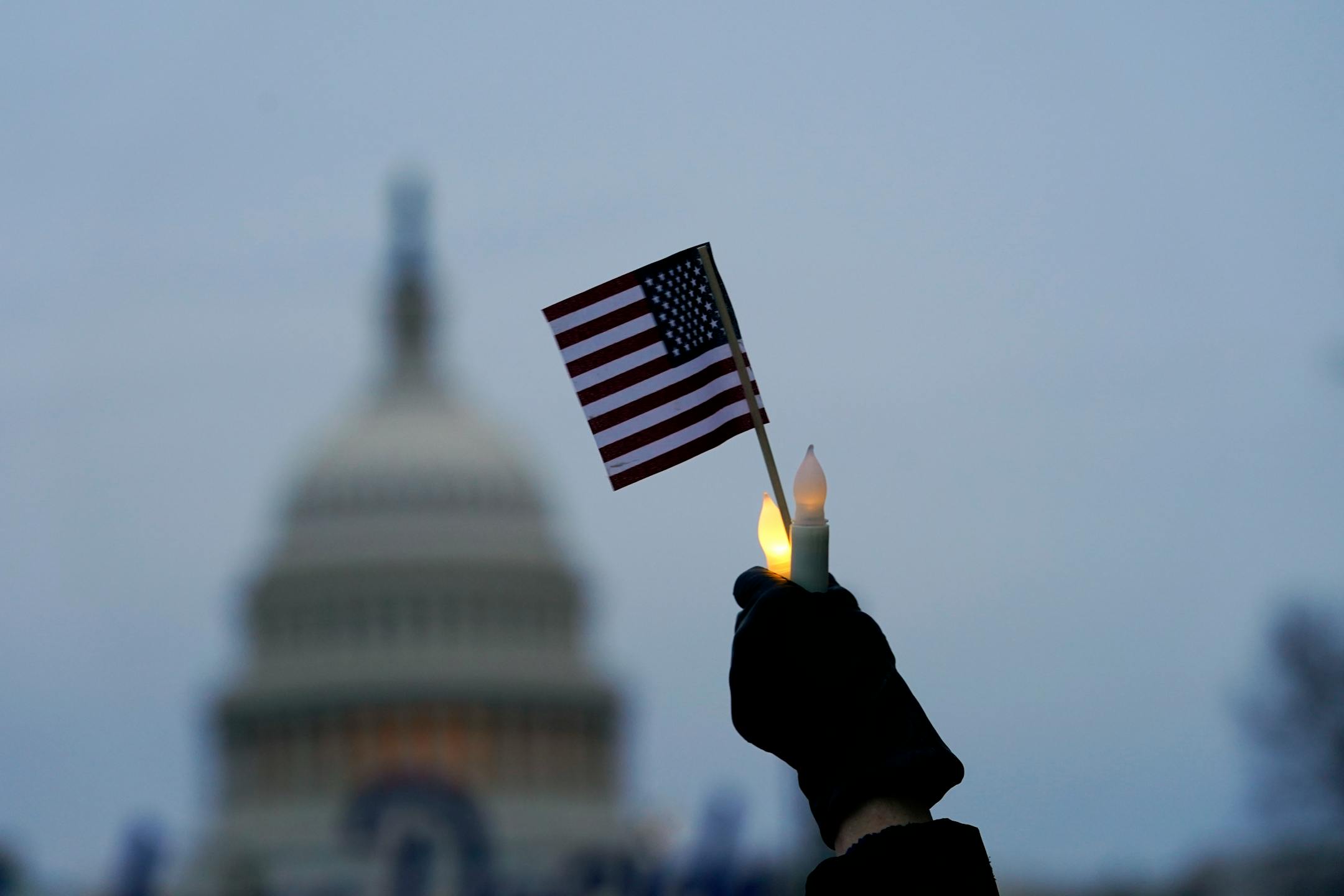
My 81-year-old mom died on Jan. 5, 2021, ending her brief yet intense ordeal with cancer. On Jan. 6, the U.S. Capitol exploded in mob rage: My face contorted into an Edvard Munch scream while viewing cable news. Mom's funeral ceremony and cremation occurred on Jan. 7, and I performed her last rites in Sanskrit with the able assistance of a Hindu priest surrounded by family in a COVID-restricted environment. These were three achingly surreal days in Columbus, Ohio, then, and now in retrospect.
A salve that helped this loyal citizen deal with both shocks to his system were the words and remembrance of Sen. Robert Kennedy, who, upon arriving in Indianapolis on April 4, 1968, being informed of MLK's assassination and cautioned not to speak publicly, proceeded anyway, grounding his ameliorative remarks around Aeschylus' apt poetry:
"He who learns must suffer. And even in our sleep pain that cannot forget falls drop by drop upon the heart, and in our own despair, against our will, comes wisdom to us by the awful grace of God."
Kennedy movingly commented on the need for unity in the country, and as many commentators have noted, Indianapolis was the rare city that did not erupt in riots that night. No politician rose to this level on Jan. 6, 2021, to calm a disoriented and still disbelieving nation. And from insider testimony, it appears our resident Caesar watched the mayhem with appreciation and a wink and a nod to his fans, a confident archfiend comforted by John Milton's aphorism that it is "better to rule in Hell than serve in Heaven": a paradise lost indeed.
Me? I am left with the memories and ashes of my dear mother, but hopefully not of the beloved country, "the republic for which it stands, one nation under God, indivisible, with liberty and justice for all."
Arvind Subramanian, Eden Prairie
•••
"I'm so damn old, I was there as well," said President Joe Biden about the civil rights era in his Jan. 11 speech in Atlanta ("Biden targets filibuster on voting"). I'm a bit younger, so I watched on TV when Freedom Riders were discovered murdered, John Lewis was beaten and the Rev. Martin Luther King Jr. was assassinated. Following much death and destruction, we got legislation and progress. It was enough progress and lasted long enough to lull most of us into believing it was permanent. Who imagined after all these years that states like Georgia would so quickly regress to cementing power for one group by legislating obstacles for so many others.


