

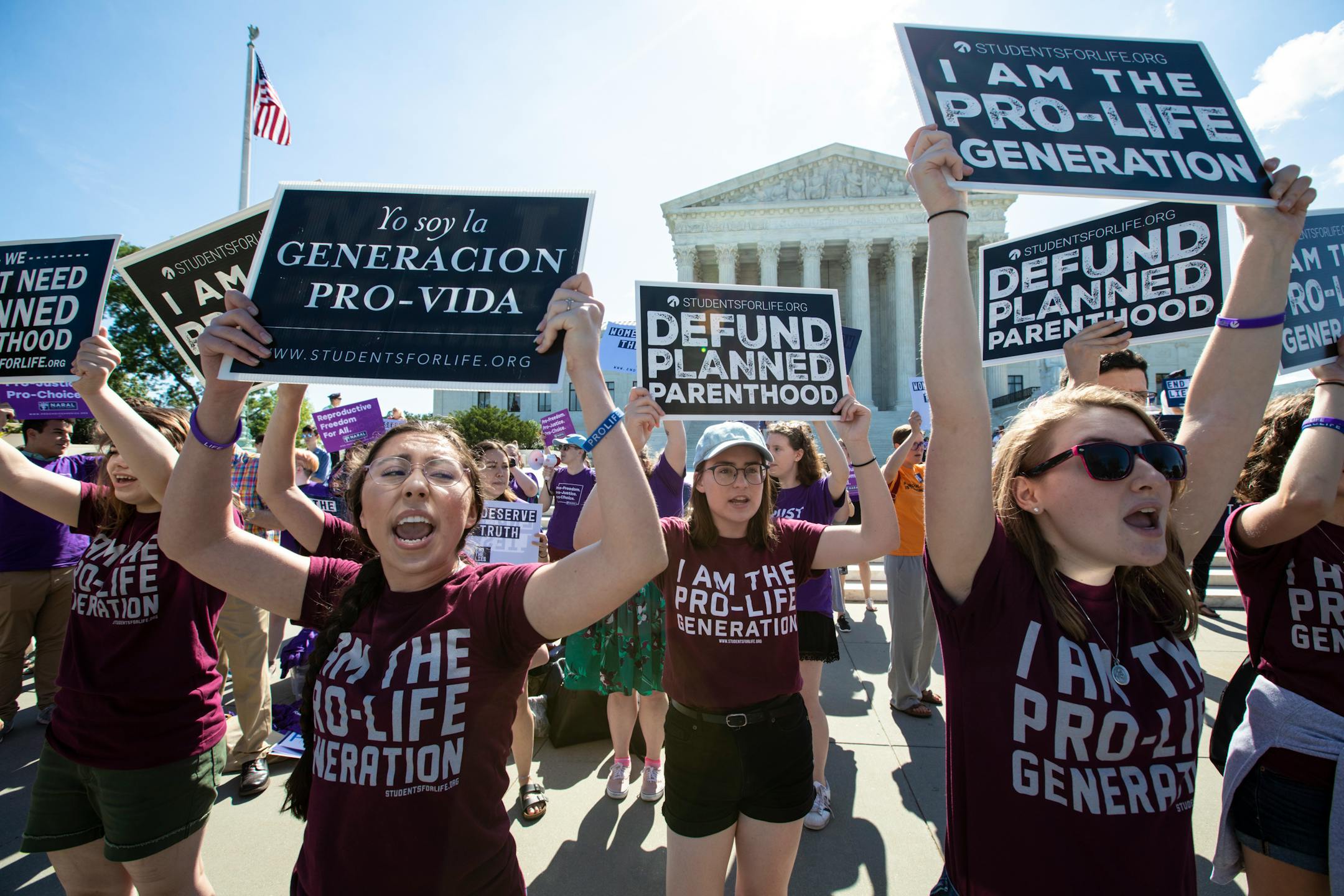
A recent letter writer wondered why there was no help nor resources available to women experiencing unplanned pregnancies in the wake of the Texas abortion decision. Actually, there are many groups out there who do offer assistance — including my group, Feminists for Life. Every single instance that she mentioned — whether poverty, lack of education, lack of shelter, lack of support from the father, you name it — there are a multitude of resources to turn to.
Many of our members have been in your shoes, sister, and we know what you're going through and want to help. Protecting unborn human life is a step forward, but much more needs to be done: Education, stronger societal support, and a better and greater choice of contraceptives is also needed. Unplanned pregnancies do occur, and they're never easy. Please know that you are loved and valuable, and you'll never have to make this journey alone.
Kay Kemper, Crystal
•••
The Supreme Court's refusal to stop enforcement of Texas' abortion law is seen as a novel way to outlaw abortion, and several states are poised to copy the new law. This signals the court's hostility to abortion, but it is only a temporary setback to abortion rights in Texas. The court majority stressed that it was not ruling on the constitutionality of the Texas law and did not mean to limit "procedurally proper challenges" to it. In other words, the court gave abortion foes several months to go after providers until they rule the law unconstitutional.
How do I know? The Supreme Court deals in legal concepts that can be applied to any law. The Texas law rests on a legal loophole that could be used to invalidate any constitutional protection. If it stands, the Bill of Rights means nothing.
Texas made abortion illegal after six weeks, which is unconstitutional under Roe v. Wade. The state could not prosecute anyone under the law, so it allows private citizens to sue in civil court, not only abortion providers but also anyone who "aids and abets" the procedure: Uber drivers, counselors, staff members, etc. It's a bounty system, with vigilantes getting $10,000 from each of the people they sue.
If the court upholds this legal workaround, states could outlaw any constitutional act. They could outlaw sale and possession of handguns, for instance, with the same bounty system for gun owners, gun shops and advocacy organizations. It might be illegal to criticize the governor, and newspapers could be among the ones they sue. The Supreme Court knows that state-sanctioned vigilantism would totally overturn constitutional law.

