

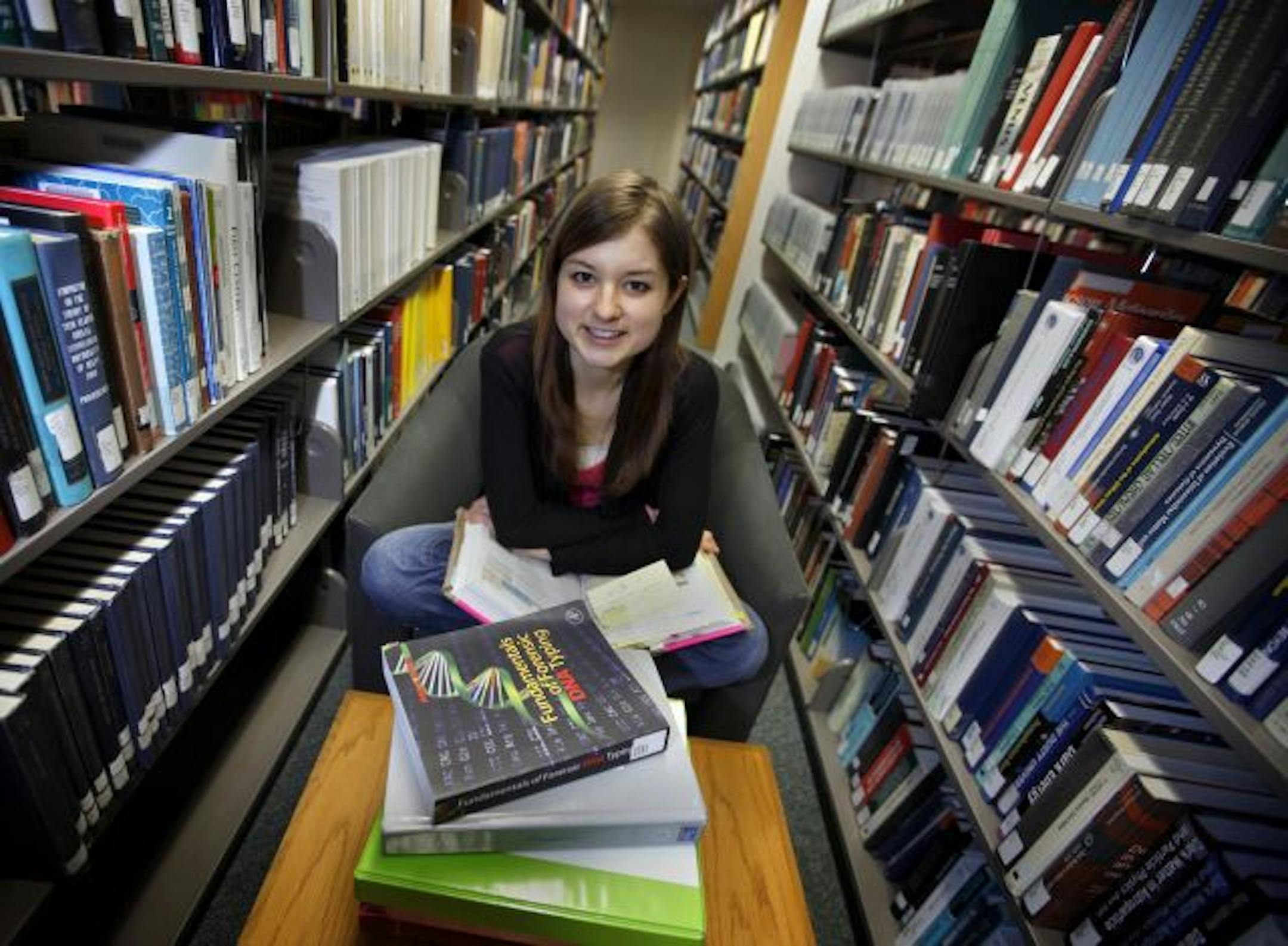
When Bob Crabb got his first look at the prototype of an electronic book reader 14 years ago, he would have bet his house that by now the bookstores he manages at the University of Minnesota would have gotten rid of most printed books.
Instead, he thought, they'd be selling PIN codes that could be used to access the publications electronically.
Fortunately for Crabb, he couldn't find anyone willing to take that bet. He still has his house, and his stores still have their books.
"I'm surprised by that," he admitted. "I thought that this generation of students, who grew up using electronic devices from the time they were in grade school, would have embraced this technology."
They certainly have in other areas. They communicate electronically, they shop electronically, they navigate electronically, many of them even manage their love lives electronically. But not all are reading their textbooks electronically.
Count U of M freshman Elin Mixer among them.
"I like textbooks," she said as she sat a table at the U's Coffman Union, a book open in front of her as she traded off between a highlighter and a pen she was using to jot notes in the margins.
"I don't like reading online; I think it's harder to follow," she explained. "I like to highlight things. I like to flip back and forth [between pages] if I need to. And I like to make notes. In fact, if I have to research something online, I always print it off so I can read it on paper."


