

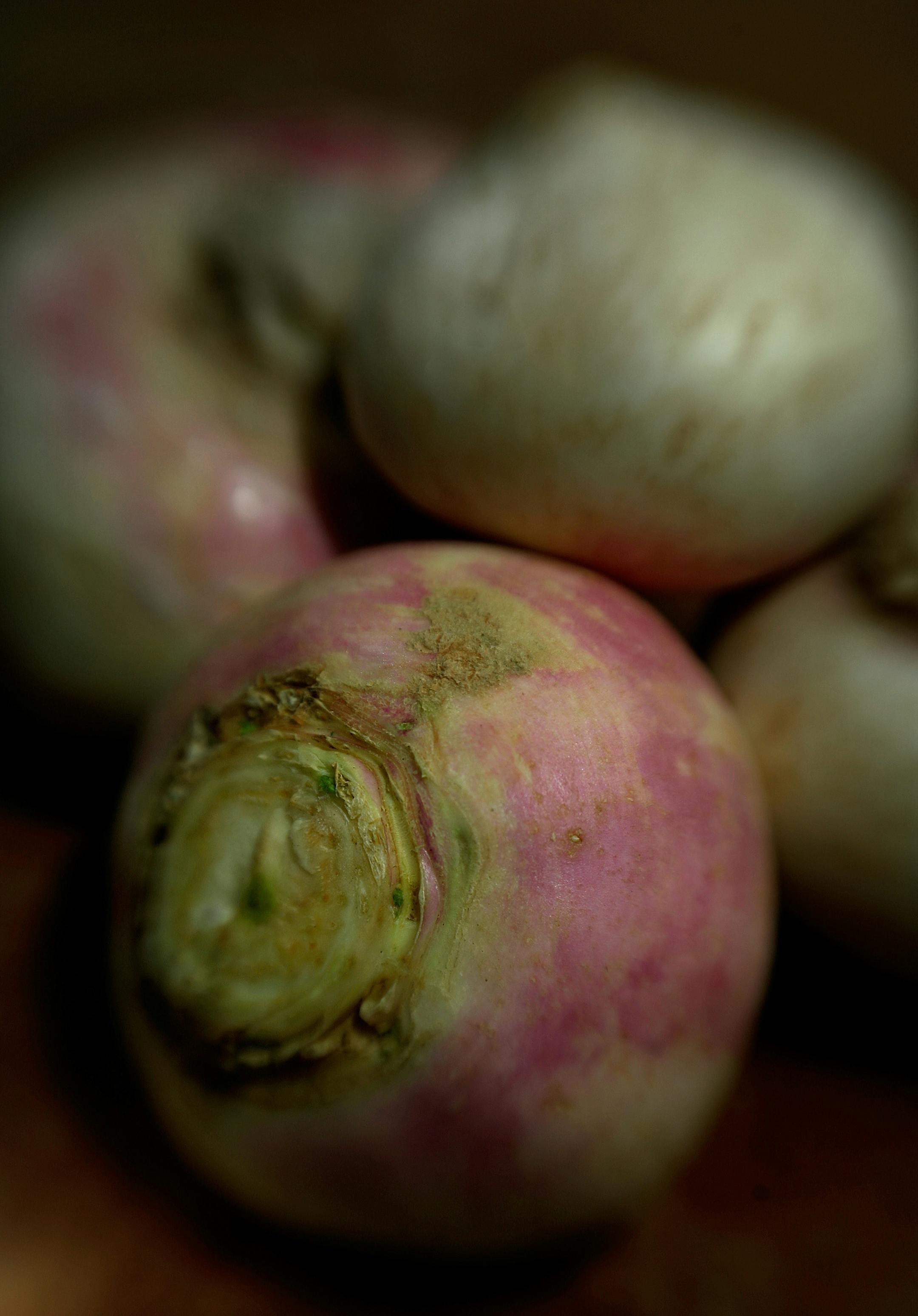
Say the words "root vegetables for dinner" at my house and, until recently, my husband would race to the phone to order a pizza or take-away meal. To him, these carbohydrate-rich roots were the scourge of the supper table.
Then he took his first bite of a parsnip and turnip. Much to his surprise, he discovered that the sweet and nutty parsnip and mildly tangy turnip not only enhanced my tried and true potato casserole, but also made it a palate-pleasing delight.
Much of the Western world has consumed them since ancient times. One of the earliest cultivated vegetables, the white, top-shaped turnip has been grown in northern Europe since 2000 B.C. The pale, carrotlike parsnip, which grows wild throughout Europe and western Asia, was first farmed during Roman times. Both prosper in cooler climates and sandy or impoverished soils, making them an ideal peasant food.
Parsnips, in particular, served a vital role in medieval European cuisine. At a time when sugar was a rare luxury, these honeyed veggies acted as the sweetener in pies, pastries and even fermented drinks. In Northern Ireland they formed the basis for beer, while the rest of Great Britain used them in wine. High in starch and potassium, this relative of the carrot also provided nourishing, filling meals. With the arrival of sugar and potatoes, parsnips gradually fell out of favor. Today, though, they remain an essential part of the traditional Sunday roast in Britain.
Simple to grow and equally easy to prepare, they can be baked, stewed, steamed or puréed alone or with other root vegetables. Often they are boiled, then mashed with butter, just like their usurper, the potato. I prefer to cut them into chunks and bake them with fresh rosemary, a sprinkle of salt and olive oil, or turn them into a creamy, rich soup.
When feeling indulgent, I will boil a handful of parsnips until just tender, slice and then fry them in hot oil. After draining them on paper towels, I sprinkle sea salt over them and munch away.
As a lower-fat alternative, I sometimes skip frying and instead toss the slices with olive oil and salt, spread them across a cookie sheet and bake them in a 375-degree oven until slightly caramelized, about 10 to 15 minutes. Without question, parsnip chips are my ultimate salty-sweet snack.
While I am inclined to cook parsnips and turnips independently, others pair the two in seasonal offerings, especially soups and stews, as they bring body to those dishes. You can cook them simply, adding a tad of olive oil and fresh herbs to parsnips and turnips. Or use mixtures of brown sugar, molasses, honey and cinnamon to spice up these two veggies.


