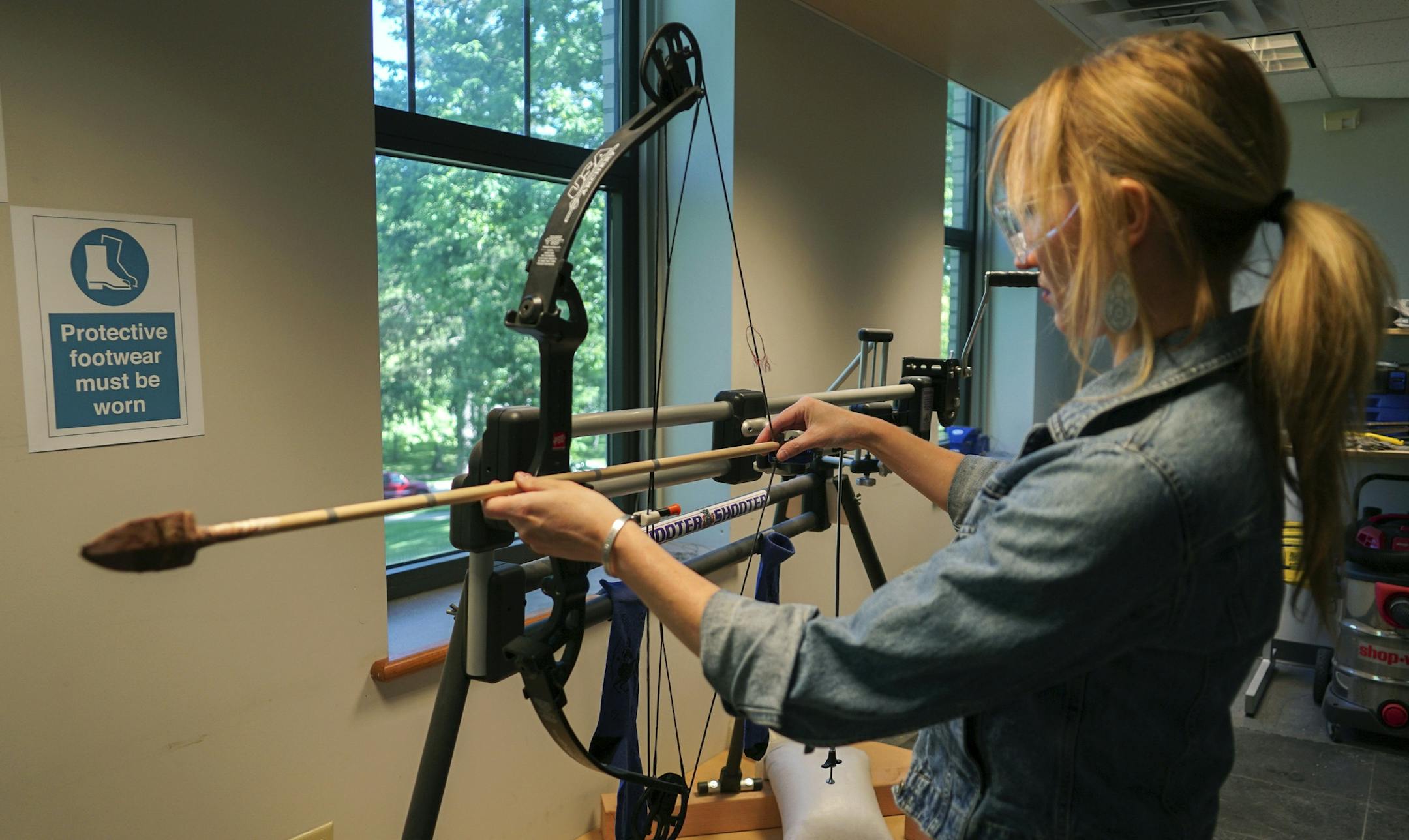
KENT, Ohio – Metin Eren wasn't satisfied just digging up ancient arrowheads to learn about the past. He wanted to use them for their intended purpose.
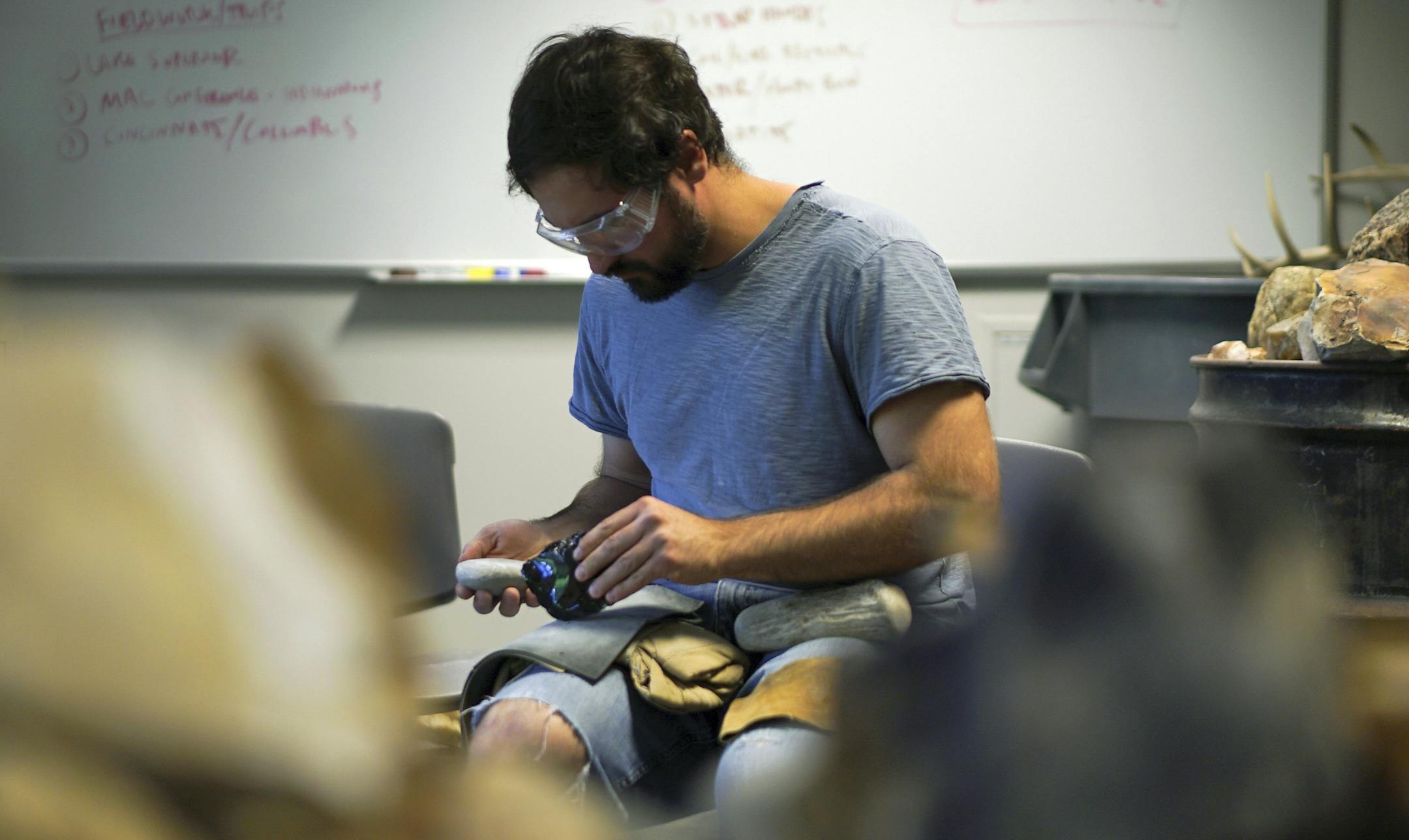
But shooting and shattering priceless millennia-old tips is out of the question, so instead, the archaeologist chips replicas of the stone-age weapons by hand.
"We can break 'em and throw 'em," he says. "Our imagination is the limit."
The Kent State University professor specializes in experimental archaeology — re-creating ancient pots, knives and arrows. By testing the replicas, archaeologists study how tools found in archaeological digs were actually used.
Eren's experiments focus on making sense of ancient weapons littered across the Americas, illustrating how humans first settled the Western Hemisphere: through careful preparation, long-term planning, and refined technology.
Already he has cracked one longtime mystery. In the early 1900s, archaeologists found unusually shaped arrowheads in North America, with grooves carved from the base halfway to the head's tip. They first appeared over 13,000 years ago and spread rapidly across the continent, but existed nowhere else. Researchers were puzzled why the grooves were carved, with speculation running from religious rituals to mere decoration.
That's where experimental archaeology came in. By testing the pressure at which the arrowheads would crack using a $30,000 crusher and computer models, Eren discovered the grooves act as a shock absorber. It allows the arrowhead's thinned base to crumple slightly and absorb energy upon the arrow's impact, making the head less likely to break. Archaeologists call it the "first truly American invention."
Scientists from Brazil to Britain previously conducted many kinds of experiments with re-creations, and borrowing techniques and technologies from other scientists has been long-standing practice.