

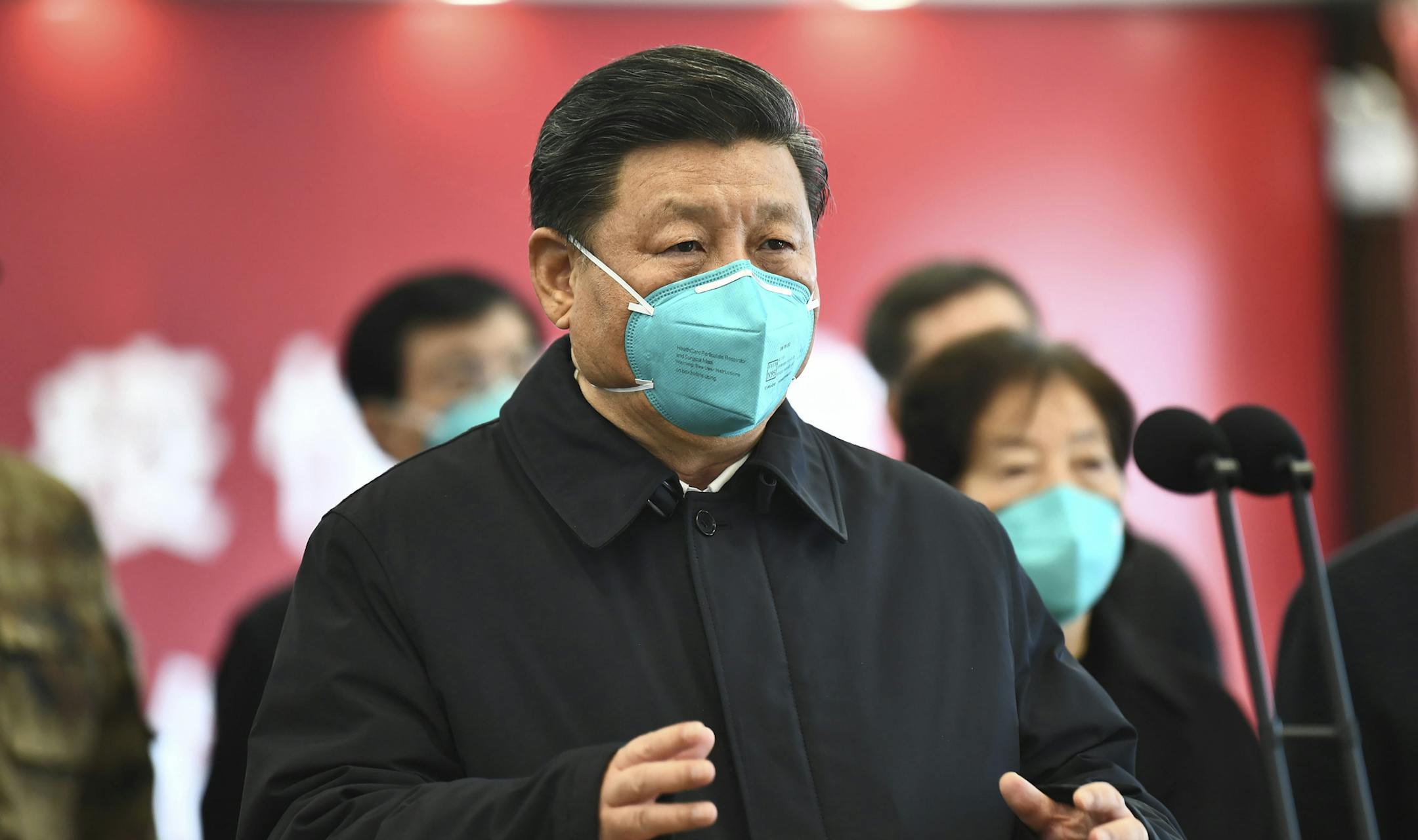
Amid an intensifying effort to show its governance structure as superior to the West's, China is touting its strict coronavirus quarantine as a model response to the pandemic.
But a different kind of quarantine — of the truth — belies Beijing's geopolitical push, even if Washington's haphazard, if not hapless, response keeps it from reasserting democratic governance as the most effective model.
China's lies began early with the silencing of witnesses to Wuhan's initial cases of COVID-19. What Beijing tried to cauterize as an internal matter quickly became an international one, sickening citizens worldwide while triggering a global recession that threatens to turn into a depression that could kill many more through starvation.
The opacity endures. Beijing is blocking an independent, international investigation into the outbreak's origin, and in March expelled 13 Wall Street Journal, Washington Post and New York Times reporters in response to the U.S. limiting the number of U.S.-based reporters working at Chinese state-run media outlets whose product is widely considered propaganda.
Word of the initial outbreak "didn't get out in time and it cost lives," said Dokhi Fassihian, the U.S. executive director of Reporters Without Borders, which released its annual World Press Freedom Index on Tuesday.
Out of 180 nations, China placed 177th, just three spots ahead of North Korea.
"By relying on the extensive use of new technology, President Xi Jinping has succeeded in imposing a social model in China based on control of news and information and online surveillance of its citizens," the report stated. "At the same time, he has been trying to export this oppressive model by promoting a 'new world media order' under China's influence."
The index reflects 2019 data. The 2020 pandemic is "exacerbating existing problems," said Fassihian, whose colleague Christophe Deloire, Reporters Without Borders' secretary-general, wrote in the report: "The public health crisis provides authoritarian governments with an opportunity to implement the notorious 'shock doctrine' — to take advantage of the fact that politics are on hold, the public is stunned and protests are out of the question, in order to impose measures that would be impossible in normal times."


