

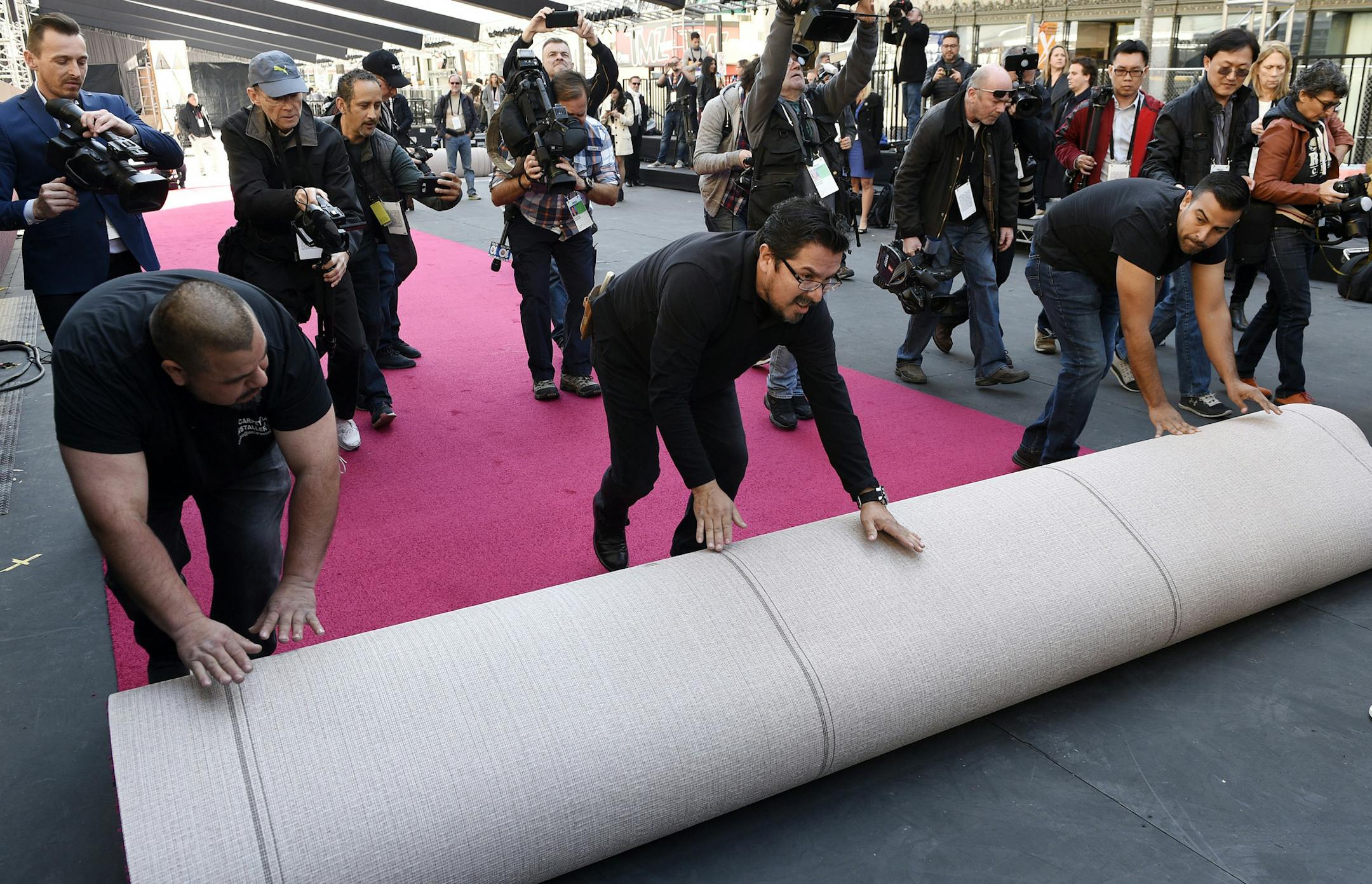
Unlike the Golden Globe Awards, it won't be all black dresses on the red carpet at this Sunday's Academy Awards.
But that doesn't mean #MeToo and the related Time's Up movements have had their moment. Rather, a significant shift in who makes movies and what movies get made may be the result of the highly public pushback against sexual harassment and gender inequality.
The changes will impact industry and individual alike.
"The #MeToo movement will not only continue to recalibrate the industry and the content of the movies, but also viewers," Carol Donelan, a professor of cinema and media studies at Carleton College in Northfield, wrote in an e-mail exchange.
There are already glimpses among nominees for Best Picture. Actress Greta Gerwig is nominated for Best Director and Best Original Screenplay for the Oscar-nominated "Lady Bird." And the odds-on favorite to win is "Three Billboards Outside Ebbing, Missouri," whose plot about a woman demanding justice evokes the justifiable quest for accountability in Hollywood and beyond.
But imbalances persist, according to a report released this week titled "Hollywood Diversity: Five Years of Progress and Missed Opportunities."
The annual analysis from UCLA stated that "women remained underrepresented on every front in 2015-16" (the most recent data available).
Actresses accounted for only 31.2 percent of film leads, perhaps because only 13.8 percent of film writers and 6.9 percent of film directors are women.


